37. Rejecting the Domino’s Theory.

Image

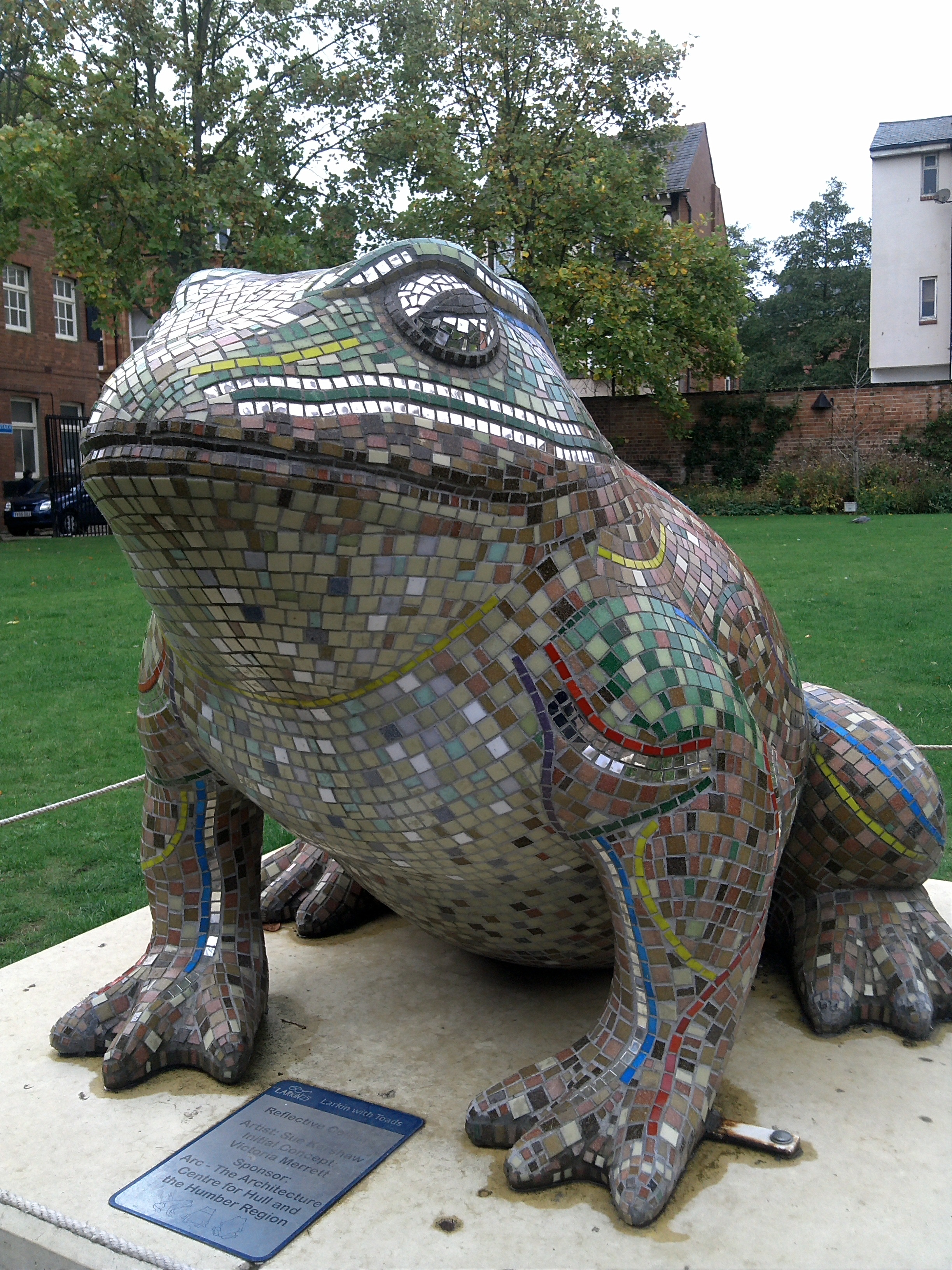
This creature’s camouflage is poorly suited to the urban jungle that is Hull.

My iron is warmed up and the fire extinguisher is ready, but my Ironing Coach is late today. Let’s hope we can stick with simple shapes again and not attempt anything complicated like pleated trousers. I was never that good at thinking in three dimensions, which is probably why I am not a surgeon.

One of my theories is that Specialisation has been very bad for us. I can understand how such a thing came about, following the industrial revolution, the invention of production lines, and the division of labour.

But every time a specialism is created, such as Pastry Chef, Tyre Fitter, or Middle-Third-of-the-Duodenum-Surgeon, a potentially useful activity has been taken away from the rest of us.

Not only are we all deskilled, but also we now have three very bored people, doing the same thing all day. Nowadays it is possible and probably lucrative to have one very finely honed skill, particularly if it is one that has been professionally colonized and denied to amateurs.

Professionals, and by this I mean the old professions like Law, Medicine and Accountancy – I nearly said Prostitution – were the first to stitch up areas of activity which would become highly rewarded and restricted to club members.

More recently we have seen Plumbers and Electricians get in on the act. Fair enough. These are occupations that need special skills and equipment and could represent a danger to people if done carelessly. But have we overdone it? Couldn’t the plumber do the electrics and vice versa?

Couldn’t someone more like a blacksmith – a person with a large shed and no backache – do tyre fitting, along with general welding and repairing? Why for instance is the person who mends shoes uniquely the person allowed to cut keys and change watch batteries?

Dominos seem to have developed an extremely narrow niche product. It’s for people with a motivational level just above the point for making phone calls but just below the point where they can put a frozen pizza in the oven for 13 minutes. A surprisingly large section of the population inhabit precisely this energy zone.

Ivan Illich was an influential writer in the seventies. I went to see him speak once in Leicester. I mainly remember that he refused to use a microphone, because he believed this invention had stolen the power of public speaking from the non-miked. However Ivan had an extremely loud speaking voice, so hardly needed any further amplification. He was easily able to drown out his opponents, which is the essential skill for a one-liner polemicist.  His message was to criticise doctors and teachers for stealing areas of expertise away from ordinary people.

As regards Medicine, there are pros and cons in his argument. It’s true that many areas of normal life have been falsely medicalised, such as insomnia, addictions and obesity. But it’s also true that high tech procedures such as coronary artery grafts have become massively more successful, providing the person carrying them out has done a large number of them, uses the right equipment and follows a strict protocol.

This week on the front pages of our newpapers we find a report about Depression supposedly commissioned by Nuffield Health. Whatever the report actually says, what has come through the press releases are some of our favourite chestnuts:

Depression affects one in four people.(Why not one in four hundred or everybody – it depends merely on where you draw the cut off point?)

GPs dish out antidepressants by the bucketful. (Who is this Willy Nilly and why can’t we stop him?)

Exercise would be just as useful as antidepressants.(As though obese people didn’t have to carry round an extremely heavy weight all day round their tummies.)

Not surprisingly, we find that Nuffield Health has taken over a lot of gyms recently. The more thoughtful papers go on to say that a Cochrane Review has shown that the value of exercise in Depression is doubtful to modest.

No-one much has a bad word to say about exercise, but lets inject a note of caution. Exercise might be an excellent pursuit, but very few people persevere with it. Much as they don’t persevere with Cognitive Therapy. Because they are hard work.

As opposed to swallowing a small tablet once a day, which is easy work. Our problem I think is in expecting either exercise or tablets to do miracles.

At the present time we have a situation where a professional person presides over getting hold of antidepressants, whereas we are still theoretically free to run upstairs or lift bags of potatoes.

However, the fitness lobby has made significant progress in colonising exercise-taking. Are we seeing the development of what could be called Big Exercise, where gym companies, sports gear and food manufacturers team up with coaches and personal trainers to create a new orthodoxy of fitness?

I predict that we will soon be able to buy antidepressants in Tesco, but if we want to take any exercise we will need expert supervision. Much like Ironing. It’s going Corgi-registered soon.

36. Selling out to musical theatre.

Image

What to drive in London, without looking ostentatious

I really need to expand the EP audience beyond its current sophisticated and beautifully formed readership. Luckily I just had an utterly brilliant idea, that came to me in a dream.

Some ideas are so monumental, they will make the person who dreamed them up instantly famous. Such as genetic fingerprinting, or the Tetrapak, for instance.

Or the four foot eight and a half inch railway gauge and the gummed postage stamp, the two breakthrough concepts that made the British Empire so large and pink.

I just had such a brainwave, and I am writing it down as quickly as my trembling fingers will allow.

It’s an idea for a film / musical stage hit, starring singing superstar James Blunt. Readers will know that writing a hit musical is hitting the literary jackpot. Even Ben Elton sold out all his credentials, of every kind, to create the Queen and Rod Stewart musicals that everyone seems to hate, apart from the millions of people who pay huge amounts of money to see them.

Remember that James was a tank commander in a former career. This is the key to it, its an action thriller, but with music, and romance. It starts with James, looking the worse for wear, in his designer Mayfair pad, strumming a few chords miserably, looking for inspiration. There is a pile of unpaid bills on his kitchen table. The landlord calls in to remind James the rent is overdue.

His agent rings to say his Blackpool and Skegness gigs have had to be cancelled due to lack of ticket sales. Finally the agent says, wistfully, ‘ we just need another ‘You’re Beautiful’ James. That’ll get you back’.

Enter a man from the ministry of defence, or that’s what he says. Lets just call him The Colonel. James doesn’t want to let him in. Cue flashback memories of the Balkans, with helicopter effects.

‘We’ve got a proposition for you James’, says the colonel, ‘but you may not like it. The truth is we need you back’.

It turns out that the mission involves James’ former tank squadron, but this time behind enemy lines in North Korea, or possibly Iran, like Argo. It’s a mixture of concerts, spying and technical sabotage.

Initially James refuses, until the Colonel threatens to destroy Atlantic Records, and in the explosion, all trace of Moon Landing, the forthcoming album. Plus a sweetener: ‘you get your old tank back, the Challenger Two. This time to keep’.

James stares at the Colonel for a long moment. ‘I want cup holders this time though. And a proper stereo’.

The mission goes wrong half way through when James insists on rescuing a beautiful spy – played by Miley Cyrus – from a hellhole prison military base, during a concert interval, escaping in a top secret stealth tank, like Clint Eastwood in Firefox.

OK, I’m not giving any more of it away now. You can guess the title and closing musical number. I’ll just wait for the phone to ring itself off the hook, as we writers say.

The message here is when you wake up with a brilliant idea, write it down straight away but don’t tell your psychotherapist. He’ll try and steal it.

35. Winking at the Standby Light.

Image

Coming to terms with existential despair is a tough task. I find it quite worrying that many of my domestic appliances, even some of the ones made in China, are going to outlive me.

Some while back I caught the beady eye of my old Toshiba television. The little red standby light, the same one that had ruined the climate, seemed to be indicating: I’ll be here after you’ve gone. I took it to the Sense shop for recycling and I happen to know it went to a good home. They wouldn’t sell me any Sense though.

Similarly the Ivy all around my house waits patiently to make its big push. It can wait a hundred years or a million. In the meantime, Ivy has one great weakness, which is failing to armour plate its giant arterial stems. Possibly an even greater weakness has been its failure to develop a political wing. No-one is out campaigning to save the Ivy. Unlike its colleagues, Holly and Mistletoe, Ivy has refused to cash in on the Christmas market. I’ve a feeling it will never sell out.

For as long as I can remember, people have told me that the Psychiatric profession is about to go out of business. Psychiatry is a creation of the 20th Century and has probably been dying since the closure of the large asylums. Many reasons are put forward for this. On the one hand it is expected that Neuroscience will eventually explain what goes wrong with the brain when mental illness happens, so that problems like bipolar disorder and schizophrenia – the meat and drink of general psychiatry – will properly belong to the neurologist, along with dementia. The rest of it can be left to social workers and psychologists, if their time machine ever gets back from the seventies.

Another factor has been the massive reduction in the psychiatrist’s favourite habitat, hospital inpatient units (I nearly said hedgerows). And a third influence has been the rise of general practice based mental health care. So on the one hand more and more people are being diagnosed with mental health problems, yet on the other hand, very few of those people will ever see a psychiatrist.

I’ve tended to believe that these prophecies of doom have been overly pessimistic. After all the same has been said about the Liberal Democrat party, which is now part of the government. And similar predictions were made about some of the High Street chains, like WH Smith, which still seems to be doing very nicely, having occupied all the stations and airports.

So maybe I have become a little over-complacent. Woolworths’s demise should perhaps have sent us a wake-up call. And now the Royal Mail sell off is sending a message that nothing is sacred. And what about the public library? Are you a bit uneasy about the coffee machines and internet terminals, and the reduced number of books? When all books are e-books (next year?), why will we need a physical library building?

Uncannily, just after I wrote that sentence, we’re in Stephen King territory here, Look North just reported that 33 libraries are going to close in the county of Lincolnshire. I’m worrying that everything I write might come true. No-one likes I told you so.

Then there was MFI. Everyone joked that their sale had been going on since 1976. Until suddenly, like Marvin Gaye, it wasn’t going on any more.

Psychiatry is perhaps no more precarious than other venerable institutions. Recruitment has been very poor for many years – we have gone from being the Cinderella profession to the Ugly Sisters (no sexist remark is intended here). We are not yet in post-apocalyptic mode, like Mr Spock, or Dr Who, whose planets were destroyed, but it may be time to start wearing big leather maxi coats and stashing shotguns.

On so many occasions I’ve thought; this place is going out of business soon. This has occurred to me in pubs, restaurants, churches, shops of various kinds, launderettes, art galleries, zoos, theatres, even cinemas. In fact, especially cinemas. People said cinemas would close when TV became affordable. Many of them did, but more recently multiplex cinemas have opened in many new locations. They seem to operate with only one member of staff, the guy with night vision goggles who stops people filming the films and guards access to the Pullman seats.

So perhaps mental health will go the same way, returning in a new form, with VIP seating. In fact, premium products have done well in retail. Even Lidl have brought out a luxury range. Premium car brands like Audi and BMW seem to be gaining market share. Royal Mail will still be called Royal, which sounds better than Royal Yodel or Royal DHL.

What would a premium quality mental health service be like? Despite protestations by NHS Trusts and Private Hospitals that they offer such a thing, mental health services are often blue stripe basic. This is perhaps because the impact of mental health problems is often to reduce patients’ earning potential. In other words, most of our patients are skint. But if we can’t do premium, we can do Primark.

Along these lines, proper psychiatrists know that older mental health medications, which are incredibly inexpensive, are probably better in many ways than the expensive new ones. This is not something that GPs have discovered yet.

I have seen so many Psychiatric units close down. Including some that I saw open, with great fanfare and optimism. I remember one that even had its own carpet designer. Some fine new ones have opened recently, although nothing to compare with Victorian asylums, which had ballrooms, cricket pitches and farms.

Predicting their longevity is like a long range weather forecast. The main climatic system is social attitude. It feels like we are just starting a closing down sale. But I’m not certain yet that Everything Must Go. The outlook is probably somewhere between Royal Mail and FM radio. It’s still going but don’t bet your (Primark) shirt on it. Psychiatry is a bit like Toshiba, but it’s not all Tosh.

Everything Must Go was a Steely Dan album. Did they do another one? Like psychiatric medication, their earlier stuff was better.

34. Calling International Rescue. Discreetly.

Image

After an extensive rebranding exercise, the chief executive is announcing a brilliant new name for the mental health service. ‘We are going to call it…’Emotional Rescue’…’  The applause is more muted than expected and there is muttering. Someone whispers to let him know it was a Rolling Stones album, and not one of the better ones, flirting a little too closely with Disco.

David Miliband has made a similar mistake in agreeing to be head of International Rescue. Doesn’t he realise he or his brother must spend half their time in space, monitoring all the radio frequencies, just in case there is a distress call?

Imagine just popping out into space for a cigarette and while you aren’t watching there is an earthquake or motorway pile up. How let-down would people feel? This never happened to the Tracey brothers –  puppets never need the bathroom.

The notion of being rescued, of someone watching over us, is a favourite one in fiction, popular culture (superheros) and religion (saviours). The gold standard for benign oversight is the catholic concept of the guardian angel. The nuns taught us we had one each.

Could that explain why some people seem very lucky? And might some guardian angels be better than others? Is each one newly created for each human, or are they deployed like the police, in a largely reactive role? Do they have a team leader, like social services, who will be vilified in the celestial media in case of a guardianship faux pas?

Do they confine their advice to moral matters, or would they for instance, stop you from buying shoes a size too small because they were in the sale, or attempting to hit a 3 wood out of a fairway bunker?

Might they have served other people in the past, like Kevin Costner’s character, Frank, in The Bodyguard? Don’t forget, last time Frank had a day off, Reagan was shot.

What a shame the real life Whitney Houston didn’t have such a person looking after her. Celebs seem to get much worse mental health care than ordinary folk. Perhaps it’s because they are surrounded by sycophants and parasites, rather than loyal and heroic servants.

Think about it. Say what you want about the NHS, we would never have gone round and given someone with severe insomnia a propofol injection, as happened to poor Michael Jackson, not even on a weekend shift.

I shudder to think what might have happened if Michael Jackson had been an NHS patient. In the USA a doctor was tried and convicted of involuntary manslaughter. In the NHS there would have been a serious incident inquiry lasting years and finally releasing a 9000 page report, criticising practically everyone involved, with particularly scathing mentions for Martin Bashir for his interviews, and Paul McCartney, for disputing  whether ‘the girl is mine’.

So many missed opportunities to prevent a tragedy. All those cosmetic operations. The accusations about children. That tea party when Bubbles took things too far. The controversial version of ‘They don’t Care about Us’. Where was the inter – agency working? Where was the properly completed Risk Assessment?

Where should celebrities turn when their lives get out of control? If they are lucky enough to be in a government or large corporation, there are people who can look out for them. In particular, people who can manage publicity and pull strings. There are lawyers and personal assistants, special advisors, coaches and trainers. Imagine having someone who comments on your actions very favourably and sends a glowing account to the media. How long would it take you to believe your own publicity? Not long in the case of people already prone to narcissism.

However many people there are in a ‘support network’ there is often no-one there when you really need them. Michael Jackson even had a full time personal physician present in his house, yet still died.

It takes a massive effort to be there for someone 24/7, which is why we invented the guardian angel, and why Trusts use grandiose titles like Crisis Teams to describe one bloke and two phones.

People who have the so-called borderline personality like to test the rescue services, both metaphorically and literally. You find out who your friends are when things go wrong, so why not test them out in advance, like a fire drill, by putting yourself in danger? Is David Miliband listening or not? This should get his attention…

Maybe NHS Trusts should set up special teams to protect celebs from the evil clutches of corporations and private healthcare.

At present, celebs with problems seem routinely directed toward spells in what gets called ‘rehab’. This means being admitted to an expensive private clinic, focussing on detoxification and abstinence programs for addiction.

No-one ever criticises such approaches as misguided or ineffective. When a movie character says, ‘I’m checking you into Rehab right now,’ no-one ever responds, ‘but the outcome after a year is no better than a control group who just see a counsellor’. It’s just not drama.

Residential drug misuse services are seldom provided in the NHS, because the cost benefit analysis for such treatment is very unfavourable. Perhaps showbiz types take a different perspective. They want a proper emotional rescue, not cosy chats, pottery and yoga.

Celebs never seem to get a social worker or CPN or get to attend the allotment project. They never seem to get taken shopping, by health care assistants, or make mosaics from broken car window glass.

There is an increasingly large gap between inpatient services like rehab clinics, and the next rung down, which is an appointment once a week in converted premises above Poundland. There is very little mental health care provided within the night-time economy, just the usual haunts – police station and A and E.

It’s comforting to imagine that an outfit like the A team or International Rescue would come and help you if you hit a downward spiral. That is perhaps why the ambucopter service attracts a lot of charitable support. It’s there when you need it – you hope. But should we have to put money in a pub collecting box to pay for the ambucopter, when we are paying £3.15 for a pint, most of which goes in tax?

Since tax on alcohol amounts to nine billion pounds annually, almost 2% of total revenue, perhaps we really could afford more Emotional Rescue, and even buy the phrase off Mick and Keith.

Just in case the Crisis Team needs more staff at night, i.e. more than one.

Just in case David Miliband is in the space station jacuzzi.

Just in case the nuns were wrong, and your angel can’t really fly.

33. Unfolding tragedy and putting it away nicely.

Image

The hideous smirk of the wasp monster.

A child’s eyes grow wide as he is handed a massive ice cream with a chocolate flake in it. Only to grow wider still as the handover is fumbled and the ice cream falls to the ground. The ice cream and cornet fall apart and roll in different dusty directions. The moment is too tragic for anyone to bear.

Further down the High Street, a teenager’s Iphone 5 falls from the shallow pockets of his hipster jeans, falling on concrete and smashing the glass front. His social network is shut down and his life is now officially ruined.

Even further along the same road, a girl who has borrowed her sister’s slightly-too-big stiletto shoes  stumbles on a tree root the council have tried to cover over with flexible tarmac, breaking the shoe heel and spraining her ankle. Her big heel days are over and thus she now has no chance of attracting a suitable partner.

Life is just a series of accidents waiting to happen. And noxious events are associated with getting depressed. People who suffer adverse ‘life events’ seem more likely to suffer from a variety of health problems, including depressive episodes. This led researchers to try and measure such events using rating scales. For instance the Holmes and Rahe Scale gave a numerical score to various life changes, divorce for instance scoring 73, getting fired scoring 47.

Interestingly, supposedly positive life events like marriage (50), marital reconciliation (45) and outstanding personal achievement (28) also were associated with Depression.

Later on life events scales were refined by allowing for context, which also made them a bit subjective and unwieldy, compared with a checklist.

Further on it was argued that certain people were predisposed both to exposing themselves to adverse events and getting depressed. So the relationship between adversity and mental health was less causal than it might seem.

Either way, whether we are accident prone or unlucky, surely if Depression is associated with ‘hardship’ it would pay to make people tougher?

In an earlier era of psychology experiment, scientists tested the pain thresholds of various cultural groups. A unit for measuring pain, the dol, was developed, by applying a hot thing to a subject’s skin.

One experiment attempted to calibrate labour pain in dols, by applying the hot thing to the subjects hand, between contractions. That’s a bit of a departure from the sort of birth plan the National Childbirth Trust would recommend .

This tells us mainly that scientists and their subjects were much tougher in the mid twentieth century. But were they also a bit dumber?

Everyone knows about the Milgram experiment in 1963, where people seemed strangely willing to obey an authority figure who told them to give electric shocks to subjects.

The findings went with the grain of sixties liberalism – that we all could be monsters, given the right circumstances. Following this vibe, Milgram merely found what he was looking for, seemingly cooking the method to get the outcome he desired.   Milgram’s work has been debunked*, but nevertheless will live on for all time in a zillion Social Science for Dummies textbooks.

Much like another favourite, the Rosenhan Study, the one where non-ill researchers admitted themselves to  psychiatric hospitals like mystery shoppers and were all found to be psychotic. The results were grossly exaggerated but enjoyed and endlessly propagated by those who would debunk psychiatrists, which is most of us. At least we are always on the lookout for mystery shopper style researchers.

Maybe the world of academic psychology in the 1960s was just a very tough period in history, like the wild west, or the Roman empire. People got up in the morning fully expecting senseless violence and thought nothing much of a little light electrocution before lunch.

So if they had the dol unit in the 1940s, it would probably have been affected by grade inflation over the years, or even completely re-valued, like the French Franc in 1960, where 100 suddenly became 1.

Help is at hand in the form of Resilience Coaching. If we could do to the Holmes Rahe Scale what France did to the Franc, then we will laugh away tragedy as minor inconvenience.

However, from an ergonomic point of view I’d still like to see a complete redesign of both the Iphone and the ice cream. The ice cream should be shaped more like the phone and vice versa.

Heels are more difficult, but I’m thinking if the Niqab gets banned by parliament could challenging shoes get included in the legislation?

*Behind the Shock Machine, the untold story of the notorious Milgram psychology experiments, by Gina Perry.

32. Picking and Mixing with the Mules.

Image

It’s not cool and it’s not clever.

Aren’t we funny about taking tablets? Some people just refuse to admit they are biological machines run by small computers made of gloop. We are quite happy to have additives in petrol, but not in food, unless you call butter, sugar and salt additives, which you would if they were called by their chemical names.

Nevertheless, when Pain is the issue, most people are fairly quick to give up grinning and bearing it. Suddenly alien molecules are allowed into the body. And in the case of opiates, not just allowed in, but given the full red carpet treatment.

I’ve been speculating a lot about pain this week, thanks to my foolish attempt to test the limits of the sacral disc mechanism. (Is that quite a good name for a progressive rock band?) God was clearly having an off day when he drew this part on the celestial white- board. Perhaps he was going through an ‘organic’ phase, knowing deep down he should be using neoprene and titanium for load bearing surfaces, and proper grommets instead of cartilage.

We can’t change our spinal parts, but we can get painkillers from Wilko.

It’s interesting what pharmaceutical products you can find in a hardware store. All the inconsistencies of the so called war on drugs present themselves along aisles 5 and 6.You can buy two packets of aspirin or paracetamol, but no more, in case you take an overdose. The rule does not seem to apply to Ibuprofen though, and certainly not to other tablets which are not painkillers.Just across the shop you can buy any amount of Evo – Stik, Meths or nail varnish remover, not to mention turpentine. Possessing and inhaling solvents is not illegal and never has been.

Similarly not illegal, some of our patients take what are called ‘legal highs’. The current favourite seems to be ‘Clockwork Orange’ which I am told costs £10.95 a sachet and can be added to tobacco.Most people who tried it seem to have become violently sick, much like the effects of tobacco itself, only exaggerated.I looked at the wording on the packet- poor quality graphic design by the way – which says not to consume it at all, it is a ‘research chemical’. This obviously appeals to a sizable minority of drug users who like to experiment, usually without getting permission from the ethical committee and seldom sticking to robust methodology

.I think I can trust most of our patients not to take it, but what concerned me most was that many of them did not know Clockwork Orange was a book and a film. That’s why we need psychiatrists from my age group, so we can explain the cultural background properly, including how Stanley Kubrick had the film taken off the market for a long period for fear of copy cat violence. Probably the drug will go the same way. Maybe one day it will turn out to be a useful remedy for migraine or piles and stage a comeback

.Meanwhile, for only 36p, thirty times less than Clockwork Orange, you can get 16 Ibuprofen tablets. They are foil wrapped, mint coated and come in a nice carton with tasteful graphic design and a better instruction leaflet than you get with a Sony TV. I’m tempted to photograph the packet lovingly and put it on ebay. Would that make me a drug dealer?

Supposing opiate painkillers like Tramadol or Morphine were on sale in Wilko for a similar modest price – what would happen? Would everyone become an opiate addict within a few weeks? To some extent this is the question that needs to be answered by those who seek to legalise drugs.

One of Thomas Szasz’s better works was: ‘Ceremonial Chemistry: The Ritual Persecution of Drugs, Addicts and Pushers’. One of his arguments was that certain cultures had learned to deal with opiates and used them medicinally and recreationally while still holding down jobs and families.This has probably not happened yet in Rotherham, so we could expect a learning curve if Wilko suddenly turned into a Head Shop. And by learning curve I mean spates of car accidents, marital breakdowns and people getting fired.

What would happen to the NHS if Opiates were freely available? Would we even need the NHS at all if we could get Tramadol from Poundshop, instead of behind Poundshop? Which section would Wilko have to delete to make room for extra tablets? Already it’s quite a nuisance that the gardening section disappears in September to make room for an aisle of Christmas tat.

We could easily lose the pick and mix selection. Light-bulb moment! What about a pick and mix section for drugs? Like we have in the NHS. You read it here first

.All drugs are just molecules, whatever the effects they might have on the human body. Some are poisonous, some are illegal, some are helpful, some are  more or less inert. Some are called over the counter, some are called prescription, some are called controlled. Some are called research chemicals and some are called plant food. Some are just called glue. If the molecule gets a hold over us, it’s a power we have bestowed on it.

There is a kind of market for drugs, artificial to an extent, and distorted by the way compounds are treated by the authorities and tradition, but the likely premier league would consist of the old favourites – opiates like heroin and psycho-stimulants like cocaine.

As far as Depression goes, all these are off limits, being gigantic holes to fall down.Life is a battle against adversity and these substances – unlike Chateauneuf du Pape and Theakston’s Old Peculiar –  are classed as chemical weapons.If Wilko seriously try putting these on sale they can expect a surgical strike from the US air force, or at least a visit from Kofi Annan.

I think he’s more of a Waitrose man to be honest.


31. Paying homage to the Empathy Police.

Image

By all means grab it by the stem and de-root it, but be careful to bend properly at the knees. Above all don’t feel sorry for it.

How did that make you feel?

A question asked by a million news and sports reporters, usually following a tragic or catastrophic moment, such as falling over the first hurdle in the Olympics, having trained for 4 years day and night.

Most people don’t have, or need to have, the kind of vocabulary to describe their feelings on these occasions. The correct British response is to massively understate any emotional effects of such an event, such as saying you were slightly disappointed but otherwise had a very nice day.

A little like Abraham Lincoln’s wife’s theatre review.

Now the idiotic question beloved of crap reporters everywhere, may be asked by surgeons, misguidedly trying to improve their approval ratings: How did you feel when…(you found we had removed the wrong kidney and left two swabs and a sandwich inside you?)

We know that empathy plays a massive part in the quality of relationships. We know it plays a key role in psychotherapy. We also know that some people have very non-empathic personalities, but that doesn’t always stop them from becoming surgeons, or even psychiatrists. It doesn’t even stop them from attempting to run workshops in emotional intelligence.

Can empathy be learned? What’s your instinct on this one? Having attended (at gunpoint, it must be added) occasional ‘workshops’ designed to improve EI, I would say not. If it’s truly a type of intelligence, which is debatable, then it’s pretty unlikely to change much. Otherwise, why call it intelligence? Asking this question during each workshop made me feel unpopular, maybe hated, I wouldn’t know.

Take this sentence from today’s Times newspaper:

‘Its not very difficult to ask the question next time I have a consultation, ‘How did that make you feel?’ which just makes you a better doctor’.

This question is described as a ‘cultural signifier’ to patients that doctors were taking them seriously.

In the same article we learn that last year the number of ‘serious medical blunders’ doubled, so that there were 299 ‘never events’ such as surgery on the wrong body part. These events illustrate the real meaning of carelessness, which is entirely different from feeling you are not being taken seriously.

I know that these remarks are probably misquoted and taken out of context. Perhaps the person quoted, Prof Ben Bridgewater, is the most empathic person you could ever hope to meet.

Nevertheless, I am lost for words to express my feelings about his remarks, save for the usual, though rather dated rejoinder, ‘beam me up Scotty’.

In fact, quite large numbers of doctors are following the bumble bees and are returning to their motherships. They didn’t join up on the basis of competing against colleagues in a league table, nor do they wish to collect tons of bogus documentation to run past the GMC every five years. So we are set to lose a large number of valued part time and older colleagues, much as we lost a whole generation of experienced ‘old- school’ nurses (and some old school-nurses) when PREP started.

When surgeons start facing the Empathy Police I fear many of them will hang up their gowns and wellies.

All this matters this week because I have hurt my back. In what I now know should be called a ‘never event’, I tried to lift something very heavy in the garden, and felt ‘something go’, way down in the lower sacral spine.

In fact I am not looking for any empathy at all on this one. Not even genuineness, warmth, or unconditional positive regard. I’m hoping not to have to fill in any questionnaires or rating scales. I don’t want the transference or counter transference interpreted.

Also, I don’t want to be taken seriously – lets keep it light should we?

In fact, I’d prefer a rather brusque and disdainful approach. After all it was pretty silly doing what I did. I really wasn’t following my own advice at all, which is to limit gardening activity to occasional chemical warfare against insurgent weeds, backed up by sound diplomacy.

So really, a telling off is fine. But what I want to obtain is a reasonable armoury of painkillers and ideally, an encounter with some kind of scanning machine.

And if I’m asked how I feel I will say I am slightly disappointed.

30. Philanthropy, partly by accident.

Image

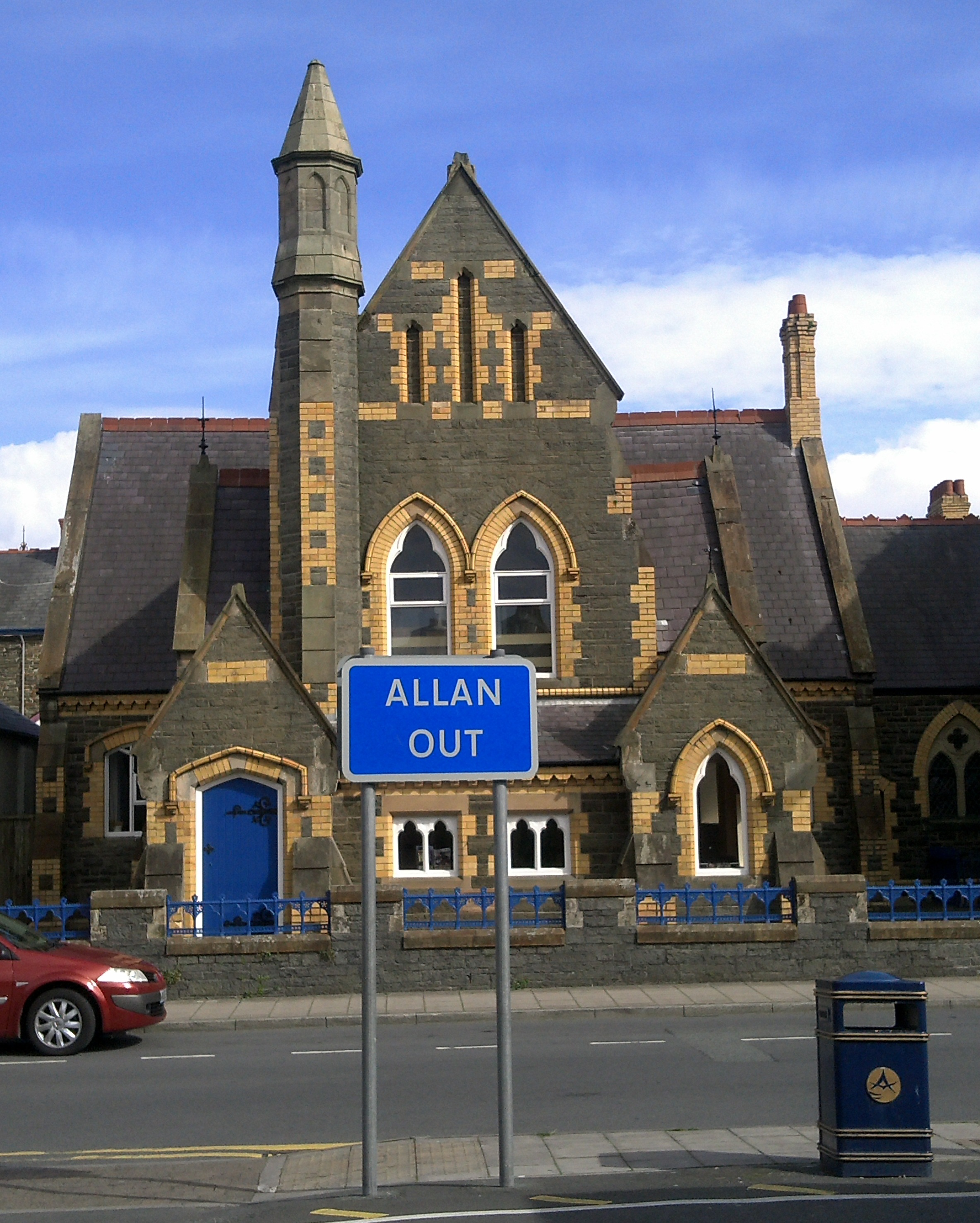
Poor Allan!

In an attempt to freshen up the local pub, the new landlord has misguidedly brought in musicians on Saturday nights. I fell victim to this last week, when I had to order some complicated drinks, standing right in front of a Rod Stewart impersonator, who in turn was standing in front of a disproportionately large sound system.

No disrespect to Rod, but he has never been a favourite and I am proud to say I have none of his work in my possession, not even on the 80s compilation album I won in the Secret Santa last year, nor even on old DC90 cassettes in the attic. (Regular readers will anyway know that I have destroyed all these).

The effect of standing in front of a wall of sound is disorientating. Look what happened to Phil Spector, for instance. This is why I didn’t immediately notice the bar lady had made a mistake with the change, in my favour. The four drinks I finally ordered – using mime – came to £12.60. I gave the bar lady a twenty pound note and she gave me £12.60 change. I presume she chose the wrong one of the two numbers on the till display.

I soon realised the mistake, but here was a minor ethical dilemma: since the lady’s boss is working right next to her, will it cause her harm if I point out the error? But then again, should the boss not be aware that his employee might be prone to error under harsh environmental conditions?

I made the refund of £5.20 as discreetly as I could during the intro to Maggie May.

The point is, the cost of being an honest man, this week, is higher than usual, but is still only £5.20.

Most weeks there are no opportunities for honesty or dishonesty, where prices are set on barcodes and payments made electronically. It doesn’t cost much to be honest. And it also doesn’t cost much to be generous.

I once read an article by psychologist Dorothy Rowe, asserting that giving someone a present could be quite an aggressive act. In particular it could represent an intrusion into the person’s life and an obligation on them to return the favour at some point. It’s a little bit like a bribe, in creating a sense of unease for the recipient. Even though we live in the age of sellotape, gifts often have strings attached.

I’ve used this notion as an excuse for not sending Christmas or birthday cards for the last few decades. I have other reasons for this, such as not wanting to support a pointless cards and gift shop industry – maybe I am just uneasy about the name Clinton’s – but the real reason is that it is a laborious task that we could all do without.

On reflection I have to admit this act of scroogism has been misguided. The real cost of being a generous person is actually quite low in the modern world. The opportunities for day to day acts of generosity are limited, boiling down mainly to paying for drinks. And even these acts are often rewarded by reciprocation, or retaliation.

Obviously the situation is more difficult when it comes to charitable giving, or taxation, as this is sometimes called. And there are similar ethical arguments about distorting the power relationships between rich and poor countries.

Dorothy Rowe also said: ‘In mental distress the real problem always arises from some kind of threat or insult to the sense of being a person. This can be hard to uncover, and difficult to ameliorate. It is never amenable to a quick fix’. Both giving and receiving charity is a lot more complicated than it first seems.

But there is a clear win/win with charities, where they will accept a lot of the stuff you don’t need or want, and will even come and take it away. They get richer and you get richer inside. Thank you the British Heart Foundation for taking my stuff and making me a better person.

There is a little bag of nuts and bolts to put it back together, taped to a leg, but there are no strings attached.

29. Growing cress heads for no particular reason.

Image

This morning, the council came to collect the 3 bins I leave outside on Tuesday mornings, and I think they have brought another new bin – to dump your Guilt into. So much better to have it safely disposed of rather than giving it to another person. Guilt just doesn’t compost down.

I’m hoping for more metaphorical bins in the future, now that local government has taken over public health. In hospitals we have sharps containers coloured yellow, which is a safe place to put barbed comments.

Today, just as The Times reported that health checks for the over 40s were a complete waste of money, I received a letter from my local surgery asking me to come in for a health check with the practice nurse.

Though I am a supporter of evidence-based medicine, it took me less than a minute to make myself an appointment. I am also a hypochondriac.

To be honest, evidence-based decision making can conflict with common sense. Everyone knows that a stitch in time saves nine. As far as I know, there is no equal and opposite proverb to cancel this one out. My strict adherence to the evidence based approach probably doesn’t go much deeper than the occasional casting of nasturtiums on the alternative sector.

So many decisions we have to make are based on intuition rather than double blind randomised control trials. For instance, choosing what we eat. I start with the null hypothesis as follows: nothing that you eat – within reason – makes any difference to you. There are occasional bits of conflicting evidence, but in general nothing to disprove the hypothesis, which is based on the sound principle that the human body is a chemical factory.

I have yet to see any convincing evidence for the five fruits a day policy, nor the arbitrary alcohol consumption limit of 21 or 28 units per week. Which leaves me with a bit of a dilemma over what to tell the practice nurse about my lifestyle. I don’t want to come across as a fanatic of any kind. Like an NHS Trust, or Everton FC, its safest to be half way up the league table rather than at the top or bottom. But there is no real ‘gold standard test’ for lifestyle to pass or fail, apart from a few aspects of what we consume.

Like everyone, I find it very difficult to explain the increasing numbers of people who suffer with obesity. I watched a recent documentary attributing this to the corn syrup industry, but was not entirely convinced. Maybe it is a virus or other infection we have yet to identify. The concept of ‘food addiction’ has gained some adherents, certain products turning out to be incredibly ‘more-ish’, such as chocolate, pizza and ice cream.

Since obesity has increased rapidly over the last 30 years, we could attribute it to any or all of the social trends of the last few decades, from computer ownership to the decline of progressive rock. Psychiatrists have made their own contribution, in the form of atypical antipsychotics, which have doubtless added to the lard mountain.

My own hypothesis – no, really my own intuition, is that obesity is inversely related to pottering.

Pottering has been defined as: ‘to busy oneself in a desultory though agreeable manner’. Pottering behaviour should be largely unplanned, enjoyable, unhurried and diverse. Crucially, pottering does not derive from a work ethic, but from a natural tendency to interact with one’s environment. It’s roots are probably in thousands of years of hunting and gathering.

The habit of pottering has been hard hit by lifestyle changes toward electronic media and industrialisation, and away from localism, arts, crafts, hobbies, games and sport. Home made food is fast going the way of home made clothes.

What is surprising is the lack of a response, either from mental health services or the pharmaceutical industry, to the obesity epidemic. Surprisingly, there is a lack of evidence about what treatment to offer.

As anyone knows who has been on one of those treadmills with a calorie counter, you have to run about a thousand miles to counteract the effects of one Mars Bar. So its hard to see how increased activity alone could be the answer.

CBT does embrace ‘behavioural activation’ and ‘activity scheduling’ and mental health services do employ a small number of occupational therapists. We could begin to rehabilitate a pottering based lifestyle, but we need badly to find a new word for ‘potter’. It’s just too old-bloke-in-a-shed-based. And we need new pottering clothes, instead of tracky-bottoms and cardigans.

So here’s my five point plan:

Pottering should be re-named Freestyle Active Behaviour – fabbing, for short.

Village Shows to be re-named ‘Fabathons’

Stella McCartney / Adidas to bring out a new fabbing range, using a tweed / kevlar fabric mix.

A new talent show, called Britain’s got Knitting.

A new ‘more modern’ penthalon event, consisting of: repairing a stuck window, making a cake, learning the saxophone, growing cress in old eggshells with a face drawn on them and visiting granny.

(Yours may be different).

So far, none of this is evidence based, but neither, it seems, is going to the health centre for a check-up.

28. Removing labels, without toxic chemical solutions.

Image

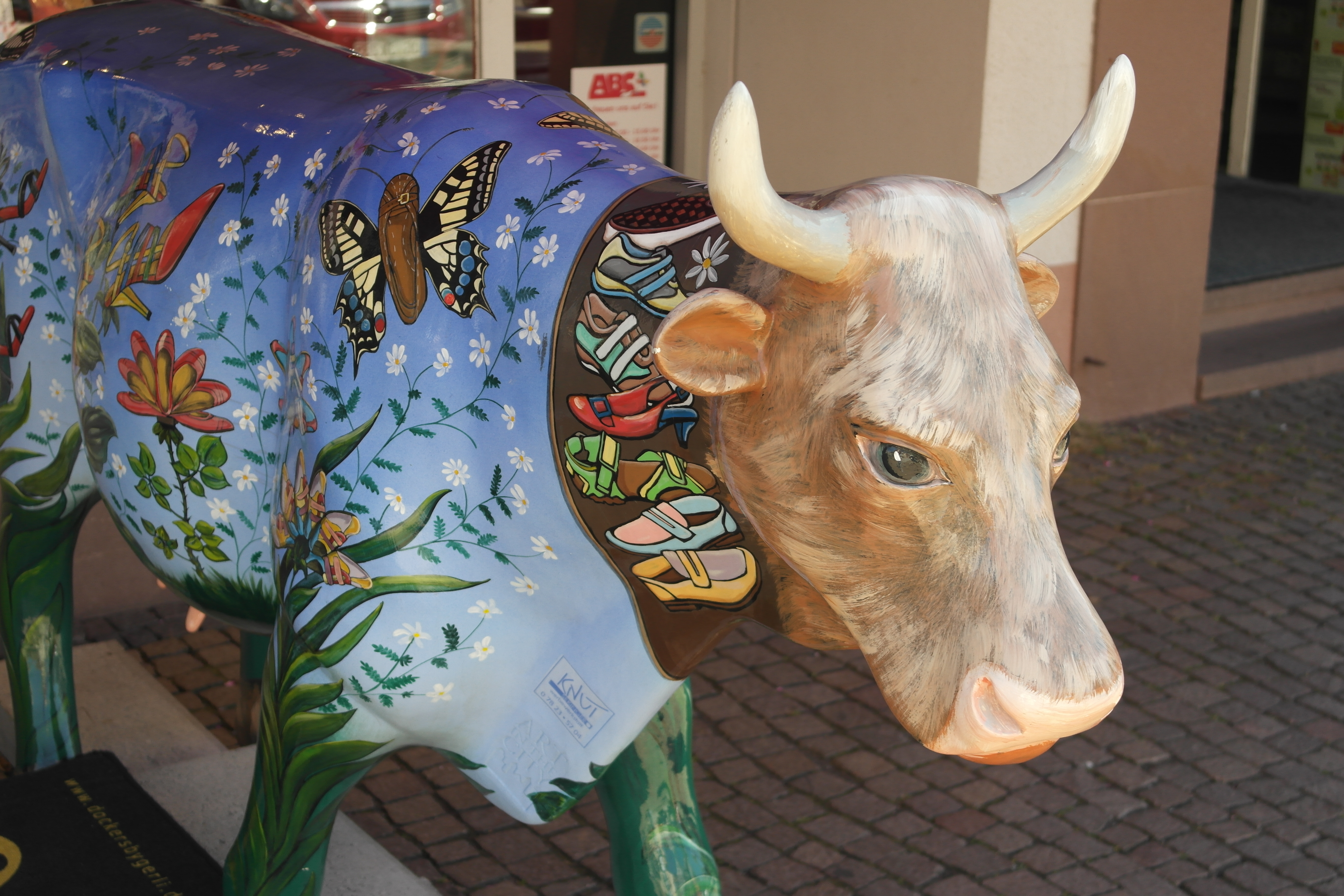
Cows are basically hippies.

Who are those people hiding behind the boiler house, just outside the strict boundary of the Foundation Trust premises? Are they common or garden smokers? Are they A and E attenders, who have finished all the books they brought to read while they wait? Or are they escaped but tagged dementia patients?

If you go near them they shy away, like geese, toward a small clutch of untidily parked Fiats and Volvos. Finally, I realise who they are – they are my colleagues who work in community psychiatry.

They are hiding for a good reason though. People are pursuing them, ‘wanting a diagnosis’. And those people are angry.

The history of mental health tends to characterise psychiatrists as predatory. The accepted wisdom is that psychiatrists are part of the forces of social control. Their traditional prey, according to folklore, is a harmless eccentric or political dissident. Their modus operandi is to label these folk with an invented illness concept in order to render them powerless in the eyes of society and the law, so as to drug them or lock them up or both. Such is the myth of ‘anti-psychiatry’.

People used to fear the psychiatrist like a 70s DJ fears the child protection team. But now the tables are turned. Some people are desperate to get labelled as mentally ill. None of my colleagues know why, but they mutter about the internet, celebrities and the drug companies, not to mention the benefits system.

The world seems to have turned upside down, like Twelfth Night. Not as regards boys playing women on stage whose characters are pretending to be men. Rather, more in terms of poacher turning game-keeper.

The story usually starts this way. A short GP letter ending with the words ‘this man thinks he has bipolar disorder, please do the needful’. A patient with a large bundle of papers downloaded from the net. Stating that the description of bipolar disorder fits him perfectly right down to the last semi colon.

The psychiatrist tries to explain that diagnoses are merely conventions about what to call things, that in the UK at least people are rather conservative about the use of diagnostic labels, that labels in their own right can become dangerous and lead to people thinking of themselves in an unhelpful way, even getting stuck in a sick role and benefits trap.

That he doesn’t really seem to have bipolar disorder, at least according to the absurdly narrow conventional diagnostic system that bow tie wearing people in Geneva have written on our behalf in quill pen on parchment.

Finally the meeting ends under a cloud, unless the psychiatrist gives in and recommends a tablet with Q or Z in its name.

It’s tempting to blame our cousins in the US and /or big pharma. There is money to be made from atypical antipsychotics, but only if a group of people can be convinced they need to take them. I have not tried this (Your Honour), but I’m pretty sure atypical antipsychotics and mood stabilisers have practically no street value.

Last time I went to the US I saw some hilarious direct to public advertising for these substances, where the baritone disclaimer tag – ‘may cause impotence, heart failure, convulsions coma and sudden death, take with caution’ – was longer than the advert itself.

I’m not sure why labels are fashionable now. Labelling theory was all the rage in the 1970s and we were all taught not to label people and put them in pigeon holes. Perhaps it started with designer clothes, where the Nike swoosh added $20 to the value of a $2 tee shirt. People who took labelling theory too literally even got tattoos. When we make a diagnosis, we always play it down – we say it’s just a name people give to this type of problem area.

My proposal is that we use a barcode instead. This is a cheap shot, but I think  one or two of my colleagues would be happy to advise people where to stick it.