13. Less is More, more or less.

Image

Another shop you don’t need to go in.

A sunny, windy Saturday morning. A queue of cars waits to turn right into a muddy field, creating a hold up on the A60. Each car is full of junk. The people from the cars unload their junk onto trestle tables and tarpaulins. People exchange items of junk and money. This is not a film crew re-making ‘Grapes of Wrath’ on location. It is a car boot sale, and it’s a tragedy.

You have a car that is 99.9% working. The part that isn’t working is a warning light that comes on when it shouldn’t. Ironically, the warning light is a faulty alarm, giving warning only of its own falsehood, but it is enough to fail the MOT test and render the car worthless.

The car must be recycled, and it is not a tragedy. Gordon Brown used to pay people to dispose of cars, successfully stimulating the Korean economy. For a while cars could be handed in for a bounty, like coyote pelts.

In our town centres, piles of junk are decanted into vacant shops under the guise of charities and sold on for slightly more than you might pay at Primark, if only you weren’t phobic and dared go in.

No disrespect to charities. It is just a pity that they have been sucked into the landfill business.

One of the best things you can do to help yourself is to throw away half your stuff. So, lots of lifestyle gurus have latched on to ‘decluttering’.

However, as Tony Blair didn’t say, its not enough just to fight clutter – we have to fight the causes of clutter also, otherwise it will merely return in a new and terrible form.

Why do we have so much tat?

The economic answer is that our society values economic growth above all other measures of civilisation.

The evolutionary answer is that for most of human existence it has really paid to hoard stuff away. Our grandparents, who lived through wars, failed to adapt to the disposable society and proved unable to dispose of their empty yogurt pots and biscuit tins. Many of them were killed in hoarded item landslides.

The psychodynamic answer is that we invest emotion in objects, so that they acquire a sentimental value. Under this heading we include whatever defence mechanism is responsible for Collecting Things.

The cognitive answer is that we hate waste. In particular we hate to lose stuff that we already have.

I don’t doubt for a moment that already there are huge land fill sites, and that a lot of land fill should really be recycled, and that land fill is problematic from an environmental point of view.

It’s just that, judging by the state of many people’s houses and sheds, the land fill sites should be so much bigger. Somewhere around the size of Bedfordshire, as a rough estimate.

Borrowing a bit from Escape from New York, why not declare an area – such as Bedfordshire – an official landfill site and build a tall fence around it? Gradually, Bedfordshire would grow taller and mountainous and probably beautiful in due course – if you could find it.

I would like to see a huge re-cycling plant for vinyl records where they can be turned into food by a special fungus.

I’d like to see all the remaining cathode ray televisions collected, melted into a giant saucepan and made into comfy chairs .

And all the books – after digitising – can be made into a new Hadrian’s bookcase along the entire Scottish border.

All the coins and money could be melted down and made into the kind of shiny foil clothing people in the 1960s imagined we would all be wearing by now.

And most of all, I’d like to see all those cardboard crowns that litter the window sills in Burger King, collected, pulped and made back into trees.

Architect and designer Mies Van der Rohe is credited with the saying ‘Less is More’. He would have been a little disappointed to find so little evidence of minimalism or even room to swing cats in our houses today. Though modernists would probably have expected people to swing their cats in verdant communal parkland between the high rise blocks, or in high quality piazza spaces, rather than indoors.

Some architects have even gone as far as to question whether cats need to be swung at all.

Digitisation seems to give us the opportunity to miniaturise the storage of all our music, video, art and documents to a card the size of a postage stamp. Using ‘the cloud’, we do not even need the little card any more.

Sadly, one has the impression that the space vacated by digitising records, books and pictures will quickly be filled by gym equipment and antiques.

It is tempting to hold the media – particularly the Sunday Times – responsible for the clutter epidemic. For instance, yesterday, the paper carried an article about buying a Victorian bidet, allegedly haunted, for £325. ‘Its sad to part with it,’ the article concluded, ‘but I’m downsizing’. What, do without a bidet! However will you manage?

In truth the blame lies closer to home. Yes, psychiatrists are to blame for the landfill explosion and thus, soon, losing one of our treasured counties. This is the reason:

Some how or other, psychiatrists have convinced the world that tidy people have something wrong with them. Tidy people are called ‘anankastic’, which sounds suspiciously like ‘antichrist’.

The word ‘anankastic’ means something similar to obsessive.

Psychiatrists have not explained very well that the anankastic personality is not the same thing at all as obsessive compulsive disorder.

Implicit in OCD is the acceptance that the thinking and behaviour is silly. Whereas the anankastic person does not think there is anything wrong with what he regards as being extremely well organised.

Psychiatrists have hinted that tidy people are repressed in some way. Something to do with anal retentiveness.

Tidy people will never be competent painters, jazz musicians or good at sex.

Look at how they are portrayed in movies and television. Radar, from Mash; Dwight, from The Office; Mr Gradgrind, from Hard Times.

Psychiatrists have been generating bad press for tidy people for over a century. There is no range of perfume called Anankast, not even in Superdrug.

There is no Anankastics charity shop in town, though by now  it would have been renamed Spick and Span, to reduce stigma.

In the Mr Men series – pretty much the bible when it comes to personality classification – Mr Neat and Mr Tidy are only minor characters in the book devoted to Mr Messy.

Looking back to the late 19th / early 20th century context, when the analysts were most active, perhaps this is more understandable.

Freud and his colleagues had no PIN numbers to remember, no car insurance to renew, no DVDs to take back to the library.

They did not have to use mobile phones to pay for parking. They did not even have land lines. They had no need to keep a range of spare batteries, chargers and light bulbs, or gas cartridges for their Braun Independent beard curlers.

They had no need to use their Tesco voucher within a specific 7 day window.

Freud never had to find a 13mm ring spanner or a 30 amp fuse.

He never had to worry that Jung had hacked his facebook page.

Today’s world is so different. The need for organisation is so acute some households should think about appointing their own executive boards, complete with Venn diagrams and Mission Statements.

As a psychiatrist I feel guilty about what we have done to besmirch tidy folk, and offer the following solution:

Since we have invested a lot of emotion in objects, we cannot simply dispose of them as the de-cluttering guru suggests.

No, each item really needs a decent send- off, with a few kind words and reprisal of happy memories. This way the grief can be channelled and worked through.

The actual process would be quite like Antiques Road Show, but featuring a conveyor belt and incinerator.

That way Bedfordshire can be saved.
12. Grappling with the wrong trousers.

Image

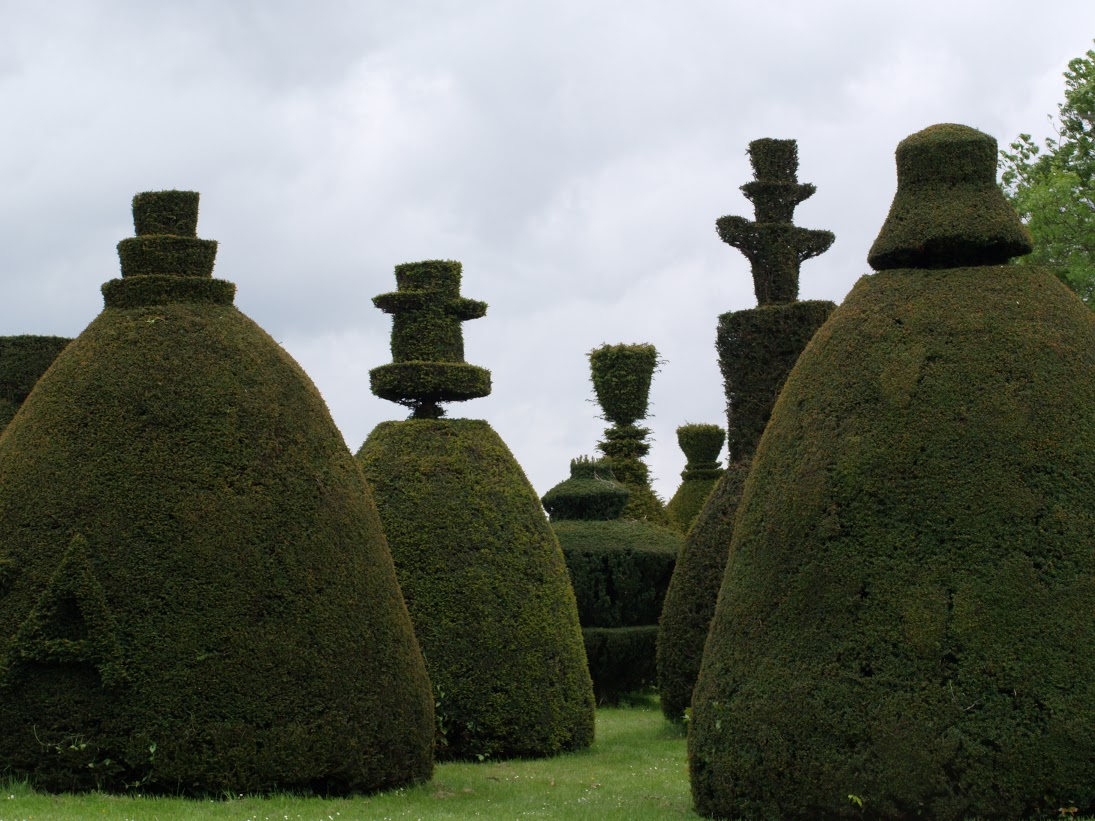
What the well dressed tree is wearing this year.

A procession of girls moves jauntily down Oxford Street. Each girl carries an identical Gap carrier bag and wears brightly coloured skinny trousers. The legwear ranges through many colours and materials – there are 23 different types in the shop.

It took me a while to realise it was an advertising event. Initially I just assumed that ‘Jeggings’ had really taken London by storm, either that or Mayor Boris had passed a new bye-law banning big trousers.

How tempting was it to join that line? So called ‘modelling’ is one of the strongest determinants of human behaviour. But by the time I had got into those trousers the line would have reached Tottenham Court Road and disappeared.

Some animals are hard-wired to behave exactly the same as their neighbour, making possible formations like shoals of fish and flocks of starlings. Someone explained to me that starlings and fish do not need to be particularly clever to pull off this trick. All they need is the instruction ‘do the same as the one next to you’.

Humans like to create this effect too, in Busby Berkely movies for instance or the Red Arrows air display team.

We are used to seeing similarly clad people in other contexts, such as children in school uniform and North Koreans in boiler suits. We like to be wearing the right things.

A demonstration of modelling behaviour is one of many attractions to be found in the local shopping centre. Since social services closed all the day care facilities, shopping malls and libraries are the best places to hang out to keep warm.

Compared with the library, the shopping centre is quieter and more studious in atmosphere. Also there are more books to read.

This part is vital – before you visit the shopping centre – establish the goal. On this occasion the target is: 1.To experience the sensation of being out of place; 2. Not to respond to this sensation by buying something.

For your day out, start by re-framing the shopping centre as a kind of art gallery.

All the familiar shops / exhibits are there (not you Woolworths). There are lots of things you can do free: try out the mattresses in John Lewis, try on lots of jeggings, use the computers in PC world to look up reviews on the same model you are trying, so you can spurn the attentions of the salesperson, use the cameras to take pictures of other people testing cameras on you, try on tester perfumes and marvel at their interesting names.

Or go into Superdrug, and ask for a super drug, such as beta interferon. Ask why they call themselves Superdrug when the best drug they have is ibuprofen.

My hypothesis is that shopping behaviour is a sublimated form of hunting, or at least gathering. The important thing to remember is that all the fun is in the hunt, and once the quarry is cornered then the fun is over. It is all about the expectation of reward – pulling the trigger on a purchase is entirely unnecessary.

Buying something is like coming home from a day’s fishing with a small trout you could have bought in Morrison’s for £3. The trout’s dead eyes communicate to you: So what?

You should have thrown it back in.

Things are not always what they seem, and shopping malls allegedly have a purpose beyond amusement or art.

Shopping malls are meant to part people with their money, rather than act as a recreational facility for escaped psychiatrists. The architects and designers have put in some subtle influences to work on your mind.

One of these is the so-called ‘Gruen Transfer’. This is a place, within the centre, that is designed to disorientate people, by using a combination of unusual shapes and textures and lighting, often accompanied by Muzak.

Apparently the effect is similar to a unit of alcohol or other anxiolytic. People slow down through the Transfer, and co-incidentally this is where the higher priced items are located.

I am not convinced that there is a strong evidence base for the Gruen Transfer, or other devices perpetrated by the advertising industry. Certain low budget shops seem to generate the same emotional disruption.

The oddly named B and M store, sometimes sub-headed ‘Bargain Madness’ can induce such profound despair that it could probably be used as a testing lab for possible new antidepressant compounds. Here the store has been less discreet about its use of disorientation – the clue perhaps is in the word ‘madness’.

Agoraphobics, who tend to have panic attacks in shops, seem to dislike places where there is no clear sightline to the exit. The entrapment induces a sense of doom. Though Morrison’s have an excellent range of vegetables, the way they are laid out can set a person on edge.

Individually, fruit and veg items are not threatening, but when they gang up like this, piled high on all sides, it creates a kind of jungle effect reminiscent of Apocalypse Now.

Another piece of (probably bogus) psychology I have read, relating to supermarkets, is that people have an ‘innate tendency’ to gravitate anti – clockwise. This led to supermarkets placing their main entrances on the right hand side of the shop.

If it was on the left, people would just drift further leftwards into the vegetables section and beach themselves in the courgettes.

Staff would come out to spin customers into the next section, like fairground attendants on a waltzer.

I wonder if it is different in the southern hemisphere, or for the left handed?

It is perhaps a little frightening to think that someone has manipulated the environment in such a way that you have unwittingly bought yourself an expensive, weirdly named perfume.

I am not just referring to ‘Obsession’. What about ‘Hypnotic Poison’, ‘Crazy in Love’ and ‘Thallium’? The internet tells me there is a perfume called M-75, which is the name of the rocket Hamas fires into Israel.

Perfumes, like the Gruen transfer, and the clockwise supermarket, are designed to create an altered state, but what exactly is the state of mind called? In the case of perfume, if it isn’t the name, it is probably solvent intoxication.

Or perhaps it is the feeling of being out of one’s element, or out of step with others. A warning that you are on unfamiliar territory.

Behaviourally, it is supposed to trigger a purchase decision.

The purchase decision is a learned behaviour that creates comfort, possibly by stimulating the ‘anticipation of reward’ section of the mind. The unsettled feeling is briefly quelled, only to be replaced by regret that you have suddenly become poorer and the shop richer.

How comforting is it to be in a herd of people all dressed appropriately and behaving in the same way? Enough people must love formations of soldiers to make it worthwhile dressing thousands of people this way and arranging them in large city parks. Everyone seemed to love the Olympic opening ceremonies.

Lots of people like to be in queues, and will probably join the end of any queue if they find one. If other people are after something, instinct says there is probably something there to have.

There is often not much to be found at the end of a motorway queue, which is formed by the pulsatile dynamics of traffic flow rather than obstacles, but the queuing instinct has evolved over the lengthy period of human history before tarmac and has not yet abated.

The instinct to behave like the person to the left of you is deeply rooted and possibly imprinted at an early age. Experiencing the feeling of being in the wrong place or in the wrong outfit is deeply discomforting.

Many people hate the moment in a restaurant when they have to set out to find the toilets. The fear is not that they will never find the toilet, but rather they will make them-self look foolish to others by dithering round the restaurant.

That is why I think it is a very tall order for CBT to try and get people to fight the idea that it matters a lot what other people think of you.

In the golden era of CBT, pioneers tried to attack this set of cognitions using grand behavioural tasks.

Albert Ellis, pioneer of CBT and our hero, in his list of the top 12 Irrational Ideas, included this as number one:

‘the idea that it is a dire necessity for an adult human being to be loved or approved by virtually every significant other person in his community’

Loved? Maybe not. Approved? Maybe not? But thought to be wearing the wrong trousers? I’m afraid it’s a deal breaker.

Maybe it shouldn’t matter. Maybe not as much. Certainly try and test how much it matters. Certainly try and get it back into proportion.

But it just does.

That leaves us with a burning question. If it is so important to blend in with everyone, why do certain people do everything they can to attract attention to themselves? For instance by dying their hair a florescent colour?

This is perhaps the exception that proves the rule, since these people are relatively few in number, especially in professional groups like accountants or dentists.

Several answers to this – you choose the one you like best:

So that they are visible in traffic?

Reaction to feeling left out or insecure?

Mating ritual?

Group or gang identity?

Genuine lack of insight about how they look?

They are doing a CBT assignment to reduce the irrational cognition that it matters what people think about them?

11. Tackling hooligans with a simple checklist.

Image

Your quiet reflections while driving to work are rudely interrupted by an idiot screaming past you in a small hatchback, overtaking the whole line of traffic, narrowly squeezing back in, missing a Portuguese pig lorry by inches.

Hooligan.

Your colleague interrupts his outpatient clinic with a brief diversion onto the internet only to suddenly find he has bought a 1995 Harley Davidson Fat Boy on ebay.

Hooligan.

Such events interrupt our attempts to look at the world as a sensible and logical place that only needs a few tweaks to make it perfect. The mind tends to create a fantasy world to live in more comfortably, and this explains dogs, fluffy toys, scented candles and soap on a rope.

Plenty of people will help us build the world of our dreams, not least the media.

Imagine the mind as a daily newspaper. Though the mind probably does not have an editor in chief, it has an editorial committee made up of opinionated people like taxi drivers and Irish nuns.

Yours may be different.

Plenty of space is devoted to current events, but even more is devoted to gossip and scandal. Quite a bit is devoted to food, clothes and the pursuit of food and clothes. The sports and health pages are also mainly about food and clothes.

Depending on the make – up of the committee, the mind can create very different sorts of world view. The Daily Mail mind for instance is quite suspicious. The Guardian mind feels it is being exploited. And the Sun mind is interested in sex and crime.

Since the concept of Depression as an illness calls for a change in a person’s usual world view, we have to imagine an editorial committee whose usual members – Fiona Bruce, Jeremy Vine and Hugh Grant – have been replaced by Leonard Cohen, Salvador Dali and Rev Ian Paisley.

Suddenly the world is transformed; distinctly darker, and quite unbalanced. Instead of Animal Hospital, as a change to a our usual programs, we now have live cockfighting from Wolverhampton.

CBT is an attempt to create a new committee instead of doom-mongers. The idea is to cut out the stuff about war and pestilence and put in more restaurant reviews.

It is tempting to think that resetting the mind’s information filtering system can bring about a more positive outlook, and this in turn could brighten the mood.

An old fashioned CBT technique, I think it was called Mastery of Pleasure, (or was that a sex manual?) involved creating a written timetable of your whole week, giving each activity a score between 1 and 10 depending on how much enjoyment it generated.

For example, watching Manchester City would score 6, while loading the dishwasher would score 7. This created a clear overview of the week, both in terms of quantity and quality of time.

Then, by substituting more dishwasher loading for football watching, your week would be improved, and more importantly, you would have disproved the notion that you had no control over how you felt.

It’s lucky that Mastery of Pleasure (or was it a postgraduate degree?) was not widely disseminated, as I suspect it is a technique that could easily turn our world upside down.

Imagine, calibrating everything, and finding, as we would, that 90% of our time is wasted on completely unnecessary items.

Luckily, Mastery of Pleasure (or was it a porn novel?) teaches people to rate their activities for pleasurableness rather than usefulness or necessity. Nevertheless, it calls upon them to re-evaluate what they find pleasurable, and if possible, substitute more pleasurable activities into the schedule, so that the whole average pleasure rating starts to increase.

There is some very interesting psychology involved in how people summarise pleasurable experiences, but one example is the case of the CD with a scratch on it about a minute before the end.

Has the scratch ruined the whole experience? What about the previous 49 minutes of pristine music?

Pleasure does not work like kilowatt hours, where we simply multiply power and time to sum up the energy used. Pleasure does not total up like the area under a curve on a graph, because the rating is given retrospectively from memory.

We also know that the beginning and the end of experiences carry more weight than the middle bits, which is why brevity is the soul of wit and why ‘The Archers,’ even at 12 minutes long, can get away with an absence of dramatic content between minutes 2 and 11.

What are the implications of moving the calibration system for pleasure from the automatic to the reflective mind? The danger is that certain activities may face a downgraded credit rating.

Some activities are probably best left to the automatic part of the mind. We could include sex, jazz and the tennis serve, which can all be affected by performance anxiety.

Once you start to rate pleasure, you may risk killing it.

I have already commented on the illusory joy of pets. But what about clothes and the pursuit of clothes, the activity called shopping? What about old stalwarts, like watercolour painting, banjo playing or golf?

What about photography, now that it is all digital? Techniques like solarisation and bas relief, that in the old days needed hours of darkroom work, involved getting contact dermatitis from putting your hands in developer, ruined your carpets etc, now can be achieved by moving a slider on a computer screen.

It so easy to make absolutely beautiful artwork using Photoshop or similar, that, suddenly, it loses its appeal totally. Such is art. It appears to need ingredients of toil and hardship to make it valid.

The notion of suffering being necessary to bring any value to an experience is borrowed a bit from religion, and also from the series Fame. Work is the price you pay. No pain no gain etc.

But how can we include items like suffering and pain in our Mastery of Pleasure (or was it a pirate ship?) timetable? Would it do suffering justice to simply rate it as zero?

Religions are always having to try and explain why terrible things happen, and this must be a massive burden for religious professionals. Why did God allow David Bowie to make the Tin Machine albums for instance?

Along the same lines, and probably to answer the same questions – only about world war and genocide – Freud developed the notion that people had a kind of death instinct.

Possibly this inspired Michael Winner to make the Death Wish movies. Though Freud would probably have put more effort into developing the main character, Paul Kersey, played by Charles Bronson.

As well as being a vigilante, Kersey was an architect. His building designs are only shown briefly, but he appears to encourage clients to save a lot of money by using a cheap building method just a little embellished by post-modern decoration.

These short cuts mirrored the corner cutting he brought to the criminal justice system by acting as police, judge and executioner all at once. I do hope Death Wish gets re-made with a lot more architectural referencing (see Point Blank).

Kersey has to choose between a civilised, measured and incremental approach to justice, using proper channels, or facing his hooligans head on and shooting them.

It is difficult to accommodate a drive toward death and destruction within a model that attempts to micro-manage pleasure activities, unless we just accept it as an elephant in the room we have to work round, covering it with a floral throw and scatter cushions.

Unless we try and accommodate destructiveness as a more understandable behaviour.

Kersey, like many other movie heroes, became a hooligan himself, but the audiences tended to view him as a necessary evil. People seem to want to subvert the usual processes of justice every now and again by acting completely out of character and possibly violently.

Kersey’s violence was initially triggered by revenge, but turned into a social mechanism, like pest control.

Many acts of seemingly random violence, such as ‘Running Amok’, have been construed as social mechanisms that redress some long lasting injustice.

In updating the psychoanalytic model of the mind, the ‘object relations school’ coined a character called the ‘internal saboteur’.

As far as I can understand it, object relations concerns itself with the very primitive mind and its development in the first few months of infancy. This is before the time when a person knows that he is a separate person and can correctly assign his experiences to inside the self or outside it. Conflict can occur in processing the aggression / guilt feedback mechanism. The object relations school seemed to focus a lot on breasts, so their world view was somewhere between the Guardian and the Sun.

I have trouble understanding object relations theory (you can tell), but we need to somehow include in our model of the mind a person – like Dr Zachery Smith in Lost in Space – who works behind the scenes to sabotage the ship.

(Or, even more evil, the Ian Holm character, Ash, in Alien – why is it that internal saboteurs are found mainly on space ships?).

Up to a point self – destructiveness can be explained as an attempt to get back at others or redress the balance in a power relationship. Sometimes it may be better to explain it as a short cut in making changes happen quickly.

I am reminded of recent attempts to fix small electrical appliances such as toasters. There comes a point where the attempted repair turns into a post mortem, the turning point being recognition that the appliance was never designed to – and cannot – be disassembled.

Finally, pulling the two halves of toaster apart with bare hands or hitting it repeatedly with a rubber hammer bring about the desired outcome of an end to the toaster issue. A colleague tells me that this happens a lot with motorcycle repairs and is known as ‘the berserker phase’. Luckily, he is not a surgeon.

In fact people who harm themselves by cutting make the observation that the act focuses and resolves a moment of intense mental turmoil.

Not recommended and foolish, both for toasters and people.

Destroying motorcycles is probably a good idea though, in the wider scheme of things. In fact there is quite a lot of redundant junk and clutter in most people’s houses that is crying out for some rational hooliganism. If you have a cathode ray tube television for instance, you have probably wondered from time to time about throwing it out of the window. I worry about you if you haven’t.

Which brings us back to the problem of calibration of emotional states. It is very difficult to find the right frame of reference. If we subjected many activities to scrupulous measurement, we would have to categorise them as ridiculous and unnecessary, like carrot shaped trousers.

In using CBT to re-evaluate and re-schedule activities, we begin to ask ourselves some difficult questions. Why does everyone we know seem to spend all day looking at a computer screen? Aren’t they supposed to be an engineer / teacher /artist?

If they realised how they now spend their time, might they be tempted to destroy the computer with Greek fire?

And if we had to carry out a Mastery of Pleasure (or was it a Waddington’s board game?) exercise on, say, running a marathon, or digging the garden, or training a parrot to ride a unicycle, how would we measure the area under the curve?

When we encounter a hooligan in our mind there are several ways we can react:

Hug them (as recommended by the Prime Minister)

Shoot them immediately (as recommended by Michael Winner)

Run away

Using a wider frame of reference, attempt to understand the hooligan

Attempt to slowly reform the hooligan using metalwork and batique

Cover them with a floral throw and scatter cushions

Play them some Tin Machine

Depending on your editorial panel, you can choose any of the above options.

(Or was it a steam locomotive?)

10. Insuring the uninsurable.

ImagePendleton’s headquarters.

Might you get depressed one day?

If you answer yes to any of the following questions, this is quite likely:

Do you tend to play a Party App on your computer rather than attending a real party? Do you support a perennially unsuccessful football team? Has everyone in your extended family been treated for depression? Do you regard your pet snake as the best friend you have ever had?  Have you been depressed every single day of your life so far?

Depression is likely to affect a sizable minority of us at some point. I’m skeptical of surveys that tend to show practically everyone in some areas (Slough?) is suffering from depression, but suffice it to say it is a major common condition on a par with blood pressure or diabetes. So, is it worth insuring yourself against getting depressed? There are several reasons why not, at least in terms of popping into Swinton or calling Direct Line.

When we consider insurance we are embarking on what is now grandly termed Risk Management. By this is meant that we need to look into the possible future and explore some hypothetical events, such as burglary or fire. Whether we might get ill or not is rather hard to predict. And also it is something we are most reluctant to think about. Some people do take out health insurance, but most of us do not.  Perhaps the main barrier is thinking that it will never happen to us.

And people are right to be skeptical about the insurance industry. Everyday someone texts me to urge me to claim back mis-sold PPI. Please can we go back to Nigerian banking scams? I have never seen a specific Mental Health Insurance Policy, though some aspects of mental health may be included within a wider health policy. Why?

First – insurers tend to specialize in more concrete types of illness like cancer or heart disease. They like to know you have not had previous episodes of the same illness. They like to be able to say categorically whether the illness has happened or not, whereas a diagnosis of depression often falls within a grey area.

Second – depression is so common that the premiums would likely be very high and riddled with snags and get out clauses.

And third – it’s not as though you can really buy a guaranteed effective treatment with your payout. The treatment of depression is as much a lottery as selecting an appropriate insurance policy.

A policy might pay out to protect your income if you cannot work due to depression. But this can lead to a horrible situation where a person is locked in an insurance- perpetuated sick role, much like the benefits trap, where it makes sense financially to continue to act like a depressed person.

But there are other ways of insuring against depression, without troubling the man from the Pru, or his modern day equivalent, lurking in the dark recesses of a Sunderland call centre. (Just redressing the north south balance, having mentioned Slough earlier on.)

Be Prepared, as Baden Powell advised. I am sure he meant this in a specific and practical way, such as keeping a spare credit card in your sock. Preparing for very unlikely events, such as a Harlem Shake breaking out in the library, or the invention of punk rock, is beyond the scope of ordinary scouting.

Can we prepare for Depression? I am referring to getting the roof of the house in order before the rain comes, as David Cameron would probably put it.

When depression hits, the mental functioning is decreased in certain key areas such as reduced concentration and energy levels. That means, if you are stretched to function properly even when you are well, then when you get depressed you may go under. That will lead to a vicious circle of more stress caused by failing to keep up, leading to worsening depression. Finally comes a crunch point where things officially go to Hell and High Wycombe.

That means if you are well at present you should be operating with spare capacity. What does that mean? I’m not your mum, but ideally:

You should keep at least a million pounds in your current account.

OK, that’s stupid, but: You should have a system for organizing and dealing with any paperwork including financial stuff. You should know where everything important is, like your birth certificate and passport. In particular some way of keeping the electronic passwords you need for online banking etc. You will never remember them if you get depressed, and you won’t even remember where you put the bit of paper you wrote them on. Then you will worry that you have lost the bit of paper or worse, someone has got the bit of paper and has taken your money. Morbid thoughts about poverty and ruin are common in Depression, and  suspicious ideas about others can occur.

So, strategy one is the tin box. Ideally take the biscuits out first and eat them.

Strategy two is more complicated, and involves working out your attitude to certain key issues. What is my policy on taking medication? What is my threshold for making an appointment with the doctor?

Strategy three is making sure none of the library books and dvds are overdue. Think how those fines could mount up.

It is clear that Risk Management is something of a myth when it comes to individuals. Actuaries – experts in statistics – work with very large sample sizes, for instance in predicting how long people will live. That makes it possible to run pension schemes and predict how much money will be paid out in future years.

When the sample size gets smaller, the effects of chance become much more significant. We have a similar problem when it comes to predicting the behavior of individuals. In particular we have been carried away with the idea that we can predict violence and self harm. We could probably predict a homicide rate for the whole population, but for smaller samples or individuals we might just as  well throw dice or read the tealeaves.

In fact a rather cynical movement has broken out within mental health work, which goes as follows: We are scientists of a kind, and we know that it is impossible to predict violence or suicide in individuals with an accuracy that could affect our practice.

Recognizing however that we work in a political context, we know that the standard on which we are judged will not be: Did a Homicide / Suicide occur? but rather: Was everything done, that should reasonably have been done, as judged by the man on the 7.15, to have prevented the tragic event?

Luckily, medical services tend not to give written guarantees, acknowledging that we are hardly in control of all the variables that predict how illnesses will affect people. Even Dixons, perhaps especially Dixons, do not guarantee that things will not go wrong. They only guarantee to fix or replace the  eg Beko if it eg explodes.

Patients cannot therefore expect infallibility, but only ‘reasonable care’.

Aware of the political context, clinicians have created an ingenious analogue of what looks like reasonable care, just in case something goes wrong. Take for instance the so called HCR20 scale, which purports to predict risk of violence.

It has a series of numerical scores, which must not be added up to make a sum total. The main function of the scale is that it shows you have considered the proposed risk factors and given some thought as to what might happen in a range of future scenarios.

Calling it ‘arse – covering’, as I heard an angry service user describe it this week, is inaccurate, as such a process is just as likely to create unexpected new buttocks.

Very few health managers and even fewer politicians are experts in statistics. It would be nice to see more actuaries in parliament. I can’t help thinking that actuaries need better PR compared with lawyers, such as a hit TV show. There was never a show called ‘Sun Life: Miami’, for instance. Or even ‘Canada Life: Canada’.

Based quite a bit on ‘Minority Report’ a theme could be a panel of (maverick) actuaries who have learned to predict actual events – sudden deaths – in individuals, rather than just rates in large populations.

Using the dark arts of prediction – going against the fuddy-duddy regime at the Institute Of Actuaries – they would race round to the person’s house just in time to stop the victim poking metal forks in the toaster, or mistaking the Paraquat for Green Chartreuse.

The hero would be called Pendleton I think, and he would drive a lightweight trail bike or use parkour to beat the inevitable traffic jams.

In the first episode Pendleton would skim a CD copy of Microsoft Excel disdainfully into the river.

Each episode would end with a party at Pendleton’s cool loft apartment, and include a minor accident he had foolishly failed to predict, such as a champagne cork hitting someone on the forehead, or someone breaking a tooth on an olive.  ‘I never saw that one coming’, Pendleton would chuckle.

Health managers and Inquiry panels would announce, ‘what we need here is a Pendleton’.

Preparation is not the same thing as insurance.

Both depend on subjective assessment of risks and putting documents in a tin box, but for insurance you need to haggle with another person and give them money.

Its quite likely that subjective risk assessment is impossible beyond simple and likely events in the very near future. Beyond that we might as well use random number tables or a horoscope (which are the same thing).

By the way, there’s a free copy of Excel floating in the river.  And is that a trail bike I can hear in the distance?

9. The Optional Illusion.

Image

Facing my inquiry panel.

It is bank holiday weekend and I am waiting for the news to show the usual rioting in Brighton, as rival gangs of philosophers – down from ‘the smoke’ – fight each other with motorcycle chains. The battle between Positivists and Constructivists continues more ferociously than ever.

It’s all to do with the way you like to see Reality. The R word is an issue for mental health specialists, since mental disorders are loosely defined as a breakdown in reality testing. Positivists like to measure reality with a ruler, whereas Constructivists like to feel it through their sensory experiences.

Positivists are quite certain you have a dining room table made of wood, whereas Constructivists aren’t even certain they are in your house at all.

Having watched the Matrix, there has to be a chance that we are all just brains in buckets being fed information via the higher number Sky channels.

There are times when Positivism is essential, like measuring the dose of insulin and checking the blood sugar level, or flying a jumbo jet. When it comes to appreciating a restaurant or a book, it is probably better to judge the overall experience than rate it with a star scale.

Consider this experience: a car goes past you. There is a large dog sitting in the passenger seat, facing forwards. The dog has the window slightly open and a serious look on its face.

Why is that funny?

The humour is at the expense of the dog. It thinks its a human. It probably thinks it is driving the car. Sadly, the dog probably does not possess ‘theory of mind’. It is happily oblivious to its station in life, which is having no rights whatsoever and certainly no vote, not even for the European parliament.

Pets are big business in the UK. How much of the supermarket is devoted to pet food? How much greenhouse gas is produced by pet related activity?

What are pets actually for, if we exclude working sheepdogs and guide dogs?

OK, horses are arguably a form of transport. And I believe ferrets play a vital role in carrying cables through underground pipes. I think there are mites that play a role in cheese production, oh yes, and the little worm that goes in Tequila, though I’m not sure what it does.

I ask just to get some comments from pet owners and tequila experts.

If the answer is ‘for company’ then I’m thinking do pet owners display the same kind of obliviousness as the dog in the passenger seat?

Treating dogs and cats as people is a strange distortion of what animals really are. But in a way, we are all like the dog in the passenger seat. We construct a view of the world, but the view has many blind spots, illusions and distortions.

If the world was presented to the senses in a completely clear and unfiltered stream, it would probably seem unbearably harsh. Nature can appear very cruel if we don’t give it a bit of positive PR, which is when it becomes all things bright and beautiful.

You would like more friends so you create an imaginary friend in the shape of a grey cat. It has a droopy moustache and its name is  Zorro.

How many movies, how much merchandising, has gone into ‘anthropomorphism’ – projecting human characteristics on to animals?

The brain seems to have a tendency to attribute human like characteristics to natural phenomena and even inanimate objects such as steam engines and curling tongs, so its not surprising that creatures with two eyes and four limbs are treated as though they had finer feelings.

How much are you really empathising with a dog if you regard it as your loyal friend?

By now you have guessed that I just don’t ‘get’ animals as pets, and not much really as food. Some time soon I hope the genetic engineers will be able to make fillet steak from cell culture on a giant loom in Milton Keynes, and our cows (and horses) can relax again.

Animals have a key role in the eco system and they are incredible in how they can look and behave. They are magnificent creatures. I nearly said they are magnificent pieces of machinery (they are). I love Disney films, and Tom and Jerry, but I think I have placed these firmly in the Fiction section.

I just don’t think Toads can really buy motor cars and get put in jail for dangerous driving. Not even in Hartlepool, where they allegedly hanged a monkey having mistaken it for a French spy.

Just to leave the pet lovers alone for a while, let us turn our attention to motorcycles. From a positivist perspective we find that these accelerate very fast in a straight line. They are very cold and noisy, don’t really go round corners as fast as cars, use more petrol and tyres than cars, and are quite dangerous.

That’s if you actually ride them outside their safe operating radius of one mile from Cafe Nero. As a form of transport they get only one star.

But to counteract this, using a constructivist method, we temper our initial experience of noise, cold and danger with a range of romanticised imagery borrowed from Marlon Brando, Bruce Springsteen and Ewan McGregor, that sets motorcycling into a grainy black and white arts movie with a working class hero.

So Pets. And Motorcycles. The fantasy does not match the reality. We use ‘sentimentalisation’ to reduce the discord between the ways things are and the way they really ought to be. War has probably been sentimentalised more than pets, and slightly more dangerously.

And luckily, there is an absolutely huge industry whose job it is to help us not see things correctly, spanning politics, advertising and business. Advertisers construct chains of feel good imagery and attach them to our perceptions. Yogurt and Skiing, for instance.

In the motor industry engineers try to reduce what they call ‘NVH’, noise vibration and harshness. Sentimentalism is a defence against NVH in the personal environment. It’s a cosy room with cats and cuddly toys, where Liberace plays Candle in the Wind.

Consider this statistic:

Of the 26.4 million households currently in the UK, 7.6 million – or 29% – are made up of only one person, with the growth in single occupant households owned by the middle aged creating extra demand for homes.

There are many reasons for this social trend, but it seems we are becoming increasingly intolerant of living with other people. This trend has also been termed ‘schizoid society’, where we all inhabit a little bubble, and our only contact with others is as spectators.

Such a process was well anticipated and described by Isaac Asimov, in his novels about the planet Solaria. People, in proximity, just cause too much NVH. People – most people – just wouldn’t fit in the yogurt commercial.

Some of the most attractive, well thought out and effective types of therapy have devoted themselves to seeing the world more carefully and sensibly. Some nice examples include rational emotive therapy, now called REBT; personal construct psychotherapy, and Karl Rogers’ person centred therapy.

Interestingly these were all developed in the 1960s and 70s. Sadly none of them are really available much now, not in a pure form at least, though they continue mainly through strands of CBT and counselling.

I don’t think anyone has invented an anti-sentimentality tablet. Nor can I find a sentimentality rating scale to measure its effects. The lifestyle advice is relatively simple however.

Avoid sending cards for anything apart from birthdays and Christmas. Better still, avoid sending cards at all. Avoid most of Steven Spielberg’s output, and anything with James Stewart in it. Rationalise your yogurt buying to the 1000g ‘Eridanous’ pots from Lidl.

Sentimentalism is a kind of emotional clutter. There is a lot written about ‘decluttering’ your house, most of it rather obvious. First order a skip, then rescue ten things you really need.

Not you Tiddles.

8. The age of Sprocket Man.

Image

Is the modern world inherently toxic to our bodily systems? Niall Ferguson included Work Ethic as a killer app for society. It is certainly a killer, but in a more literal sense.

The body uses countless timing devices to regulate itself. Obvious examples are the night and day cycle, the heartbeat and brain waves.

Systems theory teaches us that everything has a point of equilibrium or natural balance. Most things have a natural frequency at which they like to vibrate. Some cars like to cruise at 50 mph, some like to cruise at 90 mph. Generally, the more German the car, the faster it likes to go.

Many systems have a feedback mechanism of some kind that puts them back to their default setting. On the road system, large potholes have been left like landmines to deter overenthusiastic driving.  Inspired by the ‘safety car’ concept in Formula 1, our government has paid an army of older gentlemen to drive at a constant 42mph all over the country, to keep speeds down. As a uniform, they wear trilby hats. These are only worn when actually driving at 42 and never outside the car.

Farmers have received grants from the EU to bring their otherwise redundant farm machinery out onto the major highways at peak times, similarly to check undue haste.

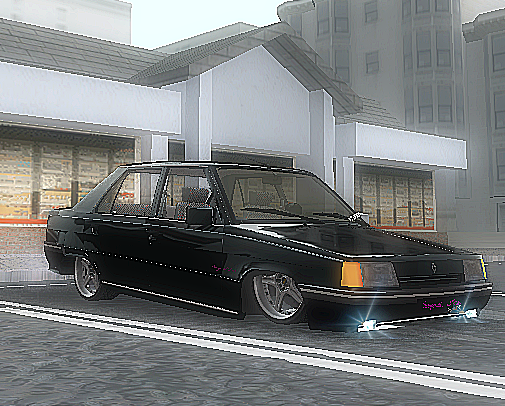
In our neighbourhood we have learned to beware a vehicle we call ‘the Stealth Renault’. Painted black, this innocuous 1980s model is driven by an extremely old person (or a person disguised that way), in second gear at a constant 30 mph. His trick is to give you the impression that he will stop or is stopping at your pedestrian crossing.

He never stops though. Like Sandra Bullock in Speed, he maybe believes a bomb will go off if he drops to 29.

He is a road safety bogey man. He never ratified the green cross code. He is there to teach children never completely to trust traffic lights. He may in fact be a dummy, the car actually being driven by remote control from a university psychology lab, as part of a learned helplessness experiment. Or maybe by the authorities, to keep us a little on our toes.

After all, we may be getting a bit complacent. Such close encounters with terrorists like Stealth Renault are relatively rare nowadays. It is surprising how routine most activities have become. The post office queue stands patiently, First Capital Connect arrives on time, the Sky box records your favourite programs. I appreciate that other societies and parts of the world are different, but the UK, with the possible exception of Doncaster, has adopted a ‘no drama’ policy.

Isaac Newton taught us that every action is met by an equal and opposite reaction. Every time I turn the heating control down another person will come and turn it up to a point slightly higher than it started originally. The body has a similar system in the hypothalamus, which can be used if thermal underwear is not available.

In larger systems, such as the NHS, an attempt to make a change will be resisted with significant force. Employees in large organisations tend to work like small cogs in a gearing system. If the small cog gets out of line the whole gearing system will crush it back into place, a few splines missing, but still turning.

A lot of ‘choice architecture’ is set up this way, large systems with high moment of inertia. Franchised models and low variance operating schedules ensure you will find the same shops and restaurants in every town.

Why not put the Hugo Chavez T shirt away and just coast along with things? People are living longer after all, and the television screens are getting bigger, sharper and cheaper all the time.

Why is it then that so many people seem to be unhappy? A recent survey by Unicef suggested that children in the UK are among the unhappiest people anywhere.

‘Pressured and commercially vulnerable, our kids are the most miserable in the industrialised world’ spoke the Guardian. People have blamed a mixture of possible causes, from inequality to the demise of the nuclear family.

Blur titled an album ‘Modern Life is Rubbish’ and I find myself quoting that to people whenever there is a spectacular system failure, such as getting stuck in a 20 mile traffic queue, or trying to pay for parking using a mobile phone.

Another line I find myself saying is ‘everything is relative’. There are many compensations in modern life.
It is the best time ever for ease of communication. Even Captain Kirk did not have a smartphone.

Food is at once the best and the worst it has ever been, depending on whether and how you choose your ingredients. I went to the Turkish part of London yesterday and had an amazing breakfast for £5.

A car made in 2013 is undoubtedly, objectively and measurably superior to a car made in any earlier period. It is faster, stronger, safer and more economical than before, and it is never mustard or beige coloured.

This is probably not the best period for music composing, which peaked in the classical period. But it is the best time for listening to Beethoven or Mozart, or any other music, because we have fabulous sound quality in concert halls and from hi-fi systems.

The best novels ever were probably written in the nineteenth century. But we can read them all free now on a device that weighs half a pound.

The renaissance period gets the prizes for painting and sculpture. But they did not have antibiotics or dentistry.

Teaching was probably better 50 years ago than it is now. And, as we know, History ended in 1989.

Different systems peak at different times. It s hardly likely that all systems will peak at the same time. That’s having your cake and eating it; or finding the M25 is completely clear all the way round.

If you happen to be lucky your system suits your natural frequency, and you will run smoothly. Your system will mesh with other systems and you will spin freely on your bearings.

If you are unlucky, like most UK children apparently, you are not in tune with your system.

For instance we know that children function better if they start school at 10 or 11 am, but our local school makes them start at 8am. The problem for children is that their system runs subordinately to every other system, so that they are made to fit in with adults rather than the other way round. The more your system is subordinated to others the less chance you will be in your own element.

The advancement of the system devoted to economic productivity has marginalised children, along with the old and sick, to the bus replacement services of life.

Children cannot vote, after all. They are just lucky that they don’t have to sweep chimneys any more. Worse than chimneys though, we have breakfast club and afternoon club, not to mention the dreaded school bit in between the clubs.

David Cameron said today that he wanted to place himself on the side ‘of hard working people who want to get on in life’.

What about those people who yearn for a life of recreation and entertainment? Shouldn’t all those machines and mechanised systems have made it possible not to work so much?

A big category of mental health diagnoses is the so called Adjustment Disorders. These come in various forms, including depression and anxiety. They are usually mild and transitory and reflect what many people loosely refer to as stress.

They can be seen as a wrench caused by a change of system, much like ‘frozen points at Guildford’ delayed Reggie Perrin by 11 minutes each morning. If frozen points cause a complete derailment, then the Adjustment Disorder is upgraded to a more serious diagnosis like Depressive Episode. A lot of depressive episodes also seem to follow adverse, or even positive, life events, which have caused a crunching in the gears.

The concept of mental health problems being stress related is attractive and easy to understand. But it only tells a part of the story. Most people are robust when it comes to negotiating changes.

Perhaps they have a wider tolerance to a range of operating conditions, so they are more often in their comfort zone.

A comfort zone is supposed to be a behavioural state where we are happy and confident and working reasonably well.

Some people work on their comfort zone more actively than others. Attributed to golfer Gary Player is the phrase: ‘the harder I practice the luckier I get’. Specifically referring to shots played out of sand, Player mastered the shot to the extent that he was equally comfortable in the bunker as on the grass.

Round about the time Player made that quote, in the sixties, psychologists developed the theory of Learned Helplessness.

Psychology nowadays keeps a bit quiet about these sorts of experiments -suffice it to mention the words electric shocks and dogs.

Later on, with the move from behaviourism to ‘cognitivism’, the negative effects of helplessness turned out to be more to do with a person’s pessimistic explanatory style than the actual experience of not being in control. This led to the idea of hopelessness, and the relationship of that state to suicidal thinking.

The issue is not so much whether we really have control over what happens to us, but more whether we think we do.

Studies in Ireland have shown that patients with Depression like their therapist to take an upbeat and optimistic stance with regard to whether and how much recovery will take place.

I remember a moment when, as junior doctors, we observed the arrival of a very senior colleague, in a severely dilapidated Ford Escort. It was trendy at the time for the psychotherapy – orientated type of psychiatrist to drive ‘crap cars’, such as this one or the Austin Maxi (mustard colour). As we watched, another SHO colleague put this scenario to me:

‘Imagine you’re in the depths of despair. You have been tried on every type of antidepressant. You’ve tried counselling and psychotherapy. You’ve had herbal medicines and homeopathy and transcendental meditation. The GP finally arranges a visit from the leading specialist at the teaching hospital. You watch through the window, and you see in the distance the Professor arrive in his Escort, which has large furry dice dangling from the mirror. Is that not the moment when suicide seems inevitable?’

Harsh perhaps. Equally, people might like to see someone eminent arrive in a non pompous vehicle like a 2CV covered in stickers or an original Beetle with vase. I can’t remember any specific training on what vehicle to drive, although an older colleague insisted that consultants should only ever have Michelin tyres, ‘never Goodyear my boy’.

To return to the point, the feeling of having a choice matters a lot, even if in the wider scheme of things, the biggest choice we really get is between Diet Pepsi and Pepsi.

The comfort zone is largely a place where we choose what happens to us. A lot of people want to move us out of our comfort zone.

It’s true that we will be more productive if we are challenged just a little. Coaches know that a mixture of support and challenge can bring about superior achievement. The same approach can work well in therapy, for instance treating a phobia. If the comfort zone has got too narrow then it needs to be carefully increased.

Unfortunately, in most organisations, the challenge is greater than the support. The pressure is always on to squeeze a little more out of the system. Supermarkets want to get the milk off the farmer for a few pennies less. The farmer turns the cows up to 11, giving them more food, or playing them some Led Zeppelin at milking time.

The effect of the larger and more dominant system on your system is felt as disharmony, or being slightly behind the beat, or as a little ping in the ears. Your system might be different.

Interestingly, this is exactly the kind of disorientated feeling that makes us purchase something – retail therapy – or consume some alcohol – drug therapy. The work ethic is all about ‘must’ ‘should’ and ‘ought to’.

It all depends whether we want to make superior achievements or just be happy with what we have. It’s not a choice we seem to get very often. Even the illusion of choice is worth a lot though. Turkish breakfast. Mozart. Thomas Hardy. And, today I think, Diet Pepsi.

The comfort zone is equivalent to driving at 50mph.

It’s better than 42. It might even be better than 52.

Image

PS: It looks a bit like this one.

7. Killer Apps of the Mind.

Image

A cultural education                                                    (picture by Roland Topor)

There are several types of therapy for Depression. In one way or another they are directed at improving insight. Whether improved insight translates directly into recovery is a different matter. Also we are assuming that better insight is always a good idea. That might not suit certain vested interests and power groups who need us at the grindstone all day, in the pub all evening and shops all weekend.

There are quite a few logistical barriers to psychological treatment – finding it, getting there, sticking with it. Recently a number of computer programs, or applications, have been designed to help, with names like Beating the Blues and Fearfighter. Mostly these have been presented by IAPT therapists in health centres or GP practices. They can be accessed directly by users at a price, but its only a question of time before cheap or free apps become available for home use. These applications have been given a cautious welcome by experts such as NICE. People who are used to modern computer gaming will find them a bit pedestrian. I hope we can rely on the software industry to pump them up.

Professor Niall Ferguson recently presented an account of modern history attempting to explain the rise of western civilisation. He used the analogy of ‘Killer Apps’ to explain why certain societies had prospered.

Competition, Science, Medicine, Property Rights, Consumer Society and Work Ethic: these were the processes  that had brought about Western Civilisation, he argued.

Commentators say that Ferguson has misused the term ‘killer app’, which has, or used to have, a particular meaning in the computing world, not just an analogy for ‘vital’.

A killer app was supposed to be an item of software unique to a particular piece of hardware. So if you wanted a spreadsheet or desktop publisher you had to have a Mac.

Strange that Ferguson, an academic historian, tolerated an historical inaccuracy in the use of terminology, for poetic licence. The recent history of technology is probably more interesting, important and possibly bloodthirsty than the Tudor period. Still, the killer app analogy caught people’s attention, which was probably what he intended.

History wasn’t my favourite subject at school. In fact, school utterly killed History for me; too many dates and royals. I was glad when Francis Fukuyama published his book ‘The End of History’ in 1989, though for me History ended in 1973, with the damp squib of an O Level exam. After Fukuyama published his book I fully expected all the History departments in schools and universities to shut down like the coal mines, their job finished. Instead of which we saw the emergence of Time Team and Dan Snow.

Since apps had not been invented in the 1970s, I can’t blame my History teachers for not using this illustration, though I can blame them for never using gimmicks at all. Aside, that is, from Mr Hockenhull’s epic 8mm movie, reenacting the Battle of Hastings in Disley.

Still, it’s a slippery slope between education and entertainment, one that I personally would hurtle down on a Lidl trolley, but thats another story. The trick I suppose is using colourful illustrations to explain ideas without dumbing down the key message.

I am certain that Niall Ferguson has looked at all the information available and come up with the right processes that shaped prosperity, but does it help to think of them as Apps?

Apps, on the computer at least, are processes that run within an operating system.

There are certain aspects common to any system, operating or otherwise. There’s a whole theory of systems, which spans science from engineering to economics. So there is a whole range of analogies to be made between aspects of different types of system.

So it might make sense to use the analogy of an App in terms of processes in societies, small groups of people, or individuals, all of which are systems of a kind.

A system needs to define itself using boundaries. It needs to regulate its inputs and outputs. It needs fuel broken down to provide energy. It needs feedback control to maintain itself. The same features can be found in any type of system, large or small, with the possible exception of the Beko washing machine.

Freud had a surprisingly electrical view of how the mind worked. For instance,Freud thought the mind had a range of mechanisms to protect itself from electrical overloads, which are now called defence mechanisms. For instance a murderous impulse might have its energy directly countered, or projected onto another person, or converted into a physical disorder.

Some of these defences he thought were disastrous and some more effective and healthy, such as Humour, Altruism and Anticipation. We could regard Freud’s favourite defence mechanisms as Killer Apps (almost literally) in terms of dealing with extreme thinking. In terms of treatment options, Freud had something of a killer app in the form of Hypnosis, which he abandoned in favour of the technique of free association, which is like exchanging a Macbook Air for a Babbage Engine.

Killer Apps in the Mind? After all, the mind is genuinely a computer system, unlike society, which is a mixed bag of systems, non systems and mud.

In truth, many people have attempted to explain how the mind works, using simplistic models that involve two or three main components. Analogies like these tend to break down when we try to illustrate something so complicated.

Apps however have the advantage of being highly specific. I have one that merely turns on the phone flashlight. Yet there are others that tell me exactly where I am and how to get home. I have one that tells me my car is in Munich at the moment. Inkorrekt!

Just like Prof Ferguson introduced the idea of Killer Apps to spice up a massively complicated piece about the history of the western world, we might be able to use the concept to help us talk about mental processes without being hidebound by some overarching model.

We might be able to use the App idea to spotlight certain aspects of morbid thinking.Terms proffered by CBT therapists like ‘arbitrary influence’ and ‘selective abstraction’ never felt very user friendly.

Specifically, are there certain killer apps that could protect against getting depressed, or help a depressed person, if we could only download them to someone’s mind?

Abstract thinking, such as the use of metaphor, proverbs and analogies, helps us organise information. Using templates, such as lists, mnemonics,algorithms and ‘pathological sieves’, helps organise piles of untidy thoughts.

If we could load some of that onto a smartphone we could call it something like Meta4Works or ProverbBlaster. These are perhaps part of a larger software package we could call InsightFull.

I would also like someone to invent FrameItWider and AttributeRite to counter some common cognitive errors.


Mostly we need help to make better decisions. There is a growing interest in how decision making takes place, both in individuals and organisations. Books like Nudge by Thaler and Sunstein explain how the ‘choice architecture’ affects how people behave. The role of default options is surprisingly strong.

Zhan Guo, in a paper called Mind the Map, showed recently that the London tube map affects peoples travel decisions far more than their actual experience of making journeys. Sometimes the schematic map is nowhere near to scale geographically. Instead of using the map, we could use an App, putting in the destination.

Smartphones are getting smarter and people are – in some ways – getting dumber. Think of Arithmetic and Calculators. Could we not just hand over more of our troublesome thinking to a computer? Its precisely what we have done with arithmetic after all.

Already, or pretty soon for most people, navigating a car will be delegated to a GPS system. Its a set of decisions we can safely leave to an App. Now we have a computer system called Amazon, that can tell what I want before I even know myself.

Tesco know what kind of whiskey I would buy if only I had a voucher for £5.40 off the price. Not £5.30 mind you. £5.40.

Doubtless Tesco and Amazon are using a version of choice architecture to apply nudges to my behaviour. I doubt whether they employ clairvoyants or telepaths at Tesco, so I am guessing they are using a software application which clusters together things people like me have bought. Either that or I have misinterpreted that large phone mast on Tesco’s roof and those strange headaches I am getting.

Many decisions we make, particularly purchasing whiskey, should be delegated to a wiser system. When it comes to choosing a product or service, or even the way home, there are many sources of guidance.

Sadly, when it comes to the biggest decisions of all, we are often working too quickly, without enough information, without an App at all, or with a flat battery.There is a strong relationship between poor decision making and Depression, both in terms of getting depressed in the first place, and perpetuating Depression once it has begun.

That is why the Killer App we need the most is ChoiceMaker Turbo version.

I just used it at Tesco and ignored the whiskey offer. Like their trolleys, I have a mind of my own. Also, if I’m right they will soon up their offer.

I like the analogy of Apps, but it works better to illustrate a single mental process rather than model the mind as a whole, let alone whole societies. As a way of spicing up and developing CBT for a mass market, Apps could be the way forward, but we have yet to see a Killer App for Depression. Good news for therapists who don’t like anything called a tablet. The important thing is we continue to seek better analogies all round.

As Mr Hockenhull might have said, ‘the first two periods are Biology and IT, the rest is History’.

Or, after Fukuyama, ‘home early today’.

6. Getting Wiser using items you can find in your kitchen*

Image

Its time for a quick win, before we delve into things any further. Today’s goal is becoming a slightly wiser person.

Our friends in Psychology have been very active over the last few years, explaining how the mind deals with day to day activity. There have been some great popular psychology books, such as Thinking, Fast, and Slow, by Daniel Kahneman, and Nudge, by Thaler and Sunstein, that have become bestsellers.  A particularly useful scheme they have developed is the separation of mental activity into two types.

The first type, sometimes called ‘Type 1’ or ‘System 1’ or ‘Automatic’ is running slightly under the surface of consciousness. It deals with routine activity. Type 2 /System 2, or Reflective thinking, is the more conscious part of the mind, where we might actively try and process a task, like a piece of mental arithmetic.

It is usually tiring to use System 2 and we tend to avoid it. We use System 1 by default, and it can handle a surprising amount of day to day functioning, including quite complex tasks like driving a car.

Despite books such as ‘Nudge’ and ‘Thinking, Fast and Slow’ being best sellers, the impact of this new cognitive psychology has been surprisingly slow to affect how psychologists and other therapists work with patients. Though the automatic / reflective model seems to make sense, everyone is struggling with how the amorphous goo of the subconscious gets turned into the crisp waffle of a considered idea.

In particular, the type of therapies that are often called Cognitive Behavioural Therapy (CBT) often seem to depart in some ways from ideals we can infer from the Automatic / Reflective model.

For instance, one very commonly used type of CBT involves keeping a diary of negative thoughts. CBT fully acknowledges the presence of AutomaticThinking, the idea being that people suffering from depression or anxiety have Negative Automatic Thoughts. Just a little below the surface runs a downbeat commentary on the persons value and capability.

At a simple level such negative self statements are easily visible in everyday life. How often do you hear people say ‘I’m no good at maths’, or ‘I cant sing’ or ‘I’m not musical’? Depressed people tend to have a more negative set of thoughts, such as ‘I am useless’ or ‘People generally don’t respect me’ or ‘I can’t control what happens to me’.

An aim of CBT is to identify the negative thoughts by writing them down and considering them. In effect this means bringing them out of System 1 and into System 2. Yet we know that this is a process that generally people find unpleasant, even for ‘neutral’ tasks like trying to solve a puzzle or a maths question. And this is perhaps why patients very often struggle to complete the diary and homework tasks set by their therapist. Very often the patient fails to do the homework, relying on the mercy of the therapist at the start of the next session.

Of course, Freud and his followers would take a different view of such a process. First of all they would expect the truly negative thoughts to be buried deeply in the mind and not easily brought into consciousness. Furthermore they would expect ‘defence mechanisms’ or ‘resistance’ to digging these ideas up, since the mind buried them deeply for good reason.

So what? Thinking can take place at different levels of consciousness.  Freudian and Cognitive Psychology would agree on that. And they would also agree that people struggle to bring thoughts from a lower to a higher level. Freud would say this is because the thought is emotionally charged and dangerous to consider – for instance a strong aggressive or sexual impulse. A cognitive psychologist might argue that the conscious System 2 is easily overloaded, much like the RAM on a computer. It is governed by a limited amount of ‘working memory’ which is easily exceeded. If asked to do more than one task at the same time, System 2 runs very slowly or stops altogether to get a beer from the fridge.

It has been clear to many CBT therapists that so called ‘second wave’ CBT, involving identifying negative thoughts and countering them is often unpopular with patients. Much of CBT has moved on to so called ‘mindfulness’ based techniques, which have imported an element of meditation or spirituality.

In embracing ‘mindfulness’ so enthusiastically however there is a danger of CBT exploding in all sorts of different and largely untested directions and falling prey to the usual cranks and charlatans normally confined to the alternative sector.

One of the strengths of CBT was that it attempted to measure its own effectiveness by using charts and scales. One of the weaknesses was that CBT became an incredibly wide church, to the point where the term ‘CBT’ became almost meaningless.

For instance CBT could span so called ‘psychoeducation’ or ‘activity scheduling’ which turned out to be fairly simple bits of lifestyle advice. Or it could mean 20 one hour fairly deep sessions with a Clinical Psychologist. So when someone tells me ‘I have had CBT and it didn’t work’ I am quite skeptical. (Just like I am skeptical when I am told ‘I tried lithium and it didn’t suit me’ or ‘I am allergic to bananas’ or ‘ I am dyslexic’. These statements always call for further enquiry and clarification.

I ask: How many sessions did you have? Who were they with? What did you do in the sessions? (Just talked), Did you have to keep a diary? (no), Did you have homework? (no), Did you have to try and look at your negative thoughts? (don’t think so).

Is there still some value in ‘old school’ CBT? By this I mean the process of identifying and challenging negative thoughts, using diaries and homework?  Behaviour Therapists have  a slogan:  ‘if you do it you ‘ll get better and if you don’t do it you won’t’. That might hold for changing behaviours, such as facing a phobia, but how much can it hold for thinking differently? How much can the mind be forced, against the grain, to reflect?

Incidentally I have seen a very similar blindness in the fields of education and personal development, where ‘Reflection’ became all the rage. Reflection, at least if forced, is effortful and tiring to most people, even if they are not depressed and reflecting only about the price of carrots.

People will find any excuse not to reflect; the mind will default to System 1 whenever it can. The best reflection seems to occur when the mind is bored and free to wander where it likes, for instance, while you pretend to listen to the chief exec going on about drilling down into more challenging granularity, while you wait for the 8.23 at Platform 1b, or during the period between your parachute opening and avoiding the pylons.

Old school CBT has failed to recognize the difficulties people have in moving unexpected items into the bagging area of Reflective thinking. This is perhaps why most patients I meet prefer a counselling type approach, by which they often mean talking to someone until they feel a bit better. What we need is a better waffle iron to turn mental goo into considered thoughts.

Somewhere between the two approaches, CBT and Counseling, probably lies a better way of dealing with negative thinking. For instance I like the use of ‘mind maps’ rather than diaries,  sketches or diagrams of what issues are affecting someone. Say it with cake if you want to.

Then there are little shortcuts. Management folk like these, e.g. 4 Ds. When presented with a problem you can Do it, Decide when to do it, Don’t do it, or Delegate it. (There are many variations on this one, as so many words begin with D, like Destroy it, or Dissect it, or Drop Dead Trying to Do it.)

Managers like little acronyms and mnemonics to bring in to solve a problem. Its something to focus the mind, or in other words, make the transition from System 1 to System 2 less noxious. Since we know System 2 is a scarce resource, which we are reluctant to use, we need to create a shortcut or scheme for using it efficiently.

Its sad that the road to wisdom turns out to be paved with acronyms and diagrams.

We used to have exams called ‘viva’ at medical school. They are the most feared type of exam for most people, as the format is one- on- one questioning. The problem is trying to operate the mind under very high anxiety conditions. The trick is to have a system to fall back on, something cast iron, like a grid, heated obviously, and teflon coated. Something to stamp out a well formed answer quickly and possibly even coat it with sugar.

If you are searching for a way of dealing with a problem, its very helpful to find a similar example, as Blue Peter would put it, ‘we’ve already done’. Like a Proverb for instance.

Proverbs have quite a poor reputation among psychiatrists. This is because – in my day anyway – we were taught to ask patients routinely to try and explain what proverbs meant. For instance we would ask them, ‘what does this saying mean: people in glass houses should not throw stones’?

Presumably this was meant to be a test of abstract thinking, and the correct answer I presume would be something like ‘beware of retaliation if you criticize someone’ or ‘ this illustrates the danger of criticizing other people for deficiencies you yourself might have’. The latter version seems to be intruding dangerously far into pot and kettle territory.

However most people gave quite poor answers, either ‘don’t know’ or overly ‘concrete’, e.g. ‘ the stones might break the glass’. That led us to the concluding that most people did not use proverbs day to day and were rather unfamiliar with the concept of metaphor.

Maybe people with mental health problems have a lesser use of metaphor in their thinking? Comments gratefully received on this one.

Another problem with proverbs can be the annoying existence of an equal and opposite proverb, such as ‘too many cooks spoil the broth’ and ‘many hands make light work’. Perhaps proverbs where there is no counter are superior and should be put in a premier league.  Proverbs may not be used widely to support reflection, but that does not mean that they are not a useful tool. It just that the noise of modern life has drowned  out a lot of wise words.

So, regarding CBT, or Proverbs, Diaries, Mind maps,  or any other tools to help us organize our thinking, as SportsTalkExtra might put it: Lets not throw the dirt out with the bathwater.

Enough waffle for today.

*pencil, paper, pot, kettle, cooks, broth, beer, cake, waffle, waffle iron.

5. Knowing what to call things

Image

An early classification system for depression, using cake.

Doctors and psychologists have invented a huge vocabulary of jargon. The downside of this enterprise is that non- experts are artificially excluded from participating. The upside is that at least we have a name for practically everything that might happen.

For instance – what do we call that thing – you know, in catatonic patients, where you pull their finger gently and you tell them to resist your pulling, but they follow your pull anyway without resistance, is there a word for that? How about mitgehen?

What about that thing where people mix up a coincidental event with a causal event? How about attribution error?

What’s that part of the wrist called at the base of the thumb? How about the anatomical snuff box?

How can we describe a loose pattern of findings that might include aspects of subjective history, observed behaviours and objective measurements, without necessarily implying a causal agent? How about a syndrome?

Depression has been described and categorised in so many different ways. We had reactive, endogenous, melancholia, major, minor, neurotic  and many more types. We have dysthymia and neurasthenia, we have bipolar 1 and 2. As stated by medical man, comedian and philosopher, Harry Hill, and an excellent catch phrase and running gag: ‘you’ve got to have a system’.

We are often accused of inventing diseases, for instance ‘medicalising’ ordinary human problems such as poor attention. More accurately though, we try and classify problems rather than invent them.

Classification is hugely important to doctors, partly because we have a geeky fondness for lists and tables, but mainly because all of medicine operates through a process of Pattern Recognition.

What we call each pattern doesn’t fundamentally matter, but it may matter a lot for social or political reasons. For instance if we diagnose ADHD or Asperger’s Syndrome, rather than identify a certain kind of character, that might mean extra funding and help at school for someone. Diagnosis could make the difference as to whether someone who offended got sent to jail or hospital.

These issues largely flow from the way society is organised and what part the medical community has come to play within the processes of maintaining social order, rather than whether the Pattern is a genuine entity.

There are lots of ways of describing Patterns of behaviour. If there is a recognisable Pattern then there are a few things we need to say about it. Take a simple example, no, lets take a really complicated example – Anorexia Nervosa.

Psychiatrists have defined this illness so that there are three necessary components -the person should have lost a lot of weight, stopped having menstrual periods (if they had them before), and have a certain set of views about their body size. Both the first two aspects are easy to measure, the third one not too difficult to find out if the person will speak to you.

Anorexia seems to be both a valid and reliable diagnosis. By valid, we mean there is a real problem that we can identify and measure, by reliable we mean that people would agree on whether someone suffered from Anorexia Nervosa.

But is there truly an illness called Anorexia Nervosa? Only perhaps in as far as that is what we agree to call a certain type of problem. Diagnoses in Psychiatry, for the most part, are conventions between us regarding what Patterns should be called.  Are there people we meet who seem to fit the criteria for Anorexia Nervosa? Yes.

Our health system, be it the NHS or private sector, will demand that we make a diagnosis. We have to use a system such as the International Classification of Disease or the Diagnostic and Statistical Manual. In the UK we tend to use the ICD10. That will give you a number code, such as F10, if you drink too much alcohol. The codes can be quite detailed if we use more digits, e.g. F10.4 if we drink too much alcohol, stop drinking for a day or two and get delirious. If we had an epileptic seizure during this we will get F10.41.

Are there people we meet who get Delirium Tremens some of whom have a seizure? Yes.

But why bother to label certain types of life problem and include them in a list of supposed Psychiatric conditions?’ I am not a number, I am a human being’, yelled Patrick McGoohan in The Prisoner. ‘Pigeon holing everyone’ – that is something Psychiatrists are accused of all the time, along with another favourite: ‘pumping people full of drugs’.

Ironically the interest in tightening up diagnosis in Psychiatry came as a result of a fascinating series of studies, the international pilot study of schizophrenia, or IPSS. The IPSS looked at the use of the term Schizophrenia in different countries including USA, USSR, UK, India and Nigeria.  This study seemed to find that a larger number of people were receiving the diagnosis of schizophrenia in certain countries (USA and USSR).  The American and Russian psychiatrists were calling a larger proportion of their patients schizophrenic.

At that time popular belief in the West was that the Soviets were falsely calling political dissidents mentally ill and locking them up in asylums. Whereas in the USA the disparity was put down to the way Psychiatrists traditionally understood the concept of schizophrenia.

It was soon recognized that it would be pretty difficult to do research into the causes or treatment of any disease if we could not even agree who suffered from it in the first place. Hence a huge amount of work sorting out a valid and reliable diagnostic system – DSM in the USA and ICD for the rest of world. The current versions – ICD10 and DSM4 are very similar in day to day use. So we can be reasonably sure that someone with Anorexia Nervosa in Milan has got a similar type of  problem to someone with Anorexia Nervosa in Birkenhead. So if we find Cause X or Therapy Y in one place, it might prove useful in any other place. Such is globalization.

Much  of the criticism of diagnosis in Psychiatry is based on what happens to people, and society, as a result of diagnosis happening. But criticizing diagnosis itself is as foolish as suggesting that it is impossible to classify colours of the rainbow or garden flowers.

The point is, sound diagnosis can be liberating as well as restrictive, it all depends on what we do with it. The danger is in poor quality diagnosis, or the misuse of diagnosis. These are the same dangers that occur with any tool, cordless curling tongs in particular.

How does this affect the depressed person in their kitchen?

Your subjective experience needs putting into words if you have to tell another person how you are feeling. You are free to create your own diagnostic scheme for Depression, but to be useful it needs to chime with someone else’s scheme.

In the case of Depression, even experts who normally know exactly what to call things, have failed to create much of a system. The ICD10 for instance gives up on classification much beyond the level of severity:  Mild/Moderate/Severe. Its unlikely that mass protest and civil disorder will break out in response to this categorisation.

There is only one thing worse than labelling people, as Oscar Wilde definitely didn’t say, and that’s not labelling people.

And there’s only one thing worse than pumping people full of drugs… (an inquiry was told).

1. The War on Depression Starts Today

Car parks can be beautiful if you look at them the right way

 Don’t be frightened – it’s only a car park.


The War on Depression: where is the enemy weak?

These pages are mainly about Depression. The starting point is to understand how Depression comes about and the finishing point is dealing with it better.

As an individual psychiatrist it may not be possible to make much of an impact on the wider problem of Depression, which affects so many millions of people.

But there are many fronts to fight on, outside the hospital.

There are a few themes to these pieces. One is to do with how toxic modern life has become. One is to do with how the mind works and in particular how people make choices. And a third one is to explain how health systems such as the NHS operate for (or sometimes against) people with mental health problems.

However we regard Depression, as an illness, as wear and tear, as a reaction to loss or as a social barometer, there is always another perspective to take.

Rather than ask the question, ‘why do some people get depressed?’ we might just as well ask why everyone isn’t depressed all the time.

Lets get the bad news out of the way right now: people get older. Generally when they get older they get more ill, and (don’t say it, please) eventually die.

In some ways that fact, the D word, is a potential party – pooper, even when we are young and have a fabulous future to look forward to.

Worse than that, even younger people can get ill, and they certainly can be subjected to terrible events (such as school).

Its been said that all political careers end in failure. Partly that’s because of the scoring system in politics, which tends to be ‘sudden death’, either by way of an election, or by way of sudden death.

But the same is not true of most sportsmen and women, who are somehow able to retire at the right time. In boxing, that’s while the brain is still working. For the rest of us, its a matter of recognising changes and adjusting to them .

If we adjust too much too quickly we are hypochondriacs and wimps. If we adjust too late we are foolhardy and in denial.

Life is very complicated and dangerous and a lot of us don’t make it, either in terms of quality or quantity of life. Some of us spend a lot of time ‘off the road,’ on the hard shoulder of life, but that doesn’t make us burned out ruins.

In seeing Depression as a wear and tear or stress related illness, we are not really explaining it very much. I prefer to see it as a natural phenomenon that is also an enemy, like rust. Or, at times, Gravity. Black ice. Wind. Electricity. Biscuits. Etc

All necessary but dangerous when out of control.

Depression happens when the system that controls mood is defective. The system has failed to calibrate correctly, or feed back on itself, or stay at a level. Most of what we do in treating Depression, one way or another, is to try and get the control system working better.

Often that’s a matter of seeing the situation differently: reflecting, reframing, resetting, recalibrating. (4 Rs. Much better than 3.)

The way we see Depression, in its widest contexts, affects very much how we deal with it. Depression is a very isolating experience, both in terms of reduced social contact, and reduced range and quality of thinking.

But if Depression was inevitable, or even an overwhelming likelihood, why is it that many people never get depressed, whatever happens? Do they have a very sophisticated chemical control mechanism? Or do they reflect upon the world in a different way? Or do they have some protective factor, like a guardian angel?

After this length of time, over 50 years of antidepressant and drug therapy, it doesn’t look as though we have a breakthrough solution, at least by way of a tablet. It would be nice to think a magic bullet would get discovered, much as saltwater killed the Triffids in one of the Day of the Triffids films, or the Common Cold killed the Martians in War of the Worlds.

While we wait to find the enemy’s weak spot, we continue to fight on all fronts. Depression’s Achilles Heal is in fact the thing that makes it strong, its incoherence as a diagnostic concept.

Could Depression fall apart under the weight of its own complexity, like the coalition government?

More to follow.