47. Predicting the New Year, without proper guidelines.

Image

Psychiatrists are able to read the future. That’s why there are very few about – most have made a killing on the stock market or at the bookies and have retired to Tahiti. Or so our managers think.

Just to prove the point, here are some predictions for the New Year:

1. Badgers will launch a surprise counter attack on David Cameron. They are already digging a tunnel towards Downing Street. Badgers are classic terrorists, with long memories and sharp teeth. In panic retribution measures, Brian May will be blamed and sent to the Tower of London.

2. People will begin to notice that google searches are getting more polluted by advertising. Google will offer a premium service where you pay a subscription for an ad free version.

3. Universities will begin a series of mergers and takeovers, so that eventually there are only four big players, as with supermarkets, petrol, energy etc. University Challenge will start at the semi finals.

4. There will be an upsurge in Placebo based treatments of all kinds, and NICE will issue lengthy guidelines on how to choose and use them, with a forward by Prince Charles.

5. Private GP practices will develop in the larger cities. They will give you the sleeping tablets, painkillers and Betnovate cream that you have longed to obtain, without any tut-tutting.

6. Building regulations will be tightened up, so that new buildings will have wider letterboxes, to accommodate take-away pizza.

7. Swiss cheese makers will be stopped from injecting carbon dioxide into the holes to make it weigh heavier on the scales. Conversely, Ryanair will check for Helium in your hand luggage.

8. The forces of social control – police, probation, mental health and social work – will increasingly blur together. The new force will be re-branded as Lifestyle Services. The uniform will look suspiciously like G4S.

9. Further updates in nomenclature. G4S to G5S, E45 cream to E46. Boots 7 goes to 7.1. Players No. 6 are re-launched as Players Number Free. They pre-empt the packaging ban by going for a plain white carton. It worked for the Beatles after all.

WD40 surprises everyone by going straight to WD million.

10. Liverpool FC will embrace Mindfulness. Their new kit will be orange robes.

If you want a more accurate prediction, and you don’t know any psychiatrists, you can do equally well or better yourself, using a set of dice or random number tables. Please note, NICE do not recommend the use of tea leaves, bones, fund managers or even physicists. Prediction is very difficult, said Niels Bohr, especially about the future.

From Tahiti, I wish you a Happy New Year.

46. Christmas Quiz

Image I

For each question choose which one answer is correct:

1. The Mind and Body are:

a)      Inseparable

b)      Made of different kinds of slime

c)      Connected by USB

2. The Human Mind uses an Operating System which :

a)      Usually responds to turning off and on again

b)      Was initially rejected by Steve Jobs

c)      Is essentially adapted from the Chimpanzee

3. Who will not come to your rescue?

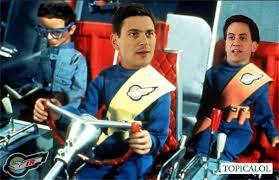
a)      DIY SOS

b)      The A Team

c)      David Miliband

ddownload

4. Where did the sickman go, after disappearing from medical cosmology?

a)      Costa Coffee

b)      Became conceptualised as a cell complex

c)      Outside, having a fag

5. Suitable scenarios for a Truth And Reconciliation Commission include:

a)      Desmond Tutu’s kitchen

b)      Nigella Lawson’s kitchen

c)      Pussy Riot’s charity gig at the KremlinPussy-Riot

6. Examples of Word Inflation include:

a)      Management Speak

b)      Cognitive Therapy

c)      Dan Brown Omnibus Edition


7. The following has proven antidepressant effects:

a)      Aerobics

b)      Chairobics

c)      Blairobics

8. What has happened to Ashleigh and Pudsy?

a)      They are hiding from animal rights activists

b)      Creative differences between them led to a bitter legal dispute

c)      Panto season

9. Which of these problems is not a cosmetics range?

a)      Opium

b)      Obsession

c)      Paedophile

9. Which of these bands is an effective antidepressant?

a)      Primal Scream

b)      Placebo

c)      AC/DC

11.  Who should you send for if one of your brainwashed assassins goes berserk?

a)      Patrick Stewart as Eddie Roebuck

b)      Patrick Stewart as Dr Jonas

c)      Patrick Stewart as Macbeth

12.  Who bore the brunt of the Michael Jackson inquiry?

a)      Bubbles, for not seeming to care

b)      Paul McCartney, for insisting the girl was his

c)      Conrad Murray, for ticking the wrong boxes on his risk assessment forms

Merry Christmas dear reader!

45. Hosing out the caves of plenty.

Image

Celebrating the end of the cull.

Consider this: Celine Dion has sold over 200 million albums worldwide. Kodak sold over 70 million Instamatic cameras.  And more than 5 million ZX Sinclair computers were produced. Where have they all gone? The answer is: the house on Gladstone Street, the one with the twenty-foot-high overgrown garden and council notices pinned to the door.

There’s a new diagnosis in town and its name is Hoarding Disorder. Everyone’s talking about it, but no-one is doing much about it yet. That may be because there is no recommended drug therapy, and it’s even a bit dubious whether behaviour therapy will help, unless the sufferer wants to change.

I know, the word sufferer is politically incorrect, I’ve been on the disability and diversity courses. And in this case it is literally incorrect, as the people who suffer are neighbours, relatives and carers, rather than the hoarders themselves.

In DSM5, Hoarding Disorder escaped from the OCD section and was given its own little category. It’s significantly different from OCD, so, like South Sudan, though considerably more cluttered than that country, it has gone its own way.

There are a few other categories associated with squalor, including the so-called Diogenes Syndrome. And there are some similar scenarios which are not considered mental health problems, such as Collecting and Teenage Room Disorder.

Most psychiatrists will have visited homes like the one on Gladstone Street, and sat in sticky chairs, next to overflowing ash trays the size of buckets. We get pressurised by housing departments and public health officers to assess the people who live in these conditions.

In Diogenes Syndrome, which apparently is unfairly named, as Diogenes was a minimalist and lived in a barrel, the affected person simply gives up on the fight to organise, recycle and dispose of stuff, so that a rising tide of garbage fills their house, and finally flows out of the doors and windows, past the complicated row of empty recycling bins.

We could regard these problems as brain based, as in frontal lobe dementia, or part of some other problem, such as Depression, disorganised-type schizophrenia, or Compulsive. We could take a view that such habits are eccentric, or even just lazy. I prefer to look at environmental causes. Hoarders are basically overwhelmed by modern life. It’s not so much the quality of the environment as the quantity. They are victims of what should be called ‘Stuff Inflation’.

Whereas economic inflation leads to money losing its value, stuff inflation leads to manufactured items getting cheaper per cubic inch. Combining this effect with reduced living space – British homes are small on average – gives an ever increasing stuff to bloke ratio. There’s even a magazine called Stuff. And there’s a shop called Poundland, from which Stuff flows, like water from a fountain.

If the alcohol industry creates more product than people can consume, some of it will accumulate excessively in certain individuals. If the availability of alcohol is adjusted up or down, a lesser or greater number of people will consume it to excess.

Similarly, if the world’s factories create more stuff than can be recycled or land-filled, a pooling effect will occur.

Quite how these ‘trickle down’ effects affect particular individuals is the big question for clinicians. Like Magpies, humans have an innate urge to acquire items, and there is a whole industry directed toward persuasion. Why Magpies like shiny metal trinkets is a bit of a mystery. I have never seen a Magpie wearing jewellery, or queuing up in Cash Converters, or playing a slot machine.

I suspect that, like many mental health problems, Hoarding Disorder will turn out to lie on one end of a spectrum rather than behave as a discrete disease entity. I’d be surprised to find anyone who didn’t show some signs of hoarding, if we looked in their loft, car boot or Celine Dion collection.

People hate to lose things they already have, and retain an evolutionarily useful tendency to stock up in case of a bad winter or poor harvest. People need some token or another to explain why they have been at work all day.

Faced with a tsunami of disposabilia, some people just give up trying to cope with it. Hoarding may be just one of many ways people give up on dealing with modern life.. There are so many waiting for DIY SOS, or International Rescue, or the A Team to come, but sadly, there is no De-cluttering service in Yellow Pages. The time cost of sorting through piles of possessions far outweighs the value of any items unearthed, so it even costs money to have everything taken away.

The solution probably lies at political level, with more powerful Stuff Police and a new Ministry of Trinkets. A landfill windfall tax for Poundland would be a good start. NICE could come out officially in support of Minimalism. More of the plinths in Trafalgar Square could be kept empty. I think the NHS has already adopted the slogan Less is More. David Cameron could issue an official apology to Diogenes.

On a personal level I think we should recognise that we can all go down this road if we are not careful, so some attention to Stuff Hygiene is needed.

In previous EPs we destroyed any vinyl records or cassette tapes we had left. We invited the British Heart Foundation into our homes, as bailiffs of charity.

Beyond this, the solution may lie in The Cloud. Somewhere in the world there are some very untidy banks of computers, but, importantly, they are not in Gladstone Street.

44. Saying goodbye to Virginia, more sensitively.

Image

Marshmallow invasion: The first wave.

You might find this hard to believe, but it’s quite a while since I’ve been punched in the nose. Especially considering the number of times I have ‘misjudged the rapport’ with our service users. However, I just discovered a product called ‘First Defence’, which creates a very similar sensation, but without the violence. First Defence sounds like the name of an outsourcing company for mercenaries, or possibly the military wing of the bus company, but rather, is a product made by Procter and Gamble, to prevent the early symptoms of a cold turning into a screaming, streaming viral attack. It’s a kind of Early Intervention Service, in a little spray.
Many of the Early Intervention services for mental health problems have been scaled down or discontinued. However, there has been a refocussing of efforts to stop our patients going on to develop lifestyle-related problems such as obesity, diabetes and vascular disease. NICE intend to step up the anti-smoking component of our role.
For every new consultation, our first questions will be about smoking, exercise, diet and alcohol use. For our inpatients, nurses will not be allowed to facilitate or supervise them going for a smoke. Furthermore our nurses will not be allowed themselves to smoke, wearing any kind of uniform or NHS regalia, not even a Charter Mark badge from 1994, nor one of those badge / lanyard accoutrements that staff-not-at-risk-of-being-strangled wear round the neck.
Please note the new CCTV cameras behind the bike sheds.
You can see now why I started with the punch in the nose issue. Before the patient has a chance to tell us anything, we will have:
Recorded the names and ages of their children and where they go to school.
Made them sign a confidentiality agreement stating that we will shop them to the police or social services if they come out with anything too alarming.
Calculated their Body Mass Index, including commenting whether they are shaped like an apple or a pear. I could perhaps disguise that bit as a personality test – if you were a kind of fruit, what fruit would you be?
Guaranteed to break the ice, I think you’ll agree. We’ll hear about your problems shortly, as soon as we’ve got through my agenda.
Whether we can make a difference to patients’ lifestyle is rather dubious. A sceptic might point out that it is really difficult to treat obesity or cigarette smoking in people who are feeling fine, let alone those who are going through difficult times. Even well directed smoking cessation programs struggle to achieve a lasting effect beyond the first 6 months. By 12 months most people with major mental health problems are back on the weed. Yet, in anticipation of the NICE guidelines, the effectiveness of such programs is being ludicrously oversold, often by the same people who dispute the efficacy of medication for mental health problems.
Psychiatrists will not be allowed to stay out of the lifestyle war. Unfortunately, we have unwittingly caused part of the problem by promoting tablets that cause weight gain, and letting people smoke in our hospitals, to help them calm down. Most people with psychotic conditions like to smoke – upwards of 70%. In surveys they say they enjoy the experience.
The orthodox view is that cigarettes do not help people concentrate or relax. They merely reduce the effects of nicotine withdrawal the smoker is already suffering. We have tended to view smoking as a relatively minor problem relative to mental illness. Now we are being asked to make it more of a concern. This is all OK, except for the damage it might do to people’s relationships with their doctors and nurses.
Coming across as positive is one thing, adopting the tone of a sports coach is another.
Very few psychiatrists wanted to be PE teachers when they were little. It’s just a hunch. Many of my colleagues – let’s put it nicely – wouldn’t make it as underwear models. Are we in a good position to set the lifestyle agenda? ‘Mindful walking’, to us, is being careful not to trip over those yellow signs that cleaners leave on stairways. Some of us even remember what the inside of a golden virginia packet looks like.
We know from long experience that telling people what to do is a bad idea. We know from many surveys that people like us to listen to them. We know that genuineness and empathy are key therapeutic ingredients. Yet only this week a social worker, who had just detained one of our patients under the mental health act, told me she thought what would really help the gentleman concerned was a back-packing trip across Scotland, rather than tablets.
Luckily, there is no section of the act that mandates back-packing or cross-country running. Yet.

43. Deciding whether to decide, or not.

Image

Some KFCs are quite opulent on the inside.

I’m hoping to acquire one of those official looking G4S-style jackets that parking inspectors wear, along with a peaked cap and mirror shades. The reason is, I live next to a school, and every morning the parking situation gets worse. The invention of the SUV has blurred the harsh boundaries of road, pavements and yellow lines and turned them into a mere probability distribution. There’s an Audi Q7 that behaves like a two tonne hippo, just setting itself down wherever it pleases. If I just stood outside, in my Parking jacket, maybe the madness would stop. Until I got arrested, anyway.

Parking properly is one of those skills, like cooking Yorkshire Pudding or wiring a plug, that 57% of people can’t do. Recently two surveys showed that modern school-leavers are no more literate than their grandparents were at the same age, and that they would lose a 100 metres race to their grandad. And that’s as he is now, aged 95, with advanced emphysema.

Surprisingly then, Britain, the country at the bottom of the skills league table, where only recent immigrants actually know how to do anything, introduced the Mental Capacity Act.

Luckily, like the parking outside the school, it is not enforced.

So called ‘mental capacity’ means that a person is able to make a decision. It depends to a large extent on how complicated the decision is as to whether the capacity is present or not. For instance a person could have mental capacity to choose breakfast, but not have capacity to make a will. In between these, somewhere, is capacity to have sex or get married, or both. If a person does not have capacity, they should first of all be suffering from a deficit of ‘mind or brain’. Then they must fail one or more of the following steps of decision making: Understanding the information, Retaining the information, Weighing the information up, and Communicating the decision.

Immediately obvious is the amount of greyness in the ‘weighing up’ part.

While the Mental Capacity Act makes it clear that making an unwise decision need not mean that the weighing up process is defective, it certainly leaves scope for an argument over the point where an unwise decision becomes irrational, and the point where irrational means lacking capacity.

Perhaps the intention of the mental capacity act was to give the illusion of clarity, while still leaving a huge judgement call to doctors or other professionals. The irony is that no professional person really understands the mental capacity act and certainly doesn’t retain it in his mind or communicate it well. The mental capacity act code of practice was written on the planet Zarg, in Zarg language, which is similar to Welsh.

So, only case law will reveal the dividing lines between unwise and irrational.  A series of judgements will set the goalposts for issues like leaving all your money to the scientologists, marrying your attractive but 70 years younger carer, buying a Porsche 911 to celebrate your 100th birthday etc.

For instance, last year, a judge ruled that an autistic woman with an IQ of 64 did not have mental capacity to have sex,

‘on the grounds she does not fully understand she could say no to such actions’.

Mr Justice Hedley said the 29-year-old lacked the mental capacity to consent to having sex, and made the order to protect her best interests.

He said she had to be protected from ‘potentially exploitative and damaging’ relations in the future, as she had already been involved in risky behaviour with people.

http://www.dailymail.co.uk/news/article-2096472/Judge-bans-vulnerable-woman-having-sex-lacks-mental-capacity-consent.html#ixzz28nA227ia

Would scientists or doctors have come to the same decision as the judge? I suspect that scientists would tolerate fuzziness better than lawyers, simply accepting that the person had some mental capacity but not as much as most other people. But the legal system is black and white, not grey.

Whether a person can choose to have sex or not soon becomes a question about how the mind and body work together. And this in turn leads to an examination of how the Automatic part of the Mind interacts with the Reflective Part. It would be nice to think that sexual behaviour falls to the Reflective Mind, but its association with the older parts of the brain and the older types of intoxicant means that it probably doesn’t. Whatever the IQ.

So rather than being a Parking Officer, perhaps I could be a Mental Capacity Inspector. Outside the school, armed with my new jacket, the Mental Capacity Act Code and the Oxford Dictionary of Zarg, it’s time to Stand up for Sensible.

Firstly, do these errantly parking motorists suffer from a disorder of mind or brain? Most of them look absent minded and some are clearly in a trance like state. Some seem distressed, shouting at their children. At least two are using nicotine. One appears to be wearing a dressing gown and slippers. In fact, none of them seems entirely well.

Then, have they really decided where they want to park? Do they know what yellow lines mean? Can they weigh up the ethical trade off between blocking the traffic and parking on the pavement? Would they know that squashing cyclists can hurt them?

Enforcing Parking Capacity is just the start. Irrational behaviour is going on all over town, much of it in the context of mind / brain dysfunction, such as Special Brew Disorder.

Firstly, the National Lottery till at the newsagent. Anyone who doesn’t understand Probability – a GCSE in Pure Maths with Statistics will suffice – should be politely turned away in their own best interests.

Then Ladbrokes. Look at these other customers – do they look like rich people?

The tattoo shop – this sounds silly, but do you know that won’t wash off? And KFC. It’s chicken Jim, but not as we know it.

The mental capacity act can only do so much, since it respects unwise decisions, or any decision made by someone of sound mind. That’s why we still need the Style Police and the Fashion Police. It’s vital these functions don’t go to G4S, even if they have the jackets already.

42. Staying hermetically sealed outside Primark.

Image

Recently a golf pro asked me whether I did any sports psychology. The only advice I could think of was the idea of treating every shot as a ‘hermetically sealed unit’.

‘Oh, you mean, the bubble’, came the reply. I nodded. Someone had obviously thought of my idea first –  Professor Woods, I expect.

On reflection though, I like the phrase ‘hermetically sealed’ better. Imagine being able to extract a single item of behaviour from its context. Imagine taking the item into the lab for a while, looking at it carefully, brainstorming the possibilities. And finally taking the shot, just exactly as you have practiced a thousand times.

Breaking down analogue behaviours into single digits is an attractive way of avoiding the effects of anxiety, or other emotions – like sadness and humiliation – found so frequently on golf courses.

The idea of living in the moment is not new, even though the mindfulness brigade have latched on to it. Sure enough, a brief excursion into google reveals a huge literature on ‘The Power of Now’. Forget about the past, forget about the future.

It’s a 6 foot putt breaking left to right on a downhill slope. Take that putt like Leonardo painted the Mona Lisa’s eyes. Give it everything. Make it perfect.

Golf is of course a flawed analogy for life in general, although for some people, golf is life in general. Golf lends itself to a model where a sequence of discrete events, strokes, make up a sum total. The scoring system is numerical and precise. Even better, there is a handicapping system to compensate the less fortunate. It’s the only game with its own system of social security. It’s like getting a GCSE upgrade on the strength of a Doncaster Postcode.

The same system cannot be applied to more complex behaviours where the scoring system is fuzzy and subjective, for instance, telling a joke, or interacting with someone selling the Big Issue outside Primark. Do we make eye contact? Do we say anything? Do we stop? Do we even buy the paper? What do the NICE guidelines say?

Luckily there is a simple tool to help us live in the moment, one that we have all used. I am referring to the Multiple Choice Questionnaire, or MCQ. If we could think of our day as a series of MCQs, then we could really start to focus on the Now.

MCQs have become the stalwart system for exams. They have several advantages, such as subjecting themselves easily to statistical analysis, but the main advantage is that they can be marked by a machine rather than a teacher after pub closing time.

MCQs are best at testing factual knowledge, but they have been developed to test logical reasoning and other skills. Like crosswords, MCQs have their little quirks and habits that students get to know. For instance if it says ‘Never’ or ‘Always’ then the answer is False. Though some events do occur 100% of the time, such as the sun rising in the East, or England losing penalty shootouts, such events do not trouble the world of exams.

There are other quirks. Some questions have one option that is plainly silly. It’s unclear whether these are designed to reveal a stratum of candidates who are also plainly silly, or because the examiners have been a bit lazy creating proper options:

Q) A 20 yr old female is nervous of being focus of attention in public, so she avoids parties & canteens. Develops palpitations, anxiety, tremors during social engagements. Diagnosis is

One answer only.

    a) Panic disorder

    b) Social Phobia

    c)Anxiety disorder with Panic attacks

    d) Measles

The silly option is usually the last one, supporting the lazy examiner hypothesis.

Instead of the silly option, some examiners prefer a twist of surrealism:

Q)  A 22 yr old male is arrested for sexual harassment of a girl & is found to have tachycardia, dilated pupils, hypertension, sweating, increased psychomotor activity, elated mood , pressure of speech & inflamed nasal mucosa. Diagnosis is

One answer only.

    a) Bipolar disorder type II

    b) Manic phase

    c) Cocaine intoxication

    d) Rock ‘n’ Roll


The art of turning our day into an MCQ test, may reveal, sadly, that there are surprisingly few choices we get to make. The biggest one is probably between Macchiato and Flat White. In daily life, the silly and surreal options – trying a fish foot spa or keeping a pet iguana – outnumber the sensible decisions. Such is the ‘choice architecture’ in the modern world. The main trick, like thought – catching in CBT, is to identify a decision point when one occurs. Realise there’s a choice to be made and hit it with an MCQ.

But what about the Big Issue itself? How are people behaving outside Primark? Here are some specimen answers I got from the web:

  • The woman who sells it in our village is a thief. She has been in court more  times than i have had hot dinners. The last time she took her child /  buggy into Peacocks and stole tonnes of clothes, using the buggy


  • I give them some money, but I don’t take the magazine. I used to give money to one seller quite regularly, and he was a nice guy but he was really  troubled. I haven’t seen him for a few months so I think his situation  finally got the better of him


  • So      what makes you think he’s not genuine? Because he’s a tw*t? tw*ts are  homeless too. In fact, IME, the proportion of tw*ts amongst the homeless is far higher than the general population


  • I buy the magazine. It sometimes has some interesting articles and interviews, but that’s not what I buy it for.


  • ‘To avoid buying it, i once told a ‘Big Issue’ seller that i got it delivered. The next time i passed him, he punched me’


It looks as though the silly and surreal options are both included, but which one is which? Try and stay hermetically sealed while you decide.

41. Finding Tannochbrae, and rolling it out.

Image

The NHS keeps being re-organised. This week we have the new GP contract and post-Francis, a splurge of nurse recruitment from the EU. The feeling is, the NHS has taken several bullets, and if this was an action thriller, we’d be waiting to see if it’s going to fall down or turns out to be wearing a kevlar vest. There’s a kind of impasse as people wait for the inevitable closure of smaller hospitals, walk-in centres and stagger-in centres, aka A and E.

The worst way of re-organising an organisation is to consult widely, sit down with ‘stakeholders’ and listen to experts. Instead, we need to reach down into the collective consciousness and find the archetypes of medical practice. We need to find the icons and copy them and work backwards from there. For medicine, we need to look no further than historical medical TV drama to find out how things ought to be, and in particular, the 1960’s shows, Dr Finlay’s Casebook, and Dr Kildare. This is what we should be reading:

‘The new general practice contract is more prescriptive and detailed than people expected. It looks as though there are going to be two doctors in each practice – one old and one young. Both must be Scottish. Only one other employee is mandated, an older female ‘housekeeper’, ideally called Janet.

The doctors must not be married. Beyond a telephone they will not use any modern form of communication device. The younger doctor must keep up to date and introduce anything deemed new-fangled. The older doctor must act as mentor and companion to the younger, specialising in wisdom and wry expression.

Although comparatively wealthy, both doctors should espouse a liberal stance and champion the disadvantaged. Both of them should know their way round a microscope. At times they may use a Motor Car to visit patients in their own homes’.

The model for hospital doctors is slightly different. Whereas the two Scottish GPs are brimming with lifestyle advice – such as proper fish filleting technique – the hospital team’s job is ‘to keep people alive, not to tell them how to live’. The hospital also uses a team of two, again an older and a younger man, but this time they are American. Both of them look good with stethoscopes and know their way around machines that go beep.

In all cases, tweed is de rigueur, no suits.

Both in general practice and in hospital, the teams will need to fight against rogue practitioners. In the community this is likely to be a toff, who works single handed, mainly in private practice and drives a Bentley. For some unaccountable reason, he has something of a way with the ladies. In hospital the main enemy is an autocratic character who calls himself The Chief. He’s in the board room far too much and never in the operating theatre. The ladies don’t like him, apart from one sycophantic, sado-masochistic type.

Both teams like a lot of background music, favouring lavish strings arrangements. But whereas the GPs prefer a jaunty tempo, in hospital it’s strictly andante, to match the steady flow of trolleys down corridors, with tubular bells on the offbeat.

Jeremy Hunt, you used to be culture secretary, so you know all this. Finlay and Cameron would never have sat around on clinical commissioning groups or attended team building workshops. Finlay would never have gone on about strategic aims and driving down operating costs by standardising the infrastructure. If Cameron had to say something like, ‘we need to front-load the front-loading’, he would at least deliver the line in a huge theatrical splutter.

The archetypes are a little different for psychiatrists, being found mainly in movies. These have been well documented in papers such Theory and Practice of Movie Psychiatry, by Irving Schneider.* The actor Patrick Stewart turns up in two pivotal roles along these lines, first as the decent-sort consultant Eddie Roebuck in Maybury, and much later on, after several years in space, as the evil Dr Jonas in Conspiracy Theory.

In the latter role he offers a poor model of practice, specialising in finishing off the survivors of a brainwashing assassins program. Though there are no NICE guidelines on brainwashing, and how to handle it when it goes wrong, Jonas probably missed the short medical ethics course at the end of year 5.

It’s likely that the new template for mental health practice will be more like this:

‘The psychiatrists, who are brothers, seem a little fussy and pompous but mean well. To compensate for limitations in his interpersonal skills, one of them runs a local radio show where patients can phone in, so that the whole community can benefit from his wisdom. For background music, it’s strictly jazz.

Jeremy Hunt, these are our heroes, not the Kings Fund, nor NHS England, nor the Nuffield Trust, nor the CQC. As culture secretary you were the one person in the country never to watch UK Gold, but now it’s time to catch up.

*Am J Psychiatry. 1987 Aug;144(8):996-1002)

40. Holding’em, folding’em – or going nuclear.

Image

A man must know his limitations.

Some days you’re the windshield, some days you’re the bug, according to Mark Knopfler. When tackling a large outfit like a utility company, be assured, everyday you’re the bug. And when tackling the NHS, they are the Louisville Slugger and you are the ball, as Mark would put it.

Sometimes it pays not to fight on too many fronts at the same time – just ask Hitler.

One of the battles not to fight is with a large corporation. Private or public sector, it doesn’t matter, don’t tangle with it unless you have unlimited resources, a firm of lawyers and preferably an enforcer who works through ‘unofficial channels’ e.g. by re-arranging peoples kneecaps. And I don’t mean an orthopaedic registrar.

For example, though I should know better, I am locked in a pointless battle with Ovo Energy, which will only end one way. Every time they read the meter they record the night as day and the day as night, essentially adopting the world view of  a nocturnal creature. They purport to be a green outfit, and I suspect they are trying to be fairer to owls and badgers, who cannot at present benefit from Economy 7.

Large organisations are groups of thousands of people, with massive resources. You are one person with very little time and money, even if Erin Brockovich is your favourite movie.

There are several ways that people get hurt when they interact with large organisations, but the main effect is that of learned helplessness. Even Kim Kardashian can’t get British Airways to accept they have taken items out of her bags. Veteran complainer Clive Zeitman resorted to sending British Airways’ mouldy strawberries to their CEO by courier service*. As a result his daughters were invited to Heathrow to inspect the catering facilities. Personally I’d have suspected they were walking into a trap, like Clive might receive them back, also by courier, but not in one piece.

You might get an apology – but does an apology on behalf of a vast organisation actually mean anything? Customer relations usually frame an apology in a twisted way like ‘We are sorry that you feel unhappy and dissatisfied with our service’. The implication is that your feelings of unhappiness and dissatisfaction are your problem and relate to poor early life experiences.

They might as well add, ‘we hope with adequate therapy you manage to resolve your issues with your over-involved yet emotionally detached  mother.’

You might get carried away and become a single issue fanatic and pub bore. The organisation might even have you designated a ‘vexatious complainer’, which means they acknowledge your letters but don’t otherwise respond to them (no change there then).

And finally, having gone too far, having got personal with some hapless call centre employee, having bogged yourself down in nitpicking details, you are consumed with guilt and remorse and you realise you have turned into a monster. For instance in suggesting that there is really only one essential item in the meter readers’ toolkit of skills.

Worst of all, it might turn out you were wrong all the time. I have checked that meter so many times. I have taken photos of it and mailed them to Ovo. My dream is to get an eminent person – Desmond Tutu would be ideal – to visit the house during the day and observe the meter’s steady advance as I turn on all the appliances, then sign an affidavit as follows: ‘I Desmond Tutu, Archbishop and veteran human rights campaigner, winner of the Nobel peace prize in 1984, solemnly confirm that Reading One is Economy 7.’ How you like them eggs, Mister Ovo? [ovo=egg, gettit?]

Instead of signing, Desmond would probably advise me that the relationship between the strong and the weak, the big and the small, is far more complicated than a simplistic perpetrator / victim scenario. Butterflies should take care not to break the wheels.

As a participant in Capitalism, which is the only game in town, it is better to regard yourself as playing a game rather than conducting asymmetrical warfare. The paradigm of gaming means you choose your opponent wisely and play when it suits you. If you lose, its only a game (sucker).

Why do people hate large organisations so much anyway?  Perhaps there’s a limit to the amount of ‘putting you on hold’ people can take, even with Vivaldi in the background. It is very difficult, even for an able -bodied, able-minded person, to penetrate the ‘choice architecture’ that creates a force field around organisations. How difficult must it be for a person with impaired abilities to deal with ordinary issues like trying to minimise energy costs?

Is there such as thing a Corporate Psychiatrist? I don’t mean a psychiatrist who wears a smart suit, drives an Audi and carries a Blackberry, because there are none. No, I mean someone who can diagnose and treat ailments that affect large companies.

For instance, the power companies suddenly became incredibly unpopular and possibly evil.  Could that be seen as a kind of disease process? I have a friend who works for an energy company, who assures me the industry is not evil, not particularly profitable and not guilty of the various price-rigging allegations that are being promoted in the media. He hasn’t tried to sell me any energy yet, but I accept he might be working a long con.

My theory is that society has a certain quantity of Stigma within it, which is probably a constant total. Now that Stigma cannot legitimately be attached to disability or minorities, it has had to go somewhere, and seemingly it attaches itself to arbitrarily and lazily designated villains-de-jour, such as banks, newspapers or power companies.

If there is hope, it probably does not come in the form of EDF, but I am hoping that nuclear electricity will boil my kettle faster, so I am changing over. We are heading toward judgement day for the meter, as two giant companies slug it out in the cellar. Desmond, you could have stopped this.

https://elt.oup.com/elt/students/englishfile/dyslexicfriendlytexts/ef_int_reading_8a.pdf?cc=us&selLanguage=en

39. Dropping hammers, more carefully, onto mobile devices.

Image

Do you wake up sometimes, look into the middle distance through the dull overcast November weather- 10 degrees Celsius, wind speed 9mph, 50% chance of rain – and wish that things were just a bit more extreme?

On the one hand, political correctness limits what can be said or done on the traditional left and right of the political spectrum. On the other hand, some religious factions – you know who you are – have ‘gone off on one’ with terrible results. Single-issue campaigning represents a window of opportunity, but even the most popular campaigns, against badger culling and wind farms for instance, tend to lose traction.

Shouldn’t Brian May be more concerned about bringing out a brilliant solo album, people ask? Shouldn’t any form of electricity be gratefully received, taking form, as it can, as light, music and warmth?

As the day goes on, opportunities to do anything extreme are surprisingly limited. True, Ladbrokes seems to be open all hours, but some kind of pheromone operates to keep people out. There is no fragrance called Loser.

One of the easier outlets seems to be Sport. It’s not uncommon to see someone running several miles before breakfast. It’s not unusual to see a cyclist powering his way round the peak district. Most of us would be exhausted just putting on the Lycra. Let alone even consider proper extreme sports, like snowboard chess and water cribbage.

The psychological roots of extremism are probably highly varied. One likely culprit is the mechanism of Denial, where the mind tells Reality, quietly and firmly, to shove off. It’s the mentality that puts a cup cake display on the gym reception counter. (Yes you, Hilton by Doubletree, Chester.) It’s the approach that leads to dropping hammers on mobile phones to test their durability. As though Isaac Newton had never existed.

Most people with Depression or other mental health problems resort to extreme therapy at times. In fact there’s a massive history of ‘heroic remedies’ in medicine, mostly deriving from the (bogus) four humour system, which ran for nearly 2000 years, from Galen to Beyoncé. Favourite approaches included purgatives, bleeding, cupping and cautery. I’m not sure what cupping was and I’m too squeamish to look it up. People still do ear-candling, which sounds similar, and this could lend itself to extreme versions, now that we have petrol.

The military have contributed enormously to extreme thinking. They have highly disciplined physical training programs, but also extravagant headwear, like the Busby. The military tend to suffer from PTSD, which is an extreme type of anxiety disorder, and they favour gung-ho treatment options, like eye movement desensitisation, instead of the gym and cupcake regime preferred by anxious civilians.

Treatments for mental health have of course taken extreme paths at times. Insulin coma and ECT are two obvious examples in terms of physical treatments. There are still psychiatrists who get fanatical with antidepressants. While most people with Depression struggle to get even adequate drug treatment, there is a small group who get battered with mega doses and multiple combinations that would leave the NICE guidelines in tattered shreds and probably smouldering.

Psychological treatments have also got extreme from time to time. For instance Primal Scream Therapy, which led to John Lennon’s worst album. And Flooding therapy, where phobias are treated by facing the feared item full on (one of the few occasions when tame spiders have found useful employment.)

More recently we had so-called ‘Assertive Outreach Teams’, who visited you whether you liked it or not. Like the doomed squad in The Wild Geese (ditto Clear and Present Danger), Assertive Outreach have been abandoned by HQ and stood down, with some still behind enemy lines.

Most people have a little voice in their ear that says, ‘I wouldn’t do that if I were you’. It’s enough to stop ordinary impulses, like pressing Amazon’s very frightening ‘buy with one click’ button, buying anyone’s second album, or biting a green chilli. It would be nice to have a health advisor along similar lines, possibly in the form of a mantra or an app. Luckily, there are warning labels everywhere, like the one that says not to put cigarette ends in your petrol tank.

CBT gives us a framework to collect our thoughts and examine them from different perspectives. CBT will tend to reduce extreme thoughts and move them back towards a sensible perspective. As such one criticism of CBT is that, if implemented on a massive scale, it could bring about a very bland society. Someone will say, not Tony Blair this time, that there are three basic values – moderation, moderation and moderation.

In which case how will resistant depression get treated? And who will seek out and follow up our reluctant service users? Above all, who will test our phones against the laws of physics?

38. Being nicer to donkeys by not talking their hind legs off.

Image

 Two people having lunch without smartphones.

Instead of  CBT sessions, the local mental health team are just playing Reasons to Be Cheerful: Part 3, over and over again. The cuts are beginning to bite.

Whenever I hear this song, the dark side of my mind sings an alternative version called Reasons to be Gloomy. (Earthquake in Turkey, Murder in Hackney, KFC…). Actually sad songs are much more uplifting, e.g. Girlfriend In a Coma. I know, I know, its serious.

A kind of Quantitative Easing has increased the supply of words, above and beyond demand for them. With QE, money goes into the economy, but where does it come out? I suspect the answer is HSBC, either that or Poundland in Mexborough.

Something similar is happening with words. Far more of them are being written or spoken, recorded and published. What will be the effect? In the words of John Major, they are probably coming out as ‘froth and bubble’. My argument is that the surplus words are emerging in the form of Chat. There are some obvious examples, like the Chat Show and reality television. Smartphone sales are through the roof. The new media has turned people who were already chatty into right-old-turbo-gobs.

Mostly the message from mental health experts – and BT – has been that it is good to talk. Communication, communication and communication, as Tony Blair didn’t say. But what about the quality? Is everyone, everywhere, just talking too much? Words are everywhere, spoken and written. Metro. Evening Standard. You can’t sell them and you can’t even give them away. People are carrying words round in wheelbarrows. Words are the new hyperinflation. Words are the new carbon footprint. Wordiness is the new Obesity. When word inflation occurs, language loses its meaning and no-one can really say anything properly.

Until finally Ronan Keating says it best when he says nothing at all.

Is verbiage damaging to psychotherapy? If either the client or the therapist seem to be making small talk, we are taught that something has gone wrong. What I look for when people speak is the signal to noise ratio. Certain groups of people use a lot of words where one or two choice words would be enough. I’m thinking priests and politicians. Or Alan Carr, the famous Chatty Man.

The practice nurse went a bit chatty at my recent annual health check. She had much worse health problems than I did. But that’s not the point, is it? That’s something for her and her own health-check-with-the-nurse. Chatty therapists tend to make the mistake of ‘early disclosure’. This is when the therapist gives away a few personal details to get things going. No doubt this is an attempt to break the ice and appear genuine and empathic. Unfortunately another person’s experiences are never that similar to your own, and even if they are, their take on them is different from yours. Even if they have the same take on them, you were there first. It’s a difficult trade off between Empathy and Genuineness, and no-one quite gets it right. In the worse case scenario the therapist will have disclosed his forthcoming trial for manslaughter before the patient has even got his coat off.

OK, the health check revealed that my back is not that bad, compared to yours. I found this out for certain at B and Q when I played my Sick Role Card to request one of the staff to carry some massive bags of compost to the car. As the very obliging man – an early discloser it turned out – struggled with them, he began to tell me about his own back problems, the account growing increasingly horrendous as he shouldered the bags from the giant pile. He’d had several operations and long courses of Physio, dallied with the alternative sector, TENS, hot yoga etc. Sometimes his legs went numb and tingly. In this case he should have disclosed even earlier, and I would have carried the bags myself and counted myself lucky to do so. I’d have taken over his shift if he’d let me. It looks as though B and Q have taken the rule book on disability and turned it inside-out.

Some people are deluded that  the new Iphone collects all our fingerprints and stores them somewhere. Come to think of it, that’s not a delusion, its probably true. It probably knows where you went shopping and what salad dressing you chose. So what?  Finding any serious information in a sea of chatter must be nearly impossible. I feel sorry for the intelligence services trying to look through all this flotsam. A paranoid person perhaps supposes that some kind of task force is working night and day on every aspect of his life, sifting the bins and joining the shredded documents together with hired jigsaw experts. Almost disappointingly, there is no-one out there doing jigsaws with your Santander statement.

No doubt there is an evolutionary advantage offered by garnering, manipulating and disseminating information. Supposedly Tesco made money using the market research that came implicit with their Clubcard scheme. That seems quite a way from spying on people.  They are searching for wood but can see only trees.

Most people’s response to surveillance is that they don’t care. They are not bothered that Barack Obama knows which biscuits they bought. Preferably though he should not get to know that they bought The Ultimate Eighties Power Ballads CD. Barack, it was only £3, please don’t get all superior. Don’t forget you mixed George Osborne up with Jeff Osborne.

Instead of buying a car, I like to ‘build the car’ on the manufacturers websites. Usually the software is clunky, or there is something wrong with Quicktime or Flash, so the virtual car gets abandoned somewhere between the Milano Leather and Heated Support Tights options. Nevertheless, all the carmakers know, or think they know, what car I would specify if I had a better computer or attention span and some money. Is it realistic to think they care, or is such a notion mere grandiosity on my part? Do I expect them to ring any moment from Stuttgart – yes we now have the S class in purple, like you always wanted, should we send it round?

Is there some kind of representation of Me out there in cyberspace, based on my failed online build-a-car projects and grocery purchases? If so it’s hardly a finely sketched personality profile, unless Rorschach testing has moved on a long way. The truth is there is very little use in collecting masses of trivia, whether you are a therapist, a supermarket, or the NSA. Lots of noise, hardly any signal. Experts call it the Alan Carr effect.

In this cacophony of trivial information, there are islands of confidentiality, such as Confession and Psychotherapy. But do any of us really have much that is worth being confidential about? They have heard it all before. People have been plotting revolutions, visiting sex workers and buying Keane albums since history began.

Being a bit of an introvert, I’m wary of the Chatty Person. I know colleagues who never reveal they are psychiatrists to people they meet on a train or plane, to the extent of building an alter ego. It’s difficult for Psychiatrists to build a credible cover story, since they seldom have any experience of other careers. I knew someone who pretended to be a hospital manager, thinking they would know just enough to get by, only to be floored by a question about Lean Sigma or some such jargon, by a busybody from KPMG.

I try to avoid taxis and hairdressers, where the chat can be relentless and searching. Never make the mistake of thinking your hairdresser is not listening to your story, or won’t remember it in detail. Trivial information is hard currency in the world of Chat. Hairdressers are not bound by any rule of confidentiality and will not be struck off any register for talking out of turn. Quite the contrary. Why don’t the security services simply use hairdressers as spies? They’ll get the info one way or another – hot tongs if necessary.

Campaigning for greater secrecy seems ridiculous. Campaigning for Plain English has already been done. Campaigning for real psychotherapy is probably too late, now that Reasons to be Cheerful seems similarly effective. What we need is better editing. This piece, for instance, its much too long.

I once worked for a consultant who never allowed anything to go out that took up more than one side of A4.  And that was even before the invention of bullet points. Along these lines, instead of all the above nonsense, let me summarize as follows:

  • A high signal to noise ratio is vital in effective communication.
  • Barack Obama knows you like James Blunt.
  • Tesco use jigsaw experts to read your mind.
  • Beware the chatty therapist.
  • Wanted for B and Q: strong silent type.