52. Finding yourself and more importantly, your keys.

Image

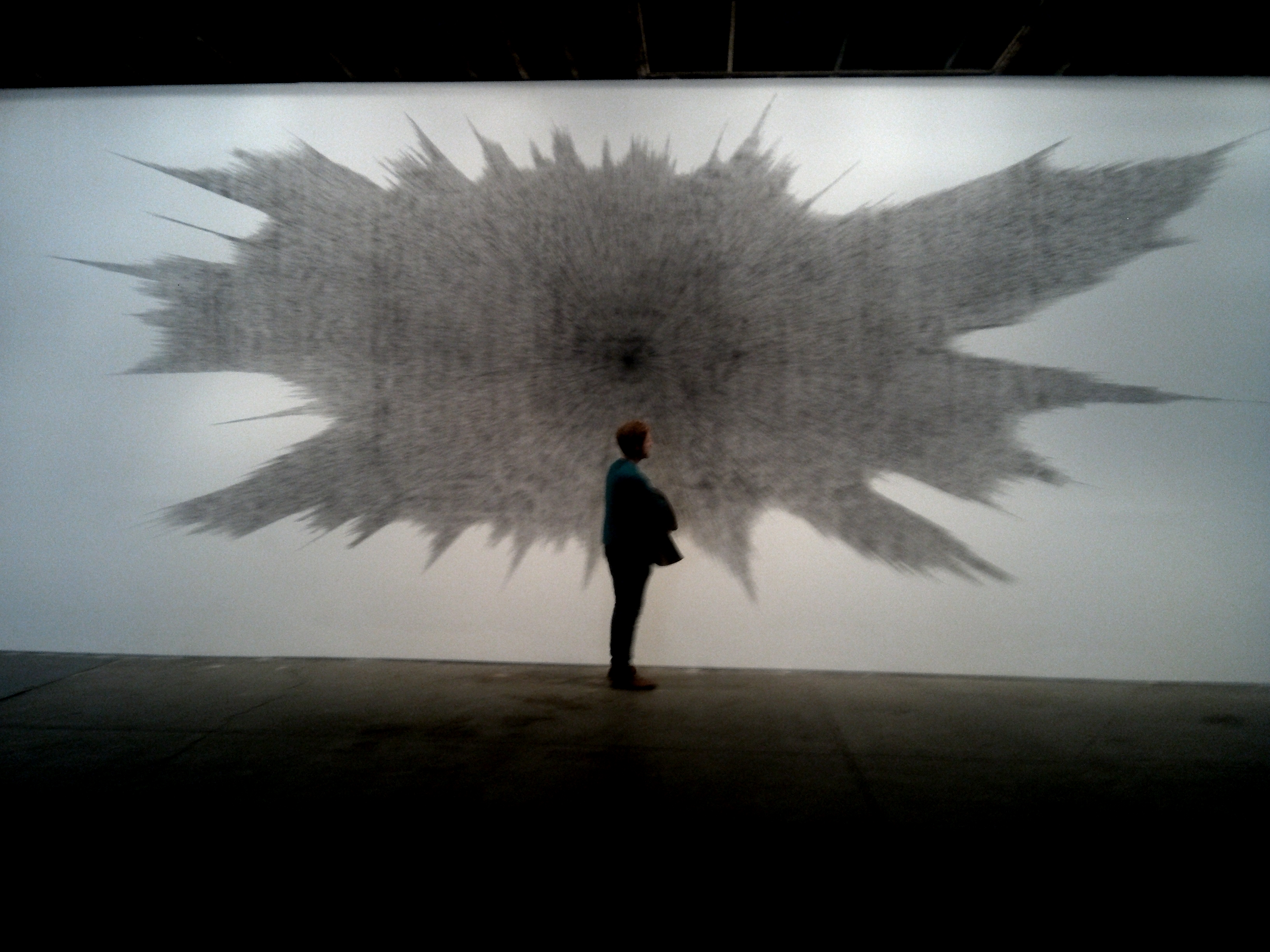
A picture with a mental health sort of vibe, suitable for a leaflet, no sensible offer refused.

Two girls walk slowly to school alongside each other, both talking into mobile phones, possibly to each other.

A man in the public library, reading the newspaper, who moves his finger along the lines of print and whispers the words out loud.

An electrician, talking to his assistant, explains what he is doing as he puts in a new fuse box. He deliberately gives himself little electric shocks at times, explaining that this is something you should never do.

A man clutching a can of Special Brew, talking loudly, seemingly to no-one, as he staggers down the high street.

A kid, pretending to be CIA, talks into his sleeve at quiet moments during a history lesson.

I’ve been observing people talking out loud, and – heresy! – I’m just wondering if there shouldn’t be more of it.

Here’s another unpopular view – I always preferred the original release of Blade Runner to the subsequent versions, simply because of the Marlowe style spoken narrative. We’ve had ‘the final cut’, but I hope there will be more versions, for instance, a musical, with tap-dancing robots.

All this stems from the realisation that we are all several people in one. The idea that we are ‘an individual’ is handy for practical purposes, such as issuing passports and driving licences, but manifestly an oversimplification. Discarding for a moment oddities like multiple personality disorder, we spend a lot of our time in different modes of operation.

Dreaming, day-dreaming, fantasising, imagining for instance. Set on autopilot as we drive to work, often not remembering all the mini roundabouts and small mammals we drove over. Or reverting to chimp mode when there is a perceived threat.

In people who suffer from psychosis, this potential for multi mode operation has been called ‘double bookkeeping’. The ancient example is a patient who is deluded that he is the King, but is content to mop the hospital floor as a day job. Real life examples are frequent enough. One of my customers thinks he is the most senior officer in the British Army, but he is happy to work in the snack bar on a voluntary basis.

There is no need to be psychotic to indulge in double bookkeeping. The phrase ‘creative accountancy’ goes back a long way. Look, for instance, at the target culture of the modern regulated public sector, where information is routinely falsified. I even had trouble typing that word, falsified. I wanted to type ‘spun’ or ‘distorted’ or ‘laundered’, such is our reluctance to attribute malicious motivation. To call someone a liar is a serious insult and perjury can carry a jail sentence. Are all these managers and civil servants who cook the books consciously aware that they are lying, or are they using a series of mental mechanisms to justify themselves?

My hypothesis here is that it is easier to lie in a diagram or a document than it is to lie out loud. Speaking out loud seems to engage bits of mental functioning that are more careful and scrutinising. If you lose your keys, if you speak out loud the word ‘keys’, you are more likely to find them. Hearing yourself out loud seems to kick the awareness level one layer higher.

Apparently negotiations go better if you speak in the first person and include some ‘feeling’ words. If you happen to citizen’s arrest a former prime minister, be sure to mention you are disappointed with some of his bombing decisions and surprised that he thinks he can walk freely around Shoreditch, amidst Hipsters.

If you appear in court, and you hear yourself swear to tell the truth, the whole truth and nothing but the truth, you probably will. Talking to yourself is the new talking to someone else.

And that brings us to new technologies, like Siri and Google Now. If you hear yourself say, ‘is there a good japanese noodle bar round here?’ you will immediately realise that you are being silly. You don’t like noodles and you’re in Rotherham. You don’t need the latest phone, or any phone at all, you just speak into your sleeve.

That’s got implications for psychotherapy, and for the church, which has never successfully marketed its Confession product. If the magic ingredient is simply speaking out loud then you don’t really need the therapist or priest. You could dial 111 and explain your problems over the phone – just unplug it first.


51. Feeding Fivepences into the System.

Image

Durer had a problem drawing the female upper body, which was why he was dropped from the Tomb Raider team.

No-one in the post office queue seems to be talking about Expressed Emotion research. Perhaps that’s because, like the post office queue itself, the concept belongs to the seventies. That’s why I prefer Hermes Mail, where the drop off point is across town, in a corner shop heavily frequented by substance mis-users.

The idea that behaving like a character from Eastenders can bring about psychotic relapse in a family member is devastating. The key ingredients of Expressed Emotion, or EE as we used to call it before the telecoms company stole the name, are supposed to be Critical Comments, Hostility and Emotional Overinvolvement. The same conditions have been achieved on shows that feature hysterical and random harsh judgements, like Strictly or the X Factor.

At the corner shop, a lady in front of me has counted out a large number of copper and silver coins onto the counter and the shopkeeper helps to count them. The customer is an ex punk rocker by the look of her attire, though a quick mental calculation tells me that she was already aged at least 40 in 1978, when punk was at its height, so that her wardrobe consultants may be at fault. Nevertheless, torn tartan trousers are pretty much fine for any occasion, from the Savoy Grill downwards, let alone a trip to the corner shop. There are people in pyjamas behind me in the queue.

The problem seems to be related to the Lottery – she has brought the wrong ticket, or it is not her own ticket, or possibly it is a dry cleaning receipt. She glances back at me conspiratorially and says that she isn’t going to tell the person whose ticket it was supposed to be. I confirm to her that her ethical position is sound, but also that I have no idea what she is talking about.

I observe that everyone in the queue is very calm, despite what seems like a pretty serious delay in proceedings. And I attribute this to a very particular body language on the part of the salesperson. She is a tall Asian lady with an excellent upright posture and a steely gaze.Yet even within the steel, there is a glint that says, ‘make time in your life for an elderly person who cannot cope with the modern world’. This is a low EE shop, I decide, and no-one is relapsing into a psychosis here this morning.

If you like low EE, one of the best shops is called Boyes. It’s hard to explain the ambience. The lighting is soft and the aisles are wide, but in no way confusing. Towards the back of the shop, there are piles of haberdashery and materials, including a large selection of foam blocks. None of the items are brash or tawdry; every item is just the kind of thing you might need one day, if you were turning over a new leaf from a former life as a contract killer.

The public library used to be low EE but things have really changed. In the centre is a ring of PCs which are occupied by students, all of whom are looking at facebook. In the foyer two old blokes are talking loudly about the bets they have placed that day. The atmosphere is tense, because everyone knows the librarian should exert some kind of authority and enforce silence, but this doesn’t happen. And then people arrive to collect free condoms from the help desk, and I wonder how they are filed and coded in the library system. The librarian says they have run out of condoms and apologises profusely. The two customers, who are teenage boys taking the mickey, burst into a fit of giggling . I appreciate the distraction, which allows me to feed handfuls of 5p pieces into the self service machine. So I can rent DVDs and pay fines effectively free, in that I can mobilise coins that were, up till now, beyond use.

EE was one of the most cumbersome tools ever developed by modern mental health researchers. It has fallen out of fashion not just because it is a thing of the seventies, but because it could never be cost effective compared with drug therapy.

It takes a panel of specially trained academics hours to decide if a family is high EE or not. EE can be reduced by special family education programs, the feasibility of which ranks with ‘rolling out’ DIY SOS nationwide.

Otherwise psychotic people shouldn’t spend more than 35 hours a week with their high EE family. That leaves a lot of time to kill. First day centres closed, then Woolworth’s closed, then the library repealed the decibel law. Employment is increasingly high EE, and so is television.

That probably explains why we ‘find ourselves’ in Boyes so much, trying to remember why we wanted foam blocks. And why people trying to avoid a psychotic relapse spend a lot of time in the Hermes queue.

EE is a good name for a business, even if they can’t really provide ‘everything everywhere’. In community mental health care its more a case of Nothing Anywhere, just shops to go in.

Also, its only £3.60 for your parcel, instead of £12.60 with Royal Mail.

50. Taking Canadian Living more seriously.

Image

First, cement each of the six guitar strings to the guitar. Then, cement the guitar to the James Blunt figure. Now, cement the James Blunt figure to the tank controls…

When I was about 7, I had a book called ‘365 Things to Make and Do in Nature and Science’. To be honest, many of the projects were frustrating, as it was difficult to obtain the necessary parts and materials, some of which were quite exotic. In our town it was very hard to obtain, say, an old altimeter from a WW2 German bomber, or a tin of gunpowder. There was also the obvious problem of leaving one day relatively unstructured during a leap year.

Until now, I have never questioned the idea that Doing Something is a worthy use of time, as compared with Reading Something, or Watching Something. But now, typing with a bandaged thumb from an unfortunate slip of the Stanley Knife, tennis elbow on both sides, from excessive screwdriver and spanner activities, and lower back pain from heavy lifting, I’m forced to ponder whether it’s time to say goodbye to B and Q and that new yellow brick road I was planning.

The Nike slogan, ‘Just do it’, is now 25 years old. People were tougher in the eighties – if coined now,  that slogan would come with a number of provisos and safety warnings, such as adding: ‘once you have checked with your cardiologist’ or  ‘providing you are Corgi Registered’.

Though Nike do not state this overtly, their motto asserts a behaviourist stance on life which I interpret as follows – you are what you do. There is a worthy theory underpinning this outlook, stemming from the psychology of self – perception. From what we find ourselves doing, we infer who we are and what we stand for. I am sitting at a computer, wiping blood off the spacebar, so I am a dedicated writer. If I had a Scotch, a full ashtray and a loaded revolver on the desk I’d be even more dedicated.

Last year, as further evidence of a shift from behaviourism toward ‘cognitivism’, Nike took the ‘just do it’ campaign in a new direction: Possibility.

With ‘Possibilities’ we’re taking ‘Just Do It’ to a whole new place, showing people a new way to set goals and think about their own athletic potential’

Thinking about our athletic potential is quite cognitive. If you are taking a penalty shot or serving at tennis, the last thing you want to do is think about possibilities. Probably the one time David Beckham thought about possibilities was the time he shot the ball twenty feet above the crossbar.

Apple’s campaign ‘Think Different’, invented in 1997,  also seemed to pursue a cognitive path. 29 famous ‘thinkers’, such as Albert Einstein, were included in the campaign posters. But if we look more closely at the list, we see that many if not most of the ‘thinkers’ were actually artists or musicians, i.e. people who held tools in their hands, made grooves in vinyl or canvas and left a legacy of artefacts and occasionally accidentally cut their fingers. In fact, none of those featured in the ads were Philosophers, unless you count Kermit the frog.

‘Here’s to the crazy ones’, ran the script,  ‘The misfits. The rebels. The troublemakers. The round pegs in the square holes. The ones who see things differently. They’re not fond of rules. And they have no respect for the status quo’.

The script seems to owe something to Top Gun, where, rather lazily in terms of character development, the hero was named Maverick.

We probably know many such mavericks, but they have never become well known or achieved much, because they thought too much and didn’t do enough. In Britain they would mainly be described as harmless eccentrics. On the other hand, those who made it into the ranks of Think Different were prolific doers. Alfred Hitchcock made over 60 movies for instance; Bob Dylan made over 40 albums.

Maverick couldn’t wait to get catapulted off an aircraft carrier and frighten the MiGs.

I just collected a Depression Leaflet from the doctors while I had my finger looked at.

In the ‘what can be done?’ section there is a bit of practical advice as follows:

‘Vary your normal routine, get out and about if you can, keep occupied if possible, if you can’t sleep, try watching TV or listening to the radio.’

In search of useful things to do I turned to ‘Canadian Living’ magazine. I found an article called ‘Fifty good deeds for fifty days’, which borrows a little from the Random Acts of Kindness movement.

Like ‘365 things to make and do’ however, some of the materials are hard to find. For instance I have no ‘well behaved dog’ to take to visit elderly people, nor any fresh cut flowers to leave at a nursing home. If I happened to buy some pet food at the supermarket to take to the local animal hospital, I’d probably buy something they weren’t allowed, like cream buns.

I’ve come up with these ideas instead, which I’m hoping Canadian Living will publish:

  • Wearing a salvation army jacket and carrying a clipboard, feed parking meters that are about to expire – not for Audi drivers though
  • Get everything out of your food cupboard and throw away any packets with a sell by date before you were born, or 1963, whichever is more recent
  • At Tramshed, in Shoreditch, try and make a citizen’s arrest on Tony Blair.
  • Find a pothole in the road, chalk round it in yellow and report it to Fillthathole.org
  • Place a small whiteboard in your toilet, headed: ‘This toilet was last checked at…’ Then sign with a fictional name and date, such as Attila the Hun, 453 AD.
  • Install Windows 8.1, but first say goodbye to everything you have on your computer, it’ll be like new
  • Phone up Santander Bank at 5.30pm and ask them to answer a short feedback questionnaire, regarding your performance as a customer
  • Phone up the bursar at the University of Leicester and ask for a cash donation towards your holiday in the Bahamas

In other words, don’t just think different – do different. Or differently, if you prefer .

49. Saying no to Mister Kipling.

Image

My new laboratory

Outside Ladbrokes, it occurs to me that behavioural psychology, one of the greatest discoveries of the twentieth century, has fallen, like that other great Russian invention, the Kalashnikov, into entirely the wrong hands.

Clinicians have neglected behaviourist explanations and treatments for mental health problems, leaving these dark arts to commerce.

Though still called cognitive behaviour therapy, CBT has edged out the behavioural aspects, such as facing feared situations in real life, or reducing unwanted repetitive actions like texting during mealtimes.

The move towards Mindfulness has taken things even further in this direction. Whereas behavioural techniques can be applied successfully to animals, mindfulness cannot. Herein lies the problem. Therapists are most reluctant to regard the human being as an animal, whereas it suits some commercial interests for people to act like plankton.

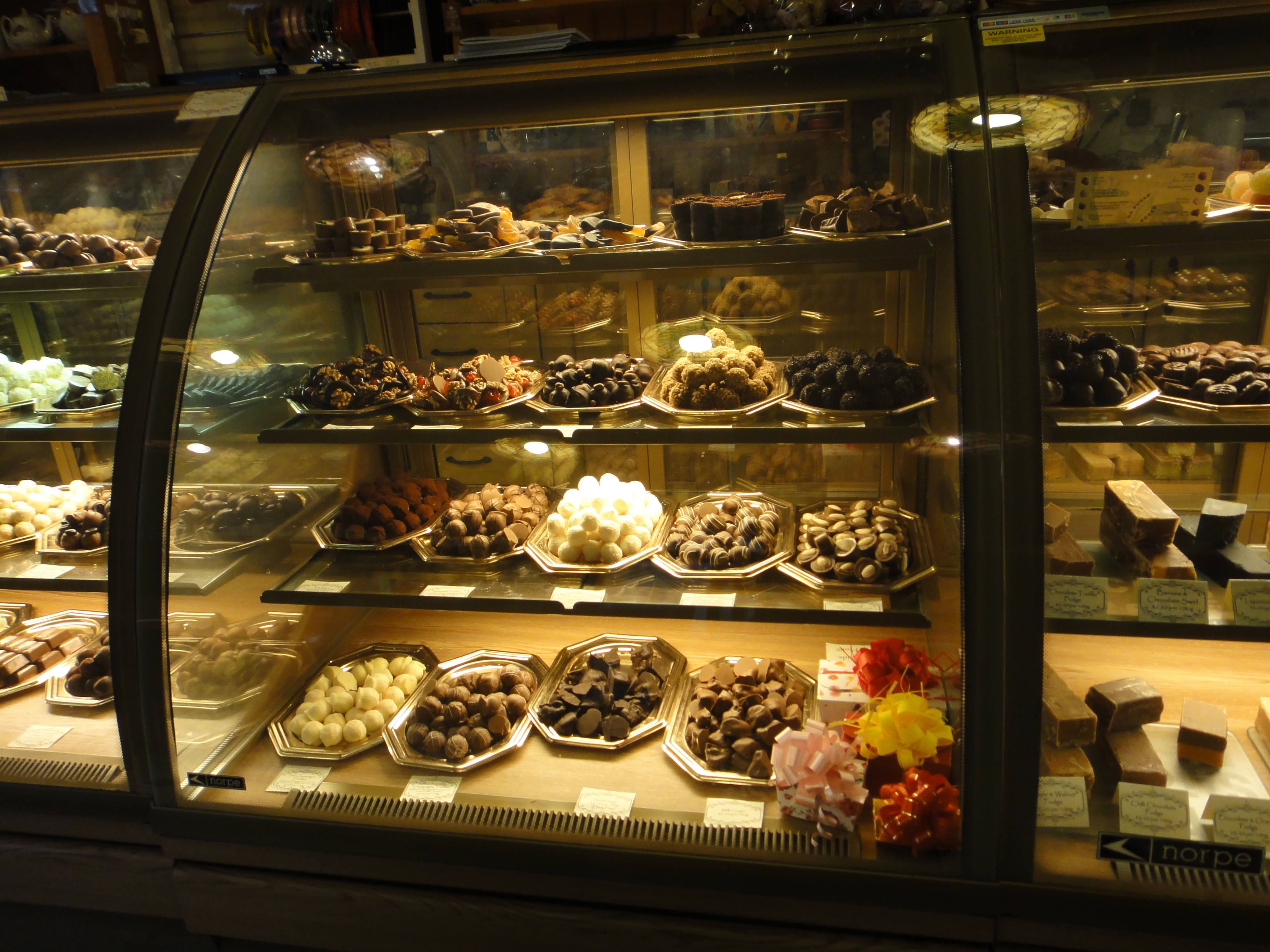
In fields such as gambling, shopping, advertising and food, simple behavioural strategies have proven to be devastatingly effective. By placing rows of sweeties either side of the checkout in supermarkets, or sending a tinkling food cart slowly but surely up and down planes and trains, we are made to drool. Our sense of scale is disrupted, by selling massive chocolate bars for £1, next to tiny versions for 65p and three-for-two offers. Greater consumption seems to make sense.

Behavioural interventions like graded exposure and exposure response prevention are too dangerously similar to common sense to warrant an exorbitant fee in clinical practice. Whereas a gambling machine or a chocolate bar has no problem reducing you conceptually to the role of laboratory animal.

I’m just dreaming up another screenplay, which is for a re-make of Traffic, but with people addicted to sugar instead of heroin, with fat actors instead of thin.

I’m hoping it’ll get funded before the current moral panic about sugar dies down. The idea is to examine ‘the sugar problem’ from different perspectives, from politicians and big business on the one hand, to the crowds of diabetics camped outside Clinic 16 on the other, via the sticky pavements outside KFC.

Here’s the background theory as I understand it, simplified for the movie:

1. For some reason, the USA has a big corn syrup industry and puts corn in all kinds of food products.

2. Fructose, made from corn, is sweeter than glucose and has less feedback effect on the brain, leading to over-consumption and frequent trips to the Spar shop.

3. People get more tolerant to sugar, increasing their consumption progressively.

4. They may experience craving and withdrawal effects similar to chemically addictive drugs, leading to sugar addiction

5. Sugar tweaks the dopamine and endorphin pathways in the brain. These are shown diagrammatically as massive cables connected to the addiction box, which is sited just behind the nose.

6. Recognising they have an addictive product on their hands, the food industry takes advantage, increasing the sugar concentrations, fructose content and portion size. 500ml becomes the new 330ml. We are asked at food shops if we want to ‘go large’ and we say yes. Shouldn’t there be a consent form for such a far reaching decision?

7. Big Sugar runs a clever diversionary tactic, blaming Big Fat for everything.

8. The insulin manufacturers get richer.

9. Politicians propose a Sugar Tax, forgetting it was an OMD album and they probably still have copyright.

10. Grand Designs features an edible house made of Glacier Mints.

Did the mental health industry play its part in the great sugar rush? At first sight, it looks as though our hands are also sticky. Mainstream psychiatry demonised the use of amphetamines, barbiturates, benzodiazepines and antipsychotics as tranquillisers, while promoting ‘atypical antipsychotics’ that were strongly associated with weight gain. Psychiatrists promoted the concept of addiction and started applying it to things increasingly difficult to compare to heroin, such as chocolate, sex, darts and embroidery. As a result, the concept of addiction has become a metaphor for any repetitive pleasurable behaviour that has a downside.

The mental health industry is buying into the idea that drugs and even foods have power over us and may enslave us if we weaken. In terms of reducing the crowds at clinic 16, will it help to regard sugar as an addiction? More likely it will prove counterproductive to empower sugar by deeming it a chemical of substance. There’s no denying that sugar is a powerful ingredient – the taste for sugar is hard-wired. After all, it’s only competing with three other tastes, two of which are bitter and sour. It’s a taste that children seem to love, but that many grow out of. But in the end it’s just a molecule, not a mystical power. Food and drugs are tools for us to use, not the other way round.

I’m pretty sure, in a double blind trial, I could not tell Coke from Diet Coke. Yet everyone I ask assures me there is a massive difference. There’s an urban myth that sugar intake creates a ‘rush’ or increases energy, even risking overexcitement. Who planted that idea in popular consciousness? Mars, perhaps.

As a debunking exercise, I did a small field trial on the so-called Death By Chocolate. Suffice it to say I survived. Should I have asked for my money back?

Image

The Death By Chocolate, before the experiment

Maybe the marketing men did not envisage how strongly sugar would catch on, given a combination of chemical and social reinforcement and low pricing. Companies say they have increased portion size and fructose content because people are demanding larger and sweeter products. A kind of forward feedback has occurred, and the moral is, conditioning is a powerful motivator.

How to end this movie then? One idea is to have all the dark psychologists who manipulate our food preferences arrested in a raid on Tate and Lyle? Or an upbeat ending with scientists discovering Baking Canderel? Or a line of addicts at the sugar clinic, receiving treacle in little pots, instead of methadone?

Incidentally, please do not attempt the Death By Chocolate challenge without medical advice. Sometimes these urban myths have a grain of truth in them.

48. Tuning in to the sound of sharpening knives.

Image

An architect taking a quick personality test

It’s a clear, bright evening in Yorkshire. A man in a Volkswagen Golf stretches both hands behind his head, steering for a while with his knees. He is observed by police safety cameras and later charged with dangerous driving. Not only does he get a year’s ban, 100 hours community service and a fine of £685. In addition he is vilified on the evening news by a sanctimonious policeman. In a moment he has gone from ordinary bloke to public enemy number one. The moral of the story is that any pretence that Yorkshire had to be ‘the Texas of England’ has completely evaporated.

The deeper moral is that sanctimonious people are much more dangerous than careless drivers. It’s not that long ago – the eighties? – that people were put in pillories and stocks and burned as witches. More recently the tabloids have taken over the hunt, bringing down celebrities whenever they can.

I am sure the bible covered this very issue, in the episode about casting stones at the adulterous person. Clearly, hypocrites have always existed. The practice of scapegoating existed in Ancient Greece, where they used to throw a beggar or a disabled person out of town whenever there was a natural disaster. They could have used a goat, like the Israelis, but maybe it suited them better to exclude a person, in terms of reducing the social security budget.

If the storms and floods continue I suspect we will have to blame a football (or cricket) manager and cast him out. It would be all too easy to mention a name or two.

It probably suits the police to pretend they are fighting crime by video. But a casual inspection of the local town centre reveals significant criminal activity. Lots of drivers are using mobile phones, parking on yellow lines, eating sandwiches and smoking cigarettes. All at the same time, in some cases. It wouldn’t take me long, if you made me a crime-fighter, to find people riding bikes without lights, on pavements, or even without hands on the handlebars.

Higher up the criminal food chain, complex laws are also enforced selectively, from drug possession to tax evasion, depending on the whim or policy of the CPS. The EU Commission even has an article in its constitution stating that it will pick and choose what it wants to enforce.

Suffice it to say, there seems to be a lot of luck involved in falling foul of the law, certainly more than your history teacher explained on the Magna Carta field trip.

I suspect the recent legislation banning fox hunting with dogs reflects an acknowledgement that all of us might have a deep rooted and nasty tendency to join a baying mob, which must be guarded against.

Scapegoating is a process found in dysfunctional groups and families. It is viewed as an unhealthy defence mechanism that, nevertheless, serves some purpose in preserving the group’s existence. Scapegoating often seems to occur in group therapy, where it can be interpreted, or even better, treated. With jazz.

Today’s paper reveals that jazz has infiltrated the public sector and has been applied to NHS managers, senior policemen and the department of transport. Alex Steele, musician and founder of ‘Improwise’, states that the NHS, in need of radical change, has called in his jazz quartet several times ‘to help with leadership’.

A police chief is quoted as saying the situation in his organisation was best explored through ‘parallels with the world of jazz’. Comedian Alexei Sayle famously observed that Jazz had no natural enemies or predators, but it seems he was wrong.

The Department of Health ’rounded furiously’ on the jazz workshops, stating that taxpayers will be ‘rightly appalled’.

So, jazz, intended to help groups function better, itself becomes the scapegoat. But Jazz cannot be blamed for careless driving. Hands off the Wheel was grunge, not jazz, and Asleep at the Wheel are Country. From Texas, not Yorkshire.

46. Christmas Quiz

Image I

For each question choose which one answer is correct:

1. The Mind and Body are:

a)      Inseparable

b)      Made of different kinds of slime

c)      Connected by USB

2. The Human Mind uses an Operating System which :

a)      Usually responds to turning off and on again

b)      Was initially rejected by Steve Jobs

c)      Is essentially adapted from the Chimpanzee

3. Who will not come to your rescue?

a)      DIY SOS

b)      The A Team

c)      David Miliband

ddownload

4. Where did the sickman go, after disappearing from medical cosmology?

a)      Costa Coffee

b)      Became conceptualised as a cell complex

c)      Outside, having a fag

5. Suitable scenarios for a Truth And Reconciliation Commission include:

a)      Desmond Tutu’s kitchen

b)      Nigella Lawson’s kitchen

c)      Pussy Riot’s charity gig at the KremlinPussy-Riot

6. Examples of Word Inflation include:

a)      Management Speak

b)      Cognitive Therapy

c)      Dan Brown Omnibus Edition


7. The following has proven antidepressant effects:

a)      Aerobics

b)      Chairobics

c)      Blairobics

8. What has happened to Ashleigh and Pudsy?

a)      They are hiding from animal rights activists

b)      Creative differences between them led to a bitter legal dispute

c)      Panto season

9. Which of these problems is not a cosmetics range?

a)      Opium

b)      Obsession

c)      Paedophile

9. Which of these bands is an effective antidepressant?

a)      Primal Scream

b)      Placebo

c)      AC/DC

11.  Who should you send for if one of your brainwashed assassins goes berserk?

a)      Patrick Stewart as Eddie Roebuck

b)      Patrick Stewart as Dr Jonas

c)      Patrick Stewart as Macbeth

12.  Who bore the brunt of the Michael Jackson inquiry?

a)      Bubbles, for not seeming to care

b)      Paul McCartney, for insisting the girl was his

c)      Conrad Murray, for ticking the wrong boxes on his risk assessment forms

Merry Christmas dear reader!

45. Hosing out the caves of plenty.

Image

Celebrating the end of the cull.

Consider this: Celine Dion has sold over 200 million albums worldwide. Kodak sold over 70 million Instamatic cameras.  And more than 5 million ZX Sinclair computers were produced. Where have they all gone? The answer is: the house on Gladstone Street, the one with the twenty-foot-high overgrown garden and council notices pinned to the door.

There’s a new diagnosis in town and its name is Hoarding Disorder. Everyone’s talking about it, but no-one is doing much about it yet. That may be because there is no recommended drug therapy, and it’s even a bit dubious whether behaviour therapy will help, unless the sufferer wants to change.

I know, the word sufferer is politically incorrect, I’ve been on the disability and diversity courses. And in this case it is literally incorrect, as the people who suffer are neighbours, relatives and carers, rather than the hoarders themselves.

In DSM5, Hoarding Disorder escaped from the OCD section and was given its own little category. It’s significantly different from OCD, so, like South Sudan, though considerably more cluttered than that country, it has gone its own way.

There are a few other categories associated with squalor, including the so-called Diogenes Syndrome. And there are some similar scenarios which are not considered mental health problems, such as Collecting and Teenage Room Disorder.

Most psychiatrists will have visited homes like the one on Gladstone Street, and sat in sticky chairs, next to overflowing ash trays the size of buckets. We get pressurised by housing departments and public health officers to assess the people who live in these conditions.

In Diogenes Syndrome, which apparently is unfairly named, as Diogenes was a minimalist and lived in a barrel, the affected person simply gives up on the fight to organise, recycle and dispose of stuff, so that a rising tide of garbage fills their house, and finally flows out of the doors and windows, past the complicated row of empty recycling bins.

We could regard these problems as brain based, as in frontal lobe dementia, or part of some other problem, such as Depression, disorganised-type schizophrenia, or Compulsive. We could take a view that such habits are eccentric, or even just lazy. I prefer to look at environmental causes. Hoarders are basically overwhelmed by modern life. It’s not so much the quality of the environment as the quantity. They are victims of what should be called ‘Stuff Inflation’.

Whereas economic inflation leads to money losing its value, stuff inflation leads to manufactured items getting cheaper per cubic inch. Combining this effect with reduced living space – British homes are small on average – gives an ever increasing stuff to bloke ratio. There’s even a magazine called Stuff. And there’s a shop called Poundland, from which Stuff flows, like water from a fountain.

If the alcohol industry creates more product than people can consume, some of it will accumulate excessively in certain individuals. If the availability of alcohol is adjusted up or down, a lesser or greater number of people will consume it to excess.

Similarly, if the world’s factories create more stuff than can be recycled or land-filled, a pooling effect will occur.

Quite how these ‘trickle down’ effects affect particular individuals is the big question for clinicians. Like Magpies, humans have an innate urge to acquire items, and there is a whole industry directed toward persuasion. Why Magpies like shiny metal trinkets is a bit of a mystery. I have never seen a Magpie wearing jewellery, or queuing up in Cash Converters, or playing a slot machine.

I suspect that, like many mental health problems, Hoarding Disorder will turn out to lie on one end of a spectrum rather than behave as a discrete disease entity. I’d be surprised to find anyone who didn’t show some signs of hoarding, if we looked in their loft, car boot or Celine Dion collection.

People hate to lose things they already have, and retain an evolutionarily useful tendency to stock up in case of a bad winter or poor harvest. People need some token or another to explain why they have been at work all day.

Faced with a tsunami of disposabilia, some people just give up trying to cope with it. Hoarding may be just one of many ways people give up on dealing with modern life.. There are so many waiting for DIY SOS, or International Rescue, or the A Team to come, but sadly, there is no De-cluttering service in Yellow Pages. The time cost of sorting through piles of possessions far outweighs the value of any items unearthed, so it even costs money to have everything taken away.

The solution probably lies at political level, with more powerful Stuff Police and a new Ministry of Trinkets. A landfill windfall tax for Poundland would be a good start. NICE could come out officially in support of Minimalism. More of the plinths in Trafalgar Square could be kept empty. I think the NHS has already adopted the slogan Less is More. David Cameron could issue an official apology to Diogenes.

On a personal level I think we should recognise that we can all go down this road if we are not careful, so some attention to Stuff Hygiene is needed.

In previous EPs we destroyed any vinyl records or cassette tapes we had left. We invited the British Heart Foundation into our homes, as bailiffs of charity.

Beyond this, the solution may lie in The Cloud. Somewhere in the world there are some very untidy banks of computers, but, importantly, they are not in Gladstone Street.

44. Saying goodbye to Virginia, more sensitively.

Image

Marshmallow invasion: The first wave.

You might find this hard to believe, but it’s quite a while since I’ve been punched in the nose. Especially considering the number of times I have ‘misjudged the rapport’ with our service users. However, I just discovered a product called ‘First Defence’, which creates a very similar sensation, but without the violence. First Defence sounds like the name of an outsourcing company for mercenaries, or possibly the military wing of the bus company, but rather, is a product made by Procter and Gamble, to prevent the early symptoms of a cold turning into a screaming, streaming viral attack. It’s a kind of Early Intervention Service, in a little spray.
Many of the Early Intervention services for mental health problems have been scaled down or discontinued. However, there has been a refocussing of efforts to stop our patients going on to develop lifestyle-related problems such as obesity, diabetes and vascular disease. NICE intend to step up the anti-smoking component of our role.
For every new consultation, our first questions will be about smoking, exercise, diet and alcohol use. For our inpatients, nurses will not be allowed to facilitate or supervise them going for a smoke. Furthermore our nurses will not be allowed themselves to smoke, wearing any kind of uniform or NHS regalia, not even a Charter Mark badge from 1994, nor one of those badge / lanyard accoutrements that staff-not-at-risk-of-being-strangled wear round the neck.
Please note the new CCTV cameras behind the bike sheds.
You can see now why I started with the punch in the nose issue. Before the patient has a chance to tell us anything, we will have:
Recorded the names and ages of their children and where they go to school.
Made them sign a confidentiality agreement stating that we will shop them to the police or social services if they come out with anything too alarming.
Calculated their Body Mass Index, including commenting whether they are shaped like an apple or a pear. I could perhaps disguise that bit as a personality test – if you were a kind of fruit, what fruit would you be?
Guaranteed to break the ice, I think you’ll agree. We’ll hear about your problems shortly, as soon as we’ve got through my agenda.
Whether we can make a difference to patients’ lifestyle is rather dubious. A sceptic might point out that it is really difficult to treat obesity or cigarette smoking in people who are feeling fine, let alone those who are going through difficult times. Even well directed smoking cessation programs struggle to achieve a lasting effect beyond the first 6 months. By 12 months most people with major mental health problems are back on the weed. Yet, in anticipation of the NICE guidelines, the effectiveness of such programs is being ludicrously oversold, often by the same people who dispute the efficacy of medication for mental health problems.
Psychiatrists will not be allowed to stay out of the lifestyle war. Unfortunately, we have unwittingly caused part of the problem by promoting tablets that cause weight gain, and letting people smoke in our hospitals, to help them calm down. Most people with psychotic conditions like to smoke – upwards of 70%. In surveys they say they enjoy the experience.
The orthodox view is that cigarettes do not help people concentrate or relax. They merely reduce the effects of nicotine withdrawal the smoker is already suffering. We have tended to view smoking as a relatively minor problem relative to mental illness. Now we are being asked to make it more of a concern. This is all OK, except for the damage it might do to people’s relationships with their doctors and nurses.
Coming across as positive is one thing, adopting the tone of a sports coach is another.
Very few psychiatrists wanted to be PE teachers when they were little. It’s just a hunch. Many of my colleagues – let’s put it nicely – wouldn’t make it as underwear models. Are we in a good position to set the lifestyle agenda? ‘Mindful walking’, to us, is being careful not to trip over those yellow signs that cleaners leave on stairways. Some of us even remember what the inside of a golden virginia packet looks like.
We know from long experience that telling people what to do is a bad idea. We know from many surveys that people like us to listen to them. We know that genuineness and empathy are key therapeutic ingredients. Yet only this week a social worker, who had just detained one of our patients under the mental health act, told me she thought what would really help the gentleman concerned was a back-packing trip across Scotland, rather than tablets.
Luckily, there is no section of the act that mandates back-packing or cross-country running. Yet.

42. Staying hermetically sealed outside Primark.

Image

Recently a golf pro asked me whether I did any sports psychology. The only advice I could think of was the idea of treating every shot as a ‘hermetically sealed unit’.

‘Oh, you mean, the bubble’, came the reply. I nodded. Someone had obviously thought of my idea first –  Professor Woods, I expect.

On reflection though, I like the phrase ‘hermetically sealed’ better. Imagine being able to extract a single item of behaviour from its context. Imagine taking the item into the lab for a while, looking at it carefully, brainstorming the possibilities. And finally taking the shot, just exactly as you have practiced a thousand times.

Breaking down analogue behaviours into single digits is an attractive way of avoiding the effects of anxiety, or other emotions – like sadness and humiliation – found so frequently on golf courses.

The idea of living in the moment is not new, even though the mindfulness brigade have latched on to it. Sure enough, a brief excursion into google reveals a huge literature on ‘The Power of Now’. Forget about the past, forget about the future.

It’s a 6 foot putt breaking left to right on a downhill slope. Take that putt like Leonardo painted the Mona Lisa’s eyes. Give it everything. Make it perfect.

Golf is of course a flawed analogy for life in general, although for some people, golf is life in general. Golf lends itself to a model where a sequence of discrete events, strokes, make up a sum total. The scoring system is numerical and precise. Even better, there is a handicapping system to compensate the less fortunate. It’s the only game with its own system of social security. It’s like getting a GCSE upgrade on the strength of a Doncaster Postcode.

The same system cannot be applied to more complex behaviours where the scoring system is fuzzy and subjective, for instance, telling a joke, or interacting with someone selling the Big Issue outside Primark. Do we make eye contact? Do we say anything? Do we stop? Do we even buy the paper? What do the NICE guidelines say?

Luckily there is a simple tool to help us live in the moment, one that we have all used. I am referring to the Multiple Choice Questionnaire, or MCQ. If we could think of our day as a series of MCQs, then we could really start to focus on the Now.

MCQs have become the stalwart system for exams. They have several advantages, such as subjecting themselves easily to statistical analysis, but the main advantage is that they can be marked by a machine rather than a teacher after pub closing time.

MCQs are best at testing factual knowledge, but they have been developed to test logical reasoning and other skills. Like crosswords, MCQs have their little quirks and habits that students get to know. For instance if it says ‘Never’ or ‘Always’ then the answer is False. Though some events do occur 100% of the time, such as the sun rising in the East, or England losing penalty shootouts, such events do not trouble the world of exams.

There are other quirks. Some questions have one option that is plainly silly. It’s unclear whether these are designed to reveal a stratum of candidates who are also plainly silly, or because the examiners have been a bit lazy creating proper options:

Q) A 20 yr old female is nervous of being focus of attention in public, so she avoids parties & canteens. Develops palpitations, anxiety, tremors during social engagements. Diagnosis is

One answer only.

    a) Panic disorder

    b) Social Phobia

    c)Anxiety disorder with Panic attacks

    d) Measles

The silly option is usually the last one, supporting the lazy examiner hypothesis.

Instead of the silly option, some examiners prefer a twist of surrealism:

Q)  A 22 yr old male is arrested for sexual harassment of a girl & is found to have tachycardia, dilated pupils, hypertension, sweating, increased psychomotor activity, elated mood , pressure of speech & inflamed nasal mucosa. Diagnosis is

One answer only.

    a) Bipolar disorder type II

    b) Manic phase

    c) Cocaine intoxication

    d) Rock ‘n’ Roll


The art of turning our day into an MCQ test, may reveal, sadly, that there are surprisingly few choices we get to make. The biggest one is probably between Macchiato and Flat White. In daily life, the silly and surreal options – trying a fish foot spa or keeping a pet iguana – outnumber the sensible decisions. Such is the ‘choice architecture’ in the modern world. The main trick, like thought – catching in CBT, is to identify a decision point when one occurs. Realise there’s a choice to be made and hit it with an MCQ.

But what about the Big Issue itself? How are people behaving outside Primark? Here are some specimen answers I got from the web:

  • The woman who sells it in our village is a thief. She has been in court more  times than i have had hot dinners. The last time she took her child /  buggy into Peacocks and stole tonnes of clothes, using the buggy


  • I give them some money, but I don’t take the magazine. I used to give money to one seller quite regularly, and he was a nice guy but he was really  troubled. I haven’t seen him for a few months so I think his situation  finally got the better of him


  • So      what makes you think he’s not genuine? Because he’s a tw*t? tw*ts are  homeless too. In fact, IME, the proportion of tw*ts amongst the homeless is far higher than the general population


  • I buy the magazine. It sometimes has some interesting articles and interviews, but that’s not what I buy it for.


  • ‘To avoid buying it, i once told a ‘Big Issue’ seller that i got it delivered. The next time i passed him, he punched me’


It looks as though the silly and surreal options are both included, but which one is which? Try and stay hermetically sealed while you decide.

41. Finding Tannochbrae, and rolling it out.

Image

The NHS keeps being re-organised. This week we have the new GP contract and post-Francis, a splurge of nurse recruitment from the EU. The feeling is, the NHS has taken several bullets, and if this was an action thriller, we’d be waiting to see if it’s going to fall down or turns out to be wearing a kevlar vest. There’s a kind of impasse as people wait for the inevitable closure of smaller hospitals, walk-in centres and stagger-in centres, aka A and E.

The worst way of re-organising an organisation is to consult widely, sit down with ‘stakeholders’ and listen to experts. Instead, we need to reach down into the collective consciousness and find the archetypes of medical practice. We need to find the icons and copy them and work backwards from there. For medicine, we need to look no further than historical medical TV drama to find out how things ought to be, and in particular, the 1960’s shows, Dr Finlay’s Casebook, and Dr Kildare. This is what we should be reading:

‘The new general practice contract is more prescriptive and detailed than people expected. It looks as though there are going to be two doctors in each practice – one old and one young. Both must be Scottish. Only one other employee is mandated, an older female ‘housekeeper’, ideally called Janet.

The doctors must not be married. Beyond a telephone they will not use any modern form of communication device. The younger doctor must keep up to date and introduce anything deemed new-fangled. The older doctor must act as mentor and companion to the younger, specialising in wisdom and wry expression.

Although comparatively wealthy, both doctors should espouse a liberal stance and champion the disadvantaged. Both of them should know their way round a microscope. At times they may use a Motor Car to visit patients in their own homes’.

The model for hospital doctors is slightly different. Whereas the two Scottish GPs are brimming with lifestyle advice – such as proper fish filleting technique – the hospital team’s job is ‘to keep people alive, not to tell them how to live’. The hospital also uses a team of two, again an older and a younger man, but this time they are American. Both of them look good with stethoscopes and know their way around machines that go beep.

In all cases, tweed is de rigueur, no suits.

Both in general practice and in hospital, the teams will need to fight against rogue practitioners. In the community this is likely to be a toff, who works single handed, mainly in private practice and drives a Bentley. For some unaccountable reason, he has something of a way with the ladies. In hospital the main enemy is an autocratic character who calls himself The Chief. He’s in the board room far too much and never in the operating theatre. The ladies don’t like him, apart from one sycophantic, sado-masochistic type.

Both teams like a lot of background music, favouring lavish strings arrangements. But whereas the GPs prefer a jaunty tempo, in hospital it’s strictly andante, to match the steady flow of trolleys down corridors, with tubular bells on the offbeat.

Jeremy Hunt, you used to be culture secretary, so you know all this. Finlay and Cameron would never have sat around on clinical commissioning groups or attended team building workshops. Finlay would never have gone on about strategic aims and driving down operating costs by standardising the infrastructure. If Cameron had to say something like, ‘we need to front-load the front-loading’, he would at least deliver the line in a huge theatrical splutter.

The archetypes are a little different for psychiatrists, being found mainly in movies. These have been well documented in papers such Theory and Practice of Movie Psychiatry, by Irving Schneider.* The actor Patrick Stewart turns up in two pivotal roles along these lines, first as the decent-sort consultant Eddie Roebuck in Maybury, and much later on, after several years in space, as the evil Dr Jonas in Conspiracy Theory.

In the latter role he offers a poor model of practice, specialising in finishing off the survivors of a brainwashing assassins program. Though there are no NICE guidelines on brainwashing, and how to handle it when it goes wrong, Jonas probably missed the short medical ethics course at the end of year 5.

It’s likely that the new template for mental health practice will be more like this:

‘The psychiatrists, who are brothers, seem a little fussy and pompous but mean well. To compensate for limitations in his interpersonal skills, one of them runs a local radio show where patients can phone in, so that the whole community can benefit from his wisdom. For background music, it’s strictly jazz.

Jeremy Hunt, these are our heroes, not the Kings Fund, nor NHS England, nor the Nuffield Trust, nor the CQC. As culture secretary you were the one person in the country never to watch UK Gold, but now it’s time to catch up.

*Am J Psychiatry. 1987 Aug;144(8):996-1002)