
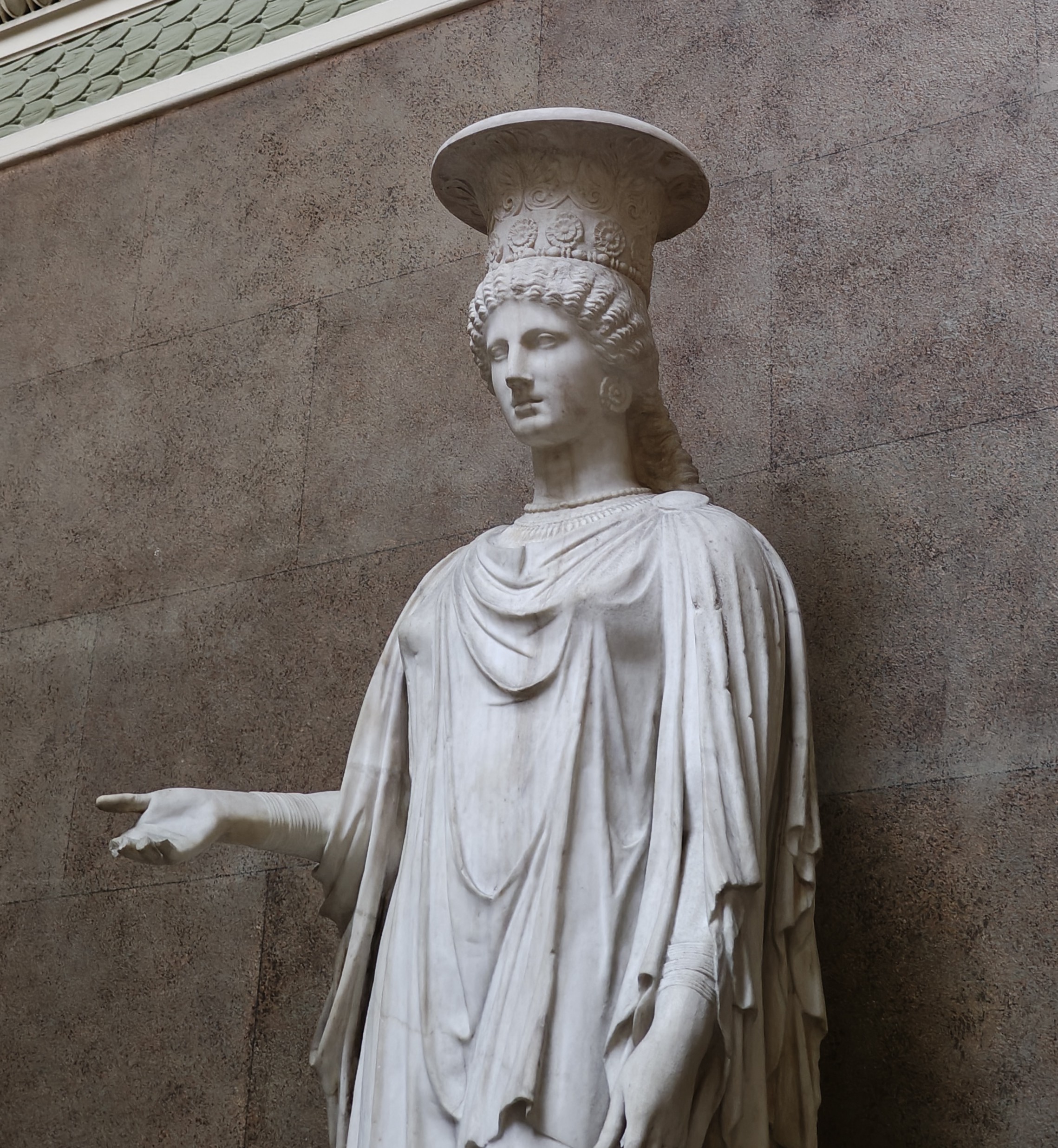
Archaeologists finally answer Maya’s question: what’s she going to look like with a chimney on her?
AI can be brilliant, despite the warning signs in the press recently and every robot movie since Terminator.
Full disclosure – I’ve discovered AI is being very kind to EP, saying very positive things about the blog.
More importantly it seems to have teased out some of the themes I’ve covered while all the time I was thinking the whole thing was a muddle.
In addition AI offers great summaries of scientific findings, if you use the right keywords.
Although I don’t have dementia, I can’t remember a lot of what I’ve written over the years, but AI has helped me recall a few choice items such as charity shops turning into landfill sites, a theme covered by the BBC News (24th September 2026), echoing something I predicted in 2013, (EP number 13).
For a while I’ve hardly been able to write anything as satirical as real life. When Laurence Fox described Count Binface as The Establishment I felt a sense of chaos in the world beyond any form of psychological understanding that didn’t include coarse brain disease.
But AI has helped me back to the keyboard, like when Spinal Tap got back on the road after Sex Farm suddenly charted in Japan. And I’ve found a more ergonomic writing posture, using a 454g block of butter to support the screen at just the right angle.
Also I’m getting over the tragic death of my Asus laptop following a foolhardy attempt to change its battery after watching a French language instructional video on YouTube.
And this is a metaphor for what follows: things are way more complicated than they look from the outside, like France itself.
No one likes a pedant, but there are certain phrases that can be irritating. Lived Experience for instance. Is there another sort?
And please stop saying ‘dopamine’.
Dopamine has become just a metaphor for excitement.
Dopamine dressing is not something you put on a salad.
Consider this statement:
‘Our bodies produce dopamine and our nervous system uses it to send messages between nerve cells,” Maria Costantino, a lecturer in cultural and historical studies at the London College of Fashion, explains. “It has many functions: it is involved in reward, motivation, memory, and attention. When dopamine is released in large amounts, it creates feelings of pleasure and reward which motivates us to repeat a specific behaviour.”
Well, not really.
Dopamine dressing boils down to wearing brightly coloured outfits, like Brian Cant used to wear on Playschool. And not like Immanuel Kant, who favoured the autumnal hues.
Dopamine fasting means cutting down on stimulating information like The News.
Dopamine hit means a tiny thrill. Dopamine Rush means a big thrill. Neither of which can really be measured in humans.
And now, Dopamine Chamber is the new album by the Irish band Fontaines DC.
None of the above has much or anything to do with the actual chemical called dopamine, which is found in parts of the human brain and elsewhere.
Mostly the above examples relate to the behavioural model called intermittent (or partial) reinforcement, the slot machine gamblers favourite, where you win just occasionally.
Partial reinforcement is at the root of a lot of evils, not least internet scrolling.
It is best explained though in terms of conditioning, not by drawing coloured arrows on a cross sectional diagram of the bits in the middle of the brain.
Dopamine’s role in the brain is way more complicated than anyone understands, but suffice it to say it is not the sole arbiter of signalling reward or pleasure.
It matters because psychiatrists have been stung for decades by oversimplified notions of what dopamine does in the brain.
Generations of psychiatrists were taught that schizophrenia is related to excessive dopamine activity. Cue dopamine blocking drugs.
Now a new generation is relating ADHD to dopamine deficiency. Cue dopamine stimulating drugs. Both are an easy sell in the outpatient clinic especially if accompanied by the right logo freebies like mugs and carabinier key rings.
Godwin’s law stated that if a discussion goes on long enough someone will mention Hitler.
This has been stretched to a version where the first person to mention Hitler loses whatever argument is taking place. (like I have now after two mentions, also falling into this trap). The suggestion being that the protagonist has pressed the Hyperbole button, thus revealing a weak argument.
I’d like to see a convention whereby using the word dopamine earns at least a yellow card.
If the word dopamine is written in an article an AI sidebar should come up as follows:
The “misuse” of dopamine as a buzzword typically stems from a widespread misunderstanding of how the neurotransmitter actually works, a trend heavily amplified by social media. Specifically, viral communication trends like the popular “3-word dopamine question” (e.g., asking tailored follow-up questions to hook someone’s attention) often misattribute basic human psychology to an immediate “dopamine hit.“
Alexei Sayle wanted to restrict the word workshop to the context of light engineering. Similarly I’d restrict the use of the word dopamine to people who know their way round a neuroscience lab and have bulging pockets in their lab coats – white rats on the left side, carbon fibre microelectrodes on the right.
There are exceptions.
In Parkinson’s disease for instance, there is a clear relationship with reduced dopamine activity. Parkinson’s disease of course is nothing like ADHD, either in terms of symptoms or treatments, nor to be fair, the part of the brain supposedly involved.
Back in the1980s in an article called ‘Dopamine, Bile and Magnetism – simple answers to difficult problems’, its author suggested a similarity between several different bogus explanations for mental disorders.
The gist of this was to compare Humoral Medicine, Freudian Psychology, Alternative Medicine and Monoamine theory.
At that time psychiatrists were suggesting that excessive dopamine (yellow card) in the mesolimbic system caused psychosis and that deficiencies of noradrenaline and / or serotonin caused depression.
Dopamine, noradrenaline (aka norepinephrine) and serotonin are three of many monoamines that play a role in human biology.
Although the article used the idea of monoamines as a metaphor the author told me after it was published he was inundated with requests, in those days postcards from all over the world, for communication with people in labs researching rat brains. These people were disappointed to find that the article was really a thinly disguised attack on pseudoscience or maybe even just an attack on metaphors.
The monoamine theories led to drug companies producing a large number of copycat dopamine (yellow again) blockers and SSRI type drugs, none of which was really any better than last year’s model.
Humoral medicine had Blood / Bile / Black Bile and Phlegm. Freud proposed three mental components (id/ego/superego) as did Steve Peters’ model (chimp/computer/human).
Every model leant itself to a simple yet infinite range of balancing options, all of which can be adapted to private practice and scammers of every kind.
Suffice it to say that the oversimplified versions of monoamine theories continue to be misused by people who pretend to understand these pathways and sell you stuff and never tell you that the evidence base is mainly from experiments on rats.
The oversimplification of the role of dopamine has been a millstone around our necks for too long as has the millstone metaphor itself.
There are effective medications in use for ADHD, Schizophrenia, Depression, Bipolar and Parkinson’s disease. They have something to do with monoamines. But the picture of how they work is a roughly drawn cartoon rather than 4K HDR.
I’m just saying that all this gobbledegook is not helping.
The Fontaines DC album title ‘dopamine chamber’ might be allowed, but I’d just as soon see it named ‘G-protein-coupled receptor chamber’.

