108. Can everybody stop saying Dopamine please?

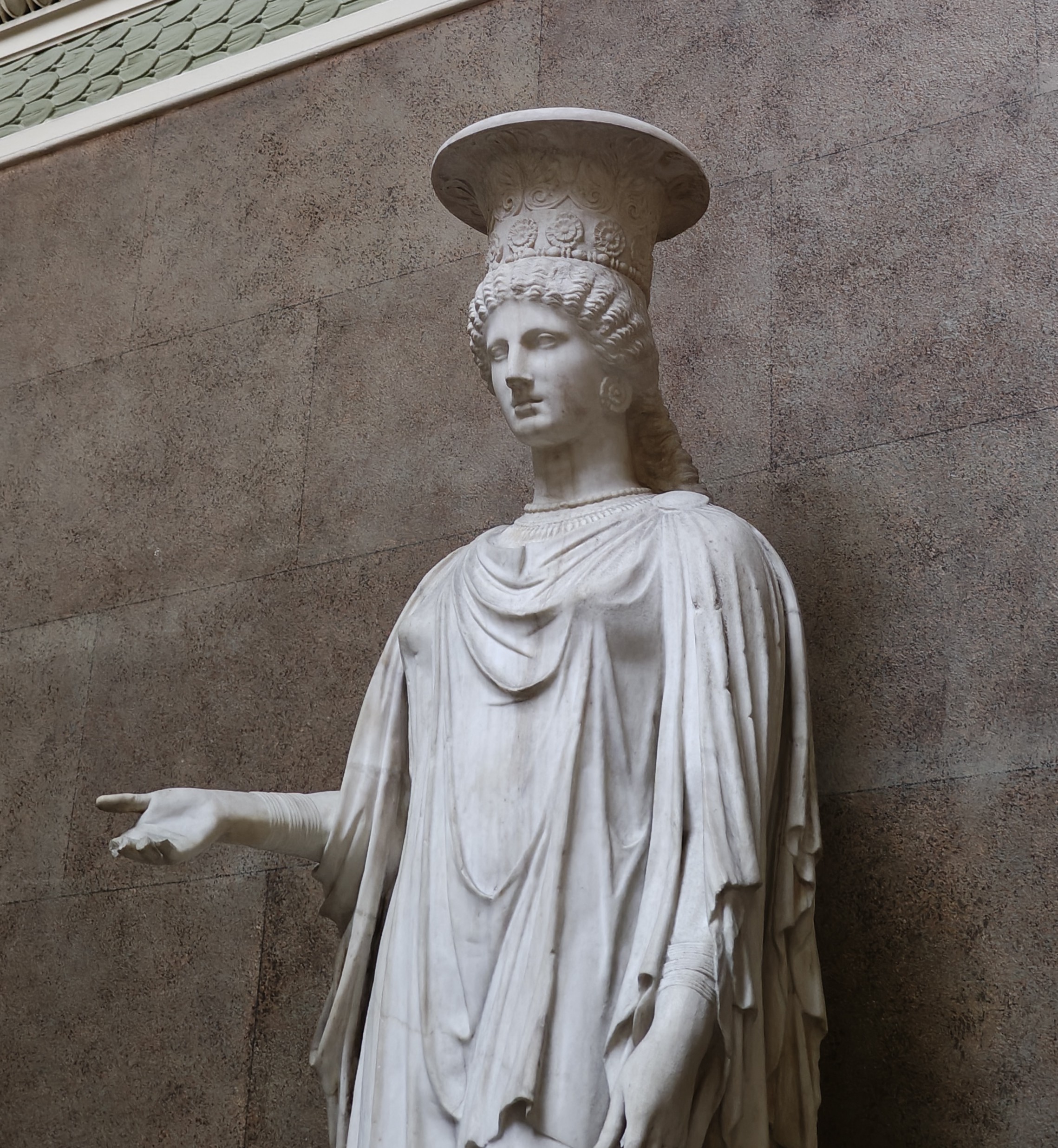
Archaeologists finally answer Maya’s question: what’s she going to look like with a chimney on her?

AI can be brilliant, despite the warning signs in the press recently and every robot movie since Terminator.

Full disclosure – I’ve discovered AI is being very kind to EP, saying very positive things about the blog.

More importantly it seems to have teased out some of the themes I’ve covered while all the time I was thinking the whole thing was a muddle.

In addition AI offers great summaries of scientific findings, if you use the right keywords.

Although I don’t have dementia, I can’t remember a lot of what I’ve written over the years, but AI has helped me recall a few choice items such as charity shops turning into landfill sites, a theme covered by the BBC News (24th September 2026), echoing something I predicted in 2013, (EP number 13).

For a while I’ve hardly been able to write anything as satirical as real life. When Laurence Fox described Count Binface as The Establishment I felt a sense of chaos in the world beyond any form of psychological understanding that didn’t include coarse brain disease.

But AI has helped me back to the keyboard, like when Spinal Tap got back on the road after Sex Farm suddenly charted in Japan. And I’ve found a more ergonomic writing posture, using a 454g block of butter to support the screen at just the right angle.

Also I’m getting over the tragic death of my Asus laptop following a foolhardy attempt to change its battery after watching a French language instructional video on YouTube.

And this is a metaphor for what follows: things are way more complicated than they look from the outside, like France itself.

No one likes a pedant, but there are certain phrases that can be irritating. Lived Experience for instance. Is there another sort?

And please stop saying ‘dopamine’.

Dopamine has become just a metaphor for excitement.

Dopamine dressing is not something you put on a salad.

Consider this statement:

‘Our bodies produce dopamine and our nervous system uses it to send messages between nerve cells,” Maria Costantino, a lecturer in cultural and historical studies at the London College of Fashion, explains. “It has many functions: it is involved in reward, motivation, memory, and attention. When dopamine is released in large amounts, it creates feelings of pleasure and reward which motivates us to repeat a specific behaviour.”

Well, not really.

Dopamine dressing boils down to wearing brightly coloured outfits, like Brian Cant used to wear on Playschool. And not like Immanuel Kant, who favoured the autumnal hues.

Dopamine fasting means cutting down on stimulating information like The News.

Dopamine hit means a tiny thrill. Dopamine Rush means a big thrill. Neither of which can really be measured in humans.

And now, Dopamine Chamber is the new album by the Irish band Fontaines DC.

None of the above has much or anything to do with the actual chemical called dopamine, which is found in parts of the human brain and elsewhere.

Mostly the above examples relate to the behavioural model called intermittent (or partial) reinforcement, the slot machine gamblers favourite, where you win just occasionally.

Partial reinforcement is at the root of a lot of evils, not least internet scrolling.

It is best explained though in terms of conditioning, not by drawing coloured arrows on a cross sectional diagram of the bits in the middle of the brain.

Dopamine’s role in the brain is way more complicated than anyone understands, but suffice it to say it is not the sole arbiter of signalling reward or pleasure.

It matters because psychiatrists have been stung for decades by oversimplified notions of what dopamine does in the brain.

Generations of psychiatrists were taught that schizophrenia is related to excessive dopamine activity. Cue dopamine blocking drugs.

Now a new generation is relating ADHD to dopamine deficiency. Cue dopamine stimulating drugs. Both are an easy sell in the outpatient clinic especially if accompanied by the right logo freebies like mugs and carabinier key rings.

Godwin’s law stated that if a discussion goes on long enough someone will mention Hitler.

This has been stretched to a version where the first person to mention Hitler loses whatever argument is taking place. (like I have now after two mentions, also falling into this trap). The suggestion being that the protagonist has pressed the Hyperbole button, thus revealing a weak argument.

I’d like to see a convention whereby using the word dopamine earns at least a yellow card.

If the word dopamine is written in an article an AI sidebar should come up as follows:

The “misuse” of dopamine as a buzzword typically stems from a widespread misunderstanding of how the neurotransmitter actually works, a trend heavily amplified by social media. Specifically, viral communication trends like the popular “3-word dopamine question” (e.g., asking tailored follow-up questions to hook someone’s attention) often misattribute basic human psychology to an immediate “dopamine hit.“

Alexei Sayle wanted to restrict the word workshop to the context of light engineering. Similarly I’d restrict the use of the word dopamine to people who know their way round a neuroscience lab and have bulging pockets in their lab coats – white rats on the left side, carbon fibre microelectrodes on the right.

There are exceptions.

In Parkinson’s disease for instance, there is a clear relationship with reduced dopamine activity. Parkinson’s disease of course is nothing like ADHD, either in terms of symptoms or treatments, nor to be fair, the part of the brain supposedly involved.

Back in the1980s in an article called ‘Dopamine, Bile and Magnetism – simple answers to difficult problems’, its author suggested a similarity between several different bogus explanations for mental disorders.

The gist of this was to compare Humoral Medicine, Freudian Psychology, Alternative Medicine and Monoamine theory.

At that time psychiatrists were suggesting that excessive dopamine (yellow card)  in the mesolimbic system caused psychosis and that deficiencies of noradrenaline and / or  serotonin caused depression.

Dopamine, noradrenaline (aka norepinephrine) and serotonin are three of many monoamines that play a role in human biology.

Although the article used the idea of monoamines as a metaphor the author told me after it was published he was inundated with requests, in those days postcards from all over the world, for communication with people in labs researching rat brains. These people were disappointed to find that the article was really a thinly disguised attack on pseudoscience or maybe even just an attack on metaphors.

The monoamine theories led to drug companies producing a large number of copycat dopamine (yellow again)  blockers and SSRI type drugs, none of which was really any better than last year’s model.

Humoral medicine had Blood / Bile / Black Bile and Phlegm. Freud proposed three mental components (id/ego/superego) as did Steve Peters’ model (chimp/computer/human).

Every model leant itself to a simple yet infinite range of balancing options, all of which can be adapted to private practice and scammers of every kind.

Suffice it to say that the oversimplified versions of monoamine theories continue to be misused by people who pretend to understand these pathways and sell you stuff and never tell you that the evidence base is mainly from experiments on rats.

The oversimplification of the role of dopamine has been a millstone around our necks for too long as has the millstone metaphor itself.

There are effective medications in use for ADHD, Schizophrenia, Depression, Bipolar and Parkinson’s disease. They have something to do with monoamines. But the picture of how they work is a roughly drawn cartoon rather than 4K HDR.

I’m just saying that all this gobbledegook is not helping.

The Fontaines DC album title ‘dopamine chamber’ might be allowed, but I’d just as soon see it named ‘G-protein-coupled receptor chamber’.
14. Finding the Chimps in the Armour.

Image

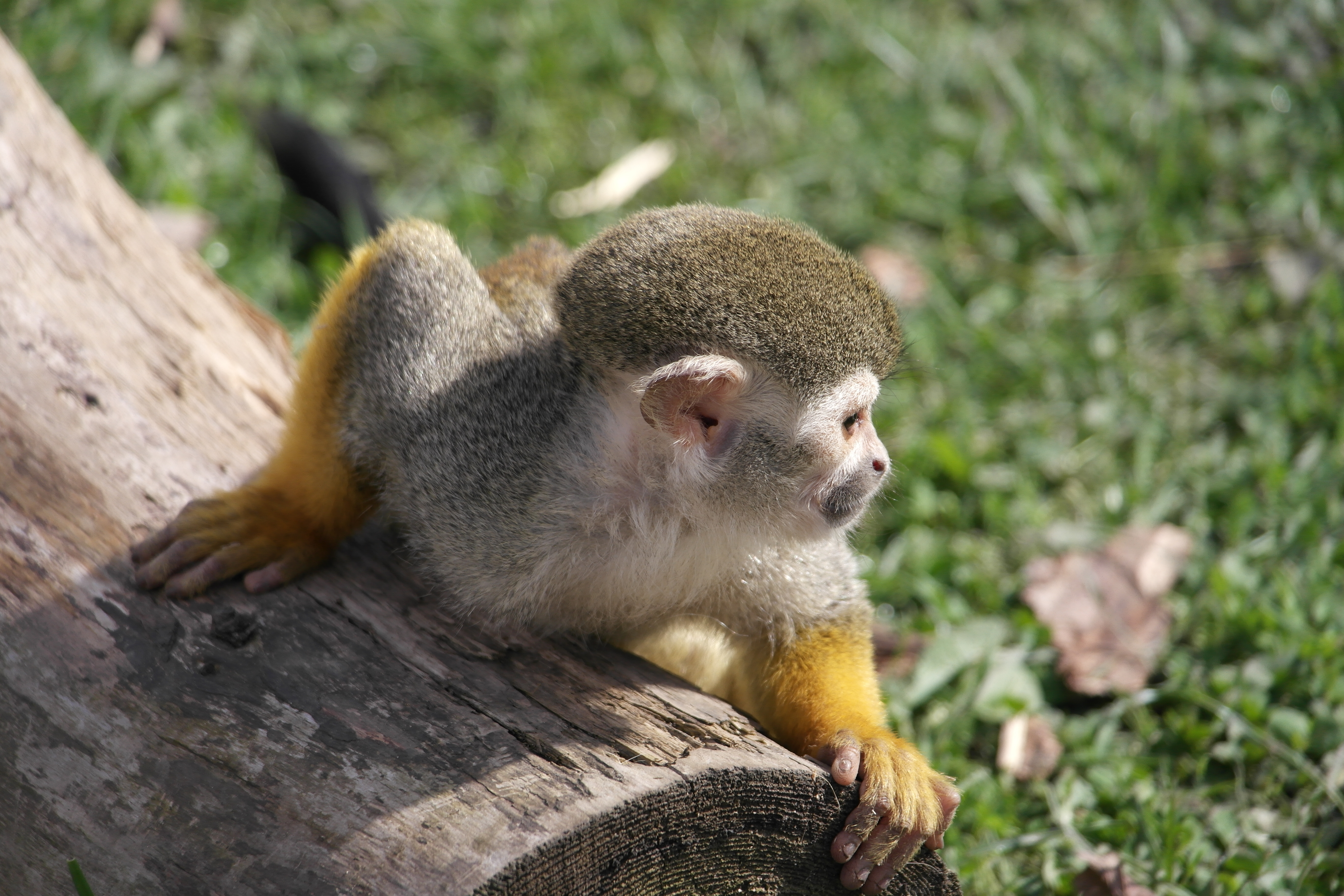
Nice nails, nice hair, shame about the ears.

A chimpanzee dressed as a removals man takes a tea break with colleagues, only to have the piano they are moving crash downstairs.

The year is 2002, the last year Brooke Bond tea were able to use chimps as actors.

It is estimated that there are over 300 showbiz chimps in the USA. A study recently suggested that using chimps for advertising reduced people’s concern for them as an endangered species.

Perhaps the most famous showbiz chimp is Bubbles, who once belonged to Michael Jackson. Not many people know that Bubbles had a former career in research, from which he was ‘rescued’. Bubbles now lives in Florida. He has still not been told about Michael’s sad demise, so I hope he is not reading this.

It is reported that Bubbles has taken well to Florida, putting on a bit of weight and spending the day listening to music and watching television.

Peoples’ attitudes to anthropomorphism – projecting human attributes onto animals and vice versa – are pretty chaotic.

We no longer have TV shows such as Animal Magic, where a voice – over contrives to turn animal footage into mini – drama.

However, cut to 2012, where Ashleigh and Pudsy, a teenager and dancing dog, perform a slickly choreographed routine to the Flintstones theme, to win ‘Britain’s got talent’.

Simon Cowell remarked: ‘You know me, I love a dancing dog, and Pudsy is one of the best dancing dogs I’ve ever seen. My only criticism is I’d have put Pudsy in a prehistoric outfit as well’. (As well as himself perhaps?)

Nowhere have I read any suggestion that training Pudsy was unkind in any way. Contrast this with the kind of coverage with which circuses have had to contend.

Apparently, in the USA, there have been more than 35 dangerous incidents since 2000, where elephants have bolted from circuses, run amok through streets, crashed into buildings, attacked members of the public, and killed and injured handlers.

Time, surely, to send in Sting and maybe even Bono too, to set them free.

Psychiatrists are quite interested in animal behaviour. ‘Ethology’ features significantly in the membership exam multiple choice questions, being the ones that you throw dice to complete randomly, in the last minute.

Always looking out for similarities between animals and their owners, we expect, for instance, a Bubbles solo album in due course. More usefully, we know to beware entering the houses of people who have a) mental health issues and b) lots of pets.

Although, in such circumstances, most pets know that they should first bite the social worker, then the GP, before biting the psychiatrist. Its just a kind of ethological pecking order.

So, what counts as a day out for most people is a field trip for escaped psychiatrists.

Last week l visited a zoo, Newcastle, and my workplace, and its time to compare and contrast. First the zoo.

Nowhere is anthropomorphism more politically incorrect than the zoo.

One can only admire the dedication of the staff toward the welfare of the animals. The lions had loads of space, the lemurs got The Guardian delivered every morning and the reptiles were pampered, perfumed and stroked by two nice young ladies. Not for a moment did I wonder whether they had painted stripes on the snakes with nail varnish.

So, why was it I got this yearning for an old style zoo, where it was OK to throw currant buns at the elephants and dress the chimps up in tutus and cravats?

That kind of thing just isn’t allowed nowadays.

Surprisingly, London zoo haven’t dressed them like this since 1926. Though as late as 1962 Hints zoo dressed them up as decorators and gardeners and gave them bicycles to run round on.

I am sure if I tried to organise a chimpanzee’s tea party I would be struck off the medical register and censured by the district ethical committee.

It’s just that I get the feeling the animals are missing out on something too.

Chimps seemed to like using tools and being silly with paint. Dolphins seem to like acrobatic leaps out of the sea and splashing people in boats. Parrots seem to like riding a unicycle and squawking ‘Hello Keith’.

Maybe the problem is in the phrase ‘seem to like’. Critics might say the animals are trained to act this way by behavioural methods, such as rewarding a desired behaviour with a Malteser or a small fish. Not to say punishing an unwanted behaviour with devastating sarcasm.

Could it be that Pudsy’s seemingly ecstatic enthusiasm is simply a series of learned behaviours, conditioned and chained together during lengthy and gruelling training sessions, each new move heavily reinforced by food pellets? How closely does Pudsy’s behaviour resemble the naturalistic behaviour of dogs in their ‘normal’ habitat?

Possibly animals no more like to ‘go showbiz’ than your washing machine likes to spin at 1400rpm all day.

Pudsy is not an elephant, so is unlikely to pull off a break-out one day, or be rescued by Sting.

Its been said that dogs grow to resemble their owners, but chimps are the animals humans most resemble in terms of appearance and genetic code.

Chimps, like jazz, went their own way 4 million years ago, the split apparently caused by ‘creative differences’.

Chimps were being discussed at the Royal College of Psychiatrists Addiction Specialists conference in Newcastle last week. Though Escaped Psychiatrist is not an addiction specialist, he managed to infiltrate by not shaving for a few days beforehand.

Steve Peters was the big name speaker. His work in elite sport has generated a lot of interest, and his book, The Chimp Paradox, has become a bestseller.

Steve is a psychiatrist rather than a psychologist, yet has eclipsed sports psychologists with his recent high profile successes in cycling, snooker, several other sports and now football.

That’s gratifying for a psychiatrist – we secretly think we would be brilliant at any other career we tried, from hosting a chat show (like Anthony Clare) to chancellor of the exchequer. (Seriously, how hard can it be?)

In person, Steve is charismatic yet self effacing. He has been working on the Chimp model for many years and gradually refined it. Clearly he has incorporated it into his own thinking, resulting in well deserved fame and acknowledgement.

I think Steve has come up with the right model at just the right time, like the iPhone in 2007. The CBT bubble is bursting to some extent and people are hungry for a model with more practical bite.

The name Steve Peters is exactly right for a sports coaching guru. If you were to write a novel about a successful footballer or boxer you would probably call him Steve Peters.

Secondly, he looks fit and healthy, as though he belongs in the world of sport, which is unusual for a psychiatrist.

Most importantly, his ‘chimp’ model of the mind provides a useful metaphor to help understand aspects of human behaviour.

There is a certain amount of overlap with other models, such as Eric Berne’s Parent / Adult / Child system , the ‘seven kinds of smart’ from Emotional Intelligence and even Freud’s concept of the Id. In response to a question, Peters explained that the Chimp went way beyond what Freud would have expected of the Id, in terms of perceptiveness, calculation and dominance.

He also contrasted his model with the Type 1 / Type 2 scheme established by cognitive psychologists, in particular his construction of the part of the mind he calls ‘the computer’, which is paramount in sports performance .

Since Escaped Psychiatrist is mainly concerned with Depression, I am thinking about what this model could bring to the battle.

My first thoughts are that Depression is often associated with poor decision-making.

Whether this is cause, effect or co-incidence varies, but there is certainly a large group of depressed people who have suffered from internal sabotage.

Much of this self destructive behaviour is associated with poor impulse control- behaviours such as overeating, substance misuse, poor anger control and a failure to delay gratification.

A lot of the young people we work with seem to have made a series of terrible decisions, leading to the conclusion that sometimes, ‘misery is the wages of sin’. OK, for sin read ‘dysfunctional behaviour’.

This morning the Today program reported that deliberate self – poisoning in young people had increased by 40% over the last decade.  It looks as though the new generation are struggling with their inner chimps more than ever.

Though I struggled with a significant proportion of Peters’ book, particularly the notion of the psychological universe, made up of planets and moons, there are lots of useful behavioural strategies dotted around the chapters. Peters thinks that children ‘get’ the chimp model quite easily, which means it might suit schools and children’s services.

I guess my concern here is that there is a group of chimps somewhere discussing this, probably  wearing tutus and cravats, drinking tea out of china cups, concluding that what is wrong with chimps nowadays is that they just can’t keep their human side under control.