28. Removing labels, without toxic chemical solutions.

Image

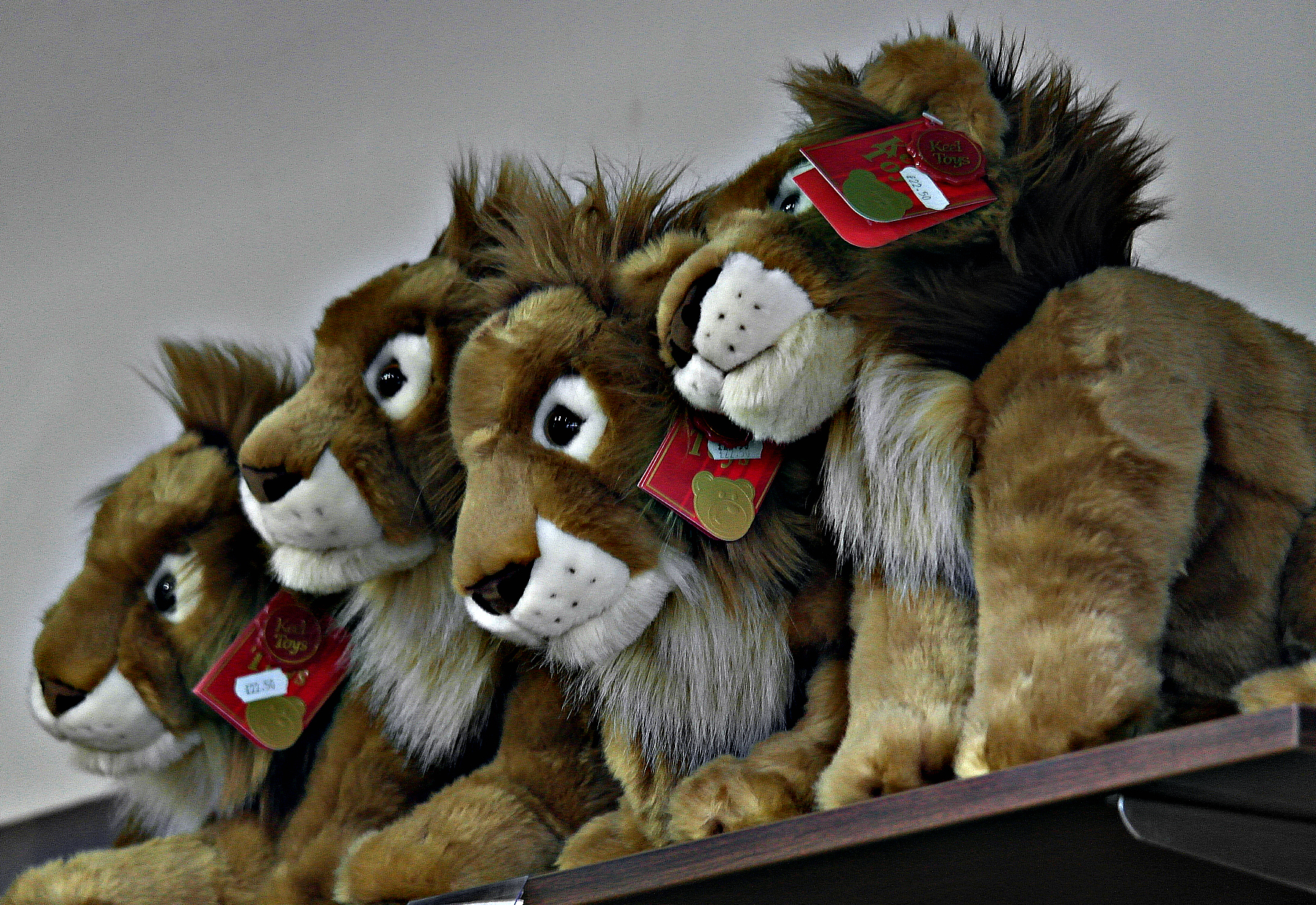
Cows are basically hippies.

Who are those people hiding behind the boiler house, just outside the strict boundary of the Foundation Trust premises? Are they common or garden smokers? Are they A and E attenders, who have finished all the books they brought to read while they wait? Or are they escaped but tagged dementia patients?

If you go near them they shy away, like geese, toward a small clutch of untidily parked Fiats and Volvos. Finally, I realise who they are – they are my colleagues who work in community psychiatry.

They are hiding for a good reason though. People are pursuing them, ‘wanting a diagnosis’. And those people are angry.

The history of mental health tends to characterise psychiatrists as predatory. The accepted wisdom is that psychiatrists are part of the forces of social control. Their traditional prey, according to folklore, is a harmless eccentric or political dissident. Their modus operandi is to label these folk with an invented illness concept in order to render them powerless in the eyes of society and the law, so as to drug them or lock them up or both. Such is the myth of ‘anti-psychiatry’.

People used to fear the psychiatrist like a 70s DJ fears the child protection team. But now the tables are turned. Some people are desperate to get labelled as mentally ill. None of my colleagues know why, but they mutter about the internet, celebrities and the drug companies, not to mention the benefits system.

The world seems to have turned upside down, like Twelfth Night. Not as regards boys playing women on stage whose characters are pretending to be men. Rather, more in terms of poacher turning game-keeper.

The story usually starts this way. A short GP letter ending with the words ‘this man thinks he has bipolar disorder, please do the needful’. A patient with a large bundle of papers downloaded from the net. Stating that the description of bipolar disorder fits him perfectly right down to the last semi colon.

The psychiatrist tries to explain that diagnoses are merely conventions about what to call things, that in the UK at least people are rather conservative about the use of diagnostic labels, that labels in their own right can become dangerous and lead to people thinking of themselves in an unhelpful way, even getting stuck in a sick role and benefits trap.

That he doesn’t really seem to have bipolar disorder, at least according to the absurdly narrow conventional diagnostic system that bow tie wearing people in Geneva have written on our behalf in quill pen on parchment.

Finally the meeting ends under a cloud, unless the psychiatrist gives in and recommends a tablet with Q or Z in its name.

It’s tempting to blame our cousins in the US and /or big pharma. There is money to be made from atypical antipsychotics, but only if a group of people can be convinced they need to take them. I have not tried this (Your Honour), but I’m pretty sure atypical antipsychotics and mood stabilisers have practically no street value.

Last time I went to the US I saw some hilarious direct to public advertising for these substances, where the baritone disclaimer tag – ‘may cause impotence, heart failure, convulsions coma and sudden death, take with caution’ – was longer than the advert itself.

I’m not sure why labels are fashionable now. Labelling theory was all the rage in the 1970s and we were all taught not to label people and put them in pigeon holes. Perhaps it started with designer clothes, where the Nike swoosh added $20 to the value of a $2 tee shirt. People who took labelling theory too literally even got tattoos. When we make a diagnosis, we always play it down – we say it’s just a name people give to this type of problem area.

My proposal is that we use a barcode instead. This is a cheap shot, but I think  one or two of my colleagues would be happy to advise people where to stick it.

27. Saying sorry, properly, to Desmond.

Image

Everything is permitted.

One of the projects that Blue Peter never attempted was to set up your own Truth and Reconciliation Commission. That’s a pity, because a TRC in your own home would be a lot more useful than, say, a separate dining room or garden shed.

Taking the example of South Africa, it looks as though we need three subcommittees: human rights violations, reparation / rehabilitation and amnesty. The first one looks at what went wrong, the second at what can be done to put things right, and the third invites further business from those who want to confess.

It’s worth making some space around the home for the proper infrastructure. Very few people, even catholics, go to confession in church nowadays, and the shortage of mobile priests has led to a decline in the domestic confessional box market. Modern architects wouldn’t even know how to design a priest hole. Most people consequently don’t get much opportunity to take a long look at their behaviour, with the help of a moral philosopher in antiquated neckwear.

Whereas the confession box requires a twin booth, soundproof module with a tiny curtained window – even Homebase seems to have stopped selling them – a TRC unit can be much more transparent and even Scandinavian-looking, in light wood.

The South African prototype required at least 18 people. The domestic version has to make do with a few co-opted members. Its unlikely you’ll get Desmond Tutu, but a distant relative from Canada, or another country with an impeccable human rights record, might be available. Failing that you can try a community psychiatric nurse, mobile hairdresser or peripatetic guitar teacher.

The agenda is to bring to light all the mistakes you have made and the transgressions you have committed; admit you would have done things differently if you had thought about it a bit more and hadn’t drunk so much; you’ll mend anything that you broke, once you get your giro and if there are replacement parts available; and you’ll accept a reasonable penance suggested by the committee.

Something similar has been developed by therapists, in particular so-called ‘Acceptance and Commitment Therapy’ or ACT. Instead of conducting a battle against negative thoughts, ACT helps people forgive themselves for their human frailties in return for a positive attitude toward the future. It looks like an attractive antidote to all the hypocrisy and  finger – pointing we are seeing nowadays.

It’s a bit like confession, but it has to be said, confession has several advantages. Firstly the church has a ‘walk in centre’ approach to confession, so there is no waiting list. Secondly, anonymity is preserved, unlike Therapy, where you will be shopped if there are public safety considerations. And thirdly, the penalties – typically two ‘Hail Marys’ – are really very minor in comparison with those a domestic TRC will hand out, such as taking everyone out to Prezzo.

In confession you are really pleading guilty to Original Sin, but with ACT it turns out your sins are entirely unoriginal.

26. Irregular conjugating with The Boss.

EP is on vacation this week, so this piece is being carved painstakingly onto an Android phone. I’m hoping that predictive text will take over at any moment and finish the last few paragraphs. If it works as usual the message will mutate dramatically and suddenly – for instance changing the word ‘many’ to ‘knuckle’ and ‘stifado’ to ‘Ericsson’. Most likely it will choose to finish off this piece with stock text such as Portia’s speech from The Merchant of Venice.

As a remedy for insomnia I watched a BBC World program about the dismantling of the German nuclear industry. Surprisingly, I found it completely fascinating. And it was then I realised that I am just about ready to start attending school.

Unfortunately, during the years I attended school, I was not ready for it. The problem seems to be this: education, work, sport and entertainment have been artificially separated and parcelled out unevenly to different age groups. So we have no entertainment at school, no work for young adults and no sport for older people.

For depressed people we recommend a mixed diet of behaviour, to include physical, mental and social stimulation. Such a mix is hard to achieve for large sections of society. Perhaps we should start by merging the goverment departments for Universities, Science, Employment, Culture and Sports to create a giant Ministry of Constructive Pastimes. Think David Willets, on a bobsleigh, playing flute.

In anticipation, universities are putting famous professors and lecturers on line, so that thousands of people can benefit, rather than just the few dozen students that can fit into a lecture theatre. The movement is called MOOC, or massive line open courses.

Educationalists have gone against the lecture as a means of communication, apparently because the average student retains only about 10% of the content. However, this figure can increase substantially in certain conditions, such as when exam questions are being ‘hinted’, when the lecturer is particularly charismatic, or by interweaving multimedia.

For instance, if Bruce Springsteen could be persuaded to lecture on irregular German verbs, strumming gently and occasionally singing a line or two, we would not be such dunces at language.

The trend toward mass market lecturing means a blurring of the traditional boundary between education and entertainment. For me, the importance of this is the prospect of a better deal for schoolchildren.

At present, children’s rights are subordinated to those of adults. For instance, chidren are compelled by law to attend school. They are forced to follow a national curriculum. Large group teaching is the norm, mainly because it is very cheap. Children endure a bargain basement approach to education that has increasingly sold out to child minding.

Adults no longer tolerate compulsory military service and cannot be compelled to work in mills. Many more are watching natural history or discovery channels and starting to enjoy finding out new information.

The coercive approach to schooling is relatively recent and followed the industrial revolution. In the UK children start school as young as age 4, so they are exposed to harshness, compulsion and judgementalism at just the wrong age. Here, for many, begin the roots of fear and helplessness that darken their perception of the world.

Children might prefer a mixture of activities, including a bit of paid employment, . It seems absurd that there are no teenagers in the house of lords and that there are no toddlers on the boards of large companies, even as non-execs.

As the managers would say, there are a lot of potential synergies in merging education and entertainment. The mind’s operating systems for music and speech seem to use different brain structures. People often remember the words of songs much more easily than prose or poetry. Some stammerers can get words out much more easily if they begin them as though singing.

We are used to opera and musical theatre, where drama can occur as a mixture of words and music. Far more people go to musicals like Les Miserables than ever read the book.

Movies like ET, Gladiator and Close Encounters attracted enough customers to support orchestral music by top composers.

So adding a musical dimension to a learning experience is likely to etch deeper and longer lasting memories.

The scale of MOOC seems to present an opportunity to incorporate a quality musical soundtrack into lectures. Whereas Horizon programs make do with incidental music, MOOC lectures could afford to have a house band at the very least, if not a full orchestra in the pit.

If it looks as though I am merely suggesting replacing school with television, something that seemed to suit me perfectly during my tonsillitis years, then my answer is this:

The quality of mercy is not strained. It droppeth as gentle rain upon the Ericsson Stifado.

25. Taking a creative powder.

Image

The golden age of pharmacology.

There is probably a link between bipolar disorder and heightened creativity, but this occurs mainly during the periods of elated mood. One of the first things to go when the mood dips is concentration. For creative types that’s a major hazard.

There’s only one solution for writer’s block. And that’s to write about it.

I just checked with the local NHS and apparently there is no rapid response team for this problem, unlike, say, blocked drains or blocked arteries.

The mental health service is interested in ‘thought block’, but only in the context of schizophrenia.

What I’m envisaging is a group of experts, probably led by a retired army major, who would arrive in a pimped day van, set up their equipment and get to work straight away.

The first thing to do is to remove any loaded weapons and / or bottles of whisky from the writer’s desk.

Next comes a thorough examination of the writer’s body, particularly the orifices, just to check he has not begun ‘disappearing up himself’. If there are signs of this, a Dyson cleaner makes an ideal suction device.

That also includes checking his ego boundaries, to ensure he is still able to separate himself from his characters. Clues to this can include wearing a flying helmet or shoulder holster while he types.

Psychedelic drugs should be removed, keeping samples for the lab, except for science fiction or fantasy writers, when they should be cautiously continued and titrated with Bourbon if necessary.

There are no NICE guidelines for writer’s block, though the author is probably poised over his keyboard and has been for years. But there is some expert guidance on the subject.

Dan Brown for instance likes to hang upside down in gravity boots. This could explain some of his thinking, in terms of reduced cerebral blood flow. Lots of writers prefer to be horizontal when they write, and many others like to pace up and down. Some are quite obsessive about stationary and pens. Others like to chew their pencils. It’s important to ensure they put the right end in their mouths.

Having attended to posture, the team looks toward some kind of psychological jolt. Firing a gun is often helpful, and if there is space, the team like to set up a row of porcelain figurines to use as targets. Royal Doulton seems to work best.

Coercion, blackmail and torture don’t seem to work. This is probably because anxiety levels have gone just beyond the optimum level for concentration. Writer’s block is mainly a result of ‘performance anxiety’. It is when the automatic mind makes the mistake of calling in the reflective mind for advice. Whether it’s writing, sex, walking a tightrope or putting, self monitoring can be catastrophic. The interventions are mainly to create a distraction.

For instance, waving a wad of cash under the nose brings about a rapid reaction similar to smelling salts. Not only does money talk, it speaks most eloquently.

Claims are made for psycho-stimulants and antidepressants which some people think enhance performance. Thomas Hardy might have benefitted from a little light turbo-charging, for instance. I’d like to have seen more of an action thriller conclusion to Mayor of Casterbridge, possibly involving Farfrae and Henchard shooting at each other with blunderbusses, from hot air balloons.

More useful is a gentle workout for the parts of the brain that write. A trip to a gritty location such as a Ladbroke’s in Rotherham might bring just the change of emotional tone that’s needed, but obviously the danger is melancholic overload.

Sometimes a little ‘power pottering’ is necessary, such as re-organising the tea bags or melting a vinyl record to make a flower pot. An encounter with an overloaded kitchen sink has helped many angry young men keep it real.

The most difficult thing is finding an ending, if that’s where the block has happened. If all else fails, a revision test can serve as a makeshift conclusion, e.g

Which blockage is not a medical emergency?

Heart

Arteries

Thought

Writer’s

Intestines

Which endings are valid?

Reprising earlier parts of the piece

Suddenly dying of TB

A dream sequence with exploding figurines

Throwing a badge into San Francisco Bay

Reader, I married him.

24. Dangling from the last helicopter out.

Image

What a lowly position feels like.

Sometimes Depression is a sign that your predicament is poor. Surveys show large numbers of people think about quitting their job, but very few actually do so.

A life-time ago, I can remember spending Monday afternoons in an operating theatre, assisting my boss, who was a vascular surgeon. Every week, at about 4pm, there would be a commotion in the theatre next door, as the very temperamental colo-rectal surgeon working there went slightly berzerk. Sometimes he would hurl items of equipment at the wall. Usually he would announce his resignation and storm out. He was always back next week though.

Remember the last scene in Dirty Harry, where Clint Eastwood’s character, Harry Callaghan, throws his police badge into a pond?

What symbol of your job would you throw into the water if you decided to quit in disgust, as the camera zooms out and the credits roll?

If you are a gynaecologist, perhaps an laparoscope would do, an old style – rigid model, thrown like a javelin. The butcher could throw his white trilby hat like a frisbee. But what about the Timpson’s shoe repair and key cutting man, who looks increasingly fed up? He’s big, but how far could anyone throw a lathe?

I have just the thing, which is a John Major era ‘Chartermark’ badge. The citizen’s charter was a policy intended to elevate the concerns of ordinary folk, like the increasing numbers of traffic cones. The problem was, there were no ordinary folk left. The baby boomers were all special.

The badge is made of bronze and about the size of a broad bean. I could skim it far out onto the river on a calm day. I’m sure though, if I went to the river there would be a queue of disgruntled workers hurling various emblematic work items.

What expression should one choose for the camera, just before the zoom-out? Sad inevitability? A mixture of guilt and relief? Or – it’s video remember – deadpan? As though all the life has gone out of you?

More and more people are fed up with work and a lot of them have suffered ‘burnout’. Neil Young said ‘its better to burn out than to fade away’, but in a sense the two things are the same, just different types of oxidation reaction.

The phrase burn-out, which was hyphenated in those days, apparently derives from Graham Greene’s book, The Burnt-Out Case, which features an exhausted celebrity architect who goes to work at a leper colony. The parallel is between architecture and leprosy in terms of their effects on people, which is to make them quite interesting and very thin.

The ‘Whitehall’ studies looked at sickness in various groups of workers within the civil service. They seemed to show that the more lowly paid the job, the more stressful it turned out to be, which is the exact opposite of the commonly-touted belief that high-flying jobs are the most vexing.

Nevertheless, even in medicine, which is quite rewarding in many ways, my impression is that an increasing number of people are walking away, sometimes after a dozen or more years of training and dedication.

I tried to research the number of doctors who are qualified but don’t work in medicine, but it is hard to get these statistics.  A sizable number are still registered and licensed by the GMC but will quit as they come up for revalidation (or to give it its proper name, The Cull.) Many more work part time or intermittently, via agencies.

Whatever the number in work, if you look around your locality, ask yourself: are there any more GPs than there were 20 years ago? And: how easy is it nowadays to sign on with a GP?

As far as I can see, the answers are, ‘No’ and ‘as easy as getting through Tintwistle’. I’m not sure where the GPs are going, but its probably the same place as the bumble bees. Studies have shown that GPs have the highest burnout rate of any professional group, up to 40%, at least in Holland.

Not been to Tintwistle? Let me explain:

The giant industrial cities, Manchester and Sheffield sit about 35 miles apart on either side of a small set of hills called the Peak District. Because they are in the north of England, there is no proper road joining them up. Things start well enough, as you leave Manchester on a fine new highway called the M67. After five miles, the M67 ends abruptly and you are frozen in traffic, as though liquid nitrogen had suddenly been sprayed over the road from a giant cartoon airship flown by Mister Freeze.

During my time at Tintwistle, which was longer than many prison sentences, I reflected on the notion of helplessness, and how it affects the nervous system. The most accurate description I can think of is that helplessness hits the human organism like a rubber hammer. There are no wounds, no broken bones, not even ruptured internal organs. Just a sense that something deep inside of you is broken.

I can remember similar effects from going on fairground rides with inappropriately high and sustained circular motion. What initially seem to be expressions of happiness on people’s faces turn out merely to be rictus grins caused by G force.

Getting stuck at Tintwistle has much in common with being in a low paid job in the civil service. You have little control over your destiny. And its too late to wonder what you were doing there in the first place.

The truth is, no-one gives much advice about the really important choices in life. Things like which partner to choose, what career to follow, or which team to support. These often start out like the M67, wide and promising, and then, suddenly, the road just runs out.

It’s easy to see people who have chosen completely the wrong jobs. There’s the lollipop man who attacked someone with his lollipop. There’s the science teacher who battered a pupil with a 3kg dumbbell, shouting ‘die, die, die’. There’s Tony Blair as peace envoy to the middle east. And there’s the man at Tesco who prints the yellow price stickers, who should be a master villain in a Bond movie.

In Thinking, Fast and Slow, Nobel prize – winning psychologist Daniel Kahneman reveals that he and his team of experts were quite unable to predict who would succeed as army officers, despite all kinds of aptitude tests. So it seems unlikely that the school careers teacher will succeed in putting everyone on the right path.

Perhaps people are more likely to change job nowadays in mid life, giving a chance of redemption.

Otherwise I think I have a solution, based a bit on Prime Ministers’ cabinet re-shuffles. My idea is to put someone like the town mayor or an official psychologist in charge of employment. He would be able to shuffle people from one job to another if they are looking burned out.

So the Timpson man becomes the science teacher. The butcher becomes the gynaecologist. The science teacher gets to cut keys. And the gynaecologist gets to kill serial killers in San Francisco.

The civil service can be moved to Tintwistle, so that everyone is always late and the activities of the government will be frozen, like in Italy.

There was no scene showing Harry Callaghan with a snorkel and flippers, retrieving his badge for the sequels, but he returned several times. Even worse, none of the sequels allowed him to move to a less bureaucratically-frustrated role, such as running the police pottery workshop, and the body count continued to rise.

Perhaps the GPs will return for a sequel one day, or even turn up at the end of the movie, like the old naval warriors in Battleship.

Or, just as all hope is abandoned, the bumble bees will swarm back over the horizon in giant black clouds. They have made enough honey not only to feed us but to run our cars too.

22. Comprehensive dental planning for the gift horse.

Image

Got away with a scale and polish!

Some people felt the recent ‘horsegate’ revelations amounted to an attempt – by ‘Big Food’ – to soften up the consumer towards more overt horse consumption.

So far I see no signs of horse restaurants opening up, so I’m wondering if its really worth registering the trade mark  ‘Horses for Courses’.

The main effect of the horse scandal was to cause a tsunami of horse-related jokes and puns, like the above example, and a welcome reprise of horsey sayings and proverbs.

We are, as humans, portrayed as horses sometimes.

A person might be described as a ‘workhorse’ for instance.

They may be compared to a mule, if stubborn; or a donkey, if they suffer with ‘bradythinkia’. People who throw eggs at talent show judges are exhibiting ‘horseplay’, though this is one activity that horses have never even attempted.

You could take someone to water, but not make them drink, and this is a major problem in pubs and cafes nowadays, especially where there is free wifi. We know from Prince’s commentary on the modern world that his cousin was ‘doing horse’ only nine months after trying a reefer ‘4 the very first time’.

Is a gift horse a person who gives gifts, or is the horse the gift?

Either way, don’t look him in the mouth, even if you are a veterinary dentist, not without a mask and safety glasses anyway.

My knowledge of horses is really very limited. I go past them very slowly on the roads, and the person riding usually acknowledges this with a friendly gesture. I know they cost a lot to run, in terms of vet’s bills and sugar lumps. I feel sorry for the ones I see confined to a box trailer, stuck on the A1(M) for hours on end. I have never known a real horse to be called Dobbin. If I had a racehorse, I would name it ‘nine to two favourite’, just to confuse the bookies.

They seem surprisingly fragile. Quite minor ailments seem to upset them, such as sleeping in the wrong posture or falling over a rabbit hole.They are sensitive to even the mildest ironic remark.

All the care pathways for horses seem to end with the box ‘shoot’.

Do horses like being whipped and raced over a series of fences? Probably the answer is the same proportion of horses as humans who like sadomasochism or hurdling.

Do they even like having people ride on them? For most of their evolutionary history presumably they just ran about when they felt like it. Western movies always depict the wild horse as reluctant to get involved in the transport industry. Horsey people will shake their heads and tell me I just don’t get it.

Horses and people, they tell me, have a unique symbiotic relationship, where horse and master blend into a sublime transport unit. Its a bit like the way obese bikers’ tummies meld seamlessly into the saddle of a Gold Wing or Harley.

This brings us back to the idea of harmonious relationships and fundamentally, the kind of environment that suits the human system.

Today there are further useful news items from the Mappiness project, which aims to survey people’s real time levels of happiness using a smartphone app and random sampling.

These findings are dangerously revealing and potentially subversive. It is revealed that work can be toxic for instance, and that its better to live in a green rural – type environment than in a tiny box high over an industrial northern city.

Also, 22 years after the LaTour single, the last reliable report on this, it is revealed that people are still having sex.

Most of human evolutionary history people have not worked, at least not in the way that has become the norm since the industrial revolution. People were hunters and gatherers for thousands of years. Accordingly, the natural state for human happiness seems to be ‘pottering about’.

Of course many people have known this for years. But oddly, the millions of ‘shed people’ have been portrayed as either lazy or autistic, not to mention shabby. Shopping is perhaps the one surviving pottering activity that remains fashionable, but all too often shopping behaviour is spoiled by buying stuff.

A clue to all this should have been the way ‘browsers’ like Netscape took off in the nineties. Browsing the web suits people better than watching television, even when ‘channel-hopping ‘is allowed.

Pottering about is the default position for human behaviour before ‘musts, haves and shoulds’ are loaded on people.

My impression is that horses are pottering animals too. Mainly they eat. But they are a bit curious to meet people. Sometimes they will get up and run for no apparent reason, to a similar bit of field.

Horses and humans have been the victims of a massive confidence trick. Basically this is that they benefit from carrying a burden.

Sadly for horses, they cannot operate smartphones, so their unhappiness cannot yet be measured.

Look, they are shaking their heads and saying ‘nay’. I think they have made their position clear enough.

21. Judging. Not.

Image

This panel comes with price tags.

I feel a bead of sweat run icy cold down my forehead, even though it is baking hot in the room. The inquiry is not going well.

My inquisitor puts down his stack of documents and looks at me accusingly.

‘So you were eating a chocolate bar in your car?’

‘That’s correct.’

‘While driving it along the A46 at 60mph?’

‘That’s correct.’

‘Could you tell the panel please, what kind of chocolate product was it?’

I hesitate for a moment. There’s no point – they probably have forensic evidence.

‘A Cadbury’s flake, I believe.’

There is a long pause. The chairman is polishing his spectacles. The scribe is making notes on a yellow pad. Its time for the killer blow.

‘What slogan is generally used to describe the Flake bar ?’

I shake my head. I tell them that slogans are outside my field of expertise.

‘Just answer as a layperson then,’ I am directed, but I decline to speculate.

The inquisitor asks whether I have heard the slogan: ‘the crumbliest, flakiest chocolate in the world’?

I nod.

‘I’m sorry, I didn’t hear you. Did you say you were familiar with the slogan, the crumbliest, flakiest chocolate in the world?’

I ask the chairman whether that might be a leading question but I am directed to answer. I agree that I have heard the slogan, and I agree that the slogan is probably accurate. I am careful to mention that I have not studied any systematic evidence that has reviewed chocolate products on a global basis and stress tested them with crumble and flake gauges.

The inquisitor is on a roll. I’ve seen enough Perry Mason to know that this is the point where I could easily burst into tears and confess.

I drink some of the tepid water from the glass in front of me. I try and shrug in a French way, supinating both hands and making a pffffff noise with my lips. The panel don’t like it.

‘Yet you drove one handed along the A46, eating a flake. And as a result, now, we have a very difficult…’ he pauses for effect, ‘a very ugly…,’ again he pauses to pull out a ball pen and tick a box on the document in front of him, ‘an almost indelible mark. A stain, if you will. On your front seat.’

We have already heard from expert witnesses that ivory cloth isn’t the most durable seat material. We’ve heard how, recklessly, I turned down the Scotchgard treatment when I bought the car. Clearly, I was an accident just waiting to happen.

My mind started to wander for a moment, as I awaited the verdict.

Just how long had car service departments been holding panels of inquiry?

I wondered whether this was just BMW*, or whether all the dealers had taken this high handed approach to customer behaviour.

The answer of course is that there is an inquiry panel going on pretty much everywhere  nowadays, as some kind of convulsion of guilt and recrimination shudders through our society.

During the recess, I walk to the newsagent to look at the cards in the window. I could do with a little inquiry work myself, something small, that would only take a few hours and not cost the taxpayer millions. Preferably I won’t have to wear a wig and gown.

I wonder if there are any small domestic inquiries going on, like the spills and stains tribunal at the car service department.

I prefer spills work to be honest. I am pretty familiar with the Spills Police and their activities, having followed the cases against Macdonalds between 1982 and 1992.

I’d probably attribute my fear of spills to a genuine scald at Macdonalds, although much earlier in life I remember being told off furiously by Sister Clare for leaving ink blots on the school savings bank ledger. Rorschach tests and banking just don’t mix.

The Spills Police will be very happy today, as it is reported in The Times that someone has invented a ‘Floating Mug’ that is also a coaster, and therefore will not leave a ring stain, even if it drips.

One of the inventors, Tigere Chiriga, apparently was ‘terrible at putting coasters under mugs and so kept leaving stains on furniture’.

I notice there is no lid however. Not even the little fold-over ‘that’s torn it’ spout device. Hmm…. Not sure about the Nobel Prize without a lid.

Many of the Spills Panels recommendations over the years have yet to be implemented. For instance, there are still a large number of small ‘comedy teapots’ in circulation at motorway service areas and  tea-rooms, the ones that seem to defy both gravity and surface tension effects, in order to pour tea over your fingers.

Everyone is on some kind of panel or another at the moment, as society heaps blame on itself. Ever since the McCarthy period, inquiries seem to be an excuse for a bunch or people getting together for a bit of bullying.

Along the street, I find there is an inquiry at No.38, regarding poor use of spelling and grammar. Apparently someone has been spelling ‘liaison’ wrongly for many years, and has been saying ‘infer’ instead of ‘imply’. Somehow the Mixed Metaphor Commission got involved.

Over at the arts centre the drama group are looking into suspected over-acting at their Gilbert and Sullivan festivals, and some abstract expressionists are answering questions about the massive carbon footprint they left behind.

A whistleblower at the council has revealed that billions of wasps were slaughtered in the decades before it was realised that wasps were our friends. At the library, a panel struggles to unravel how Grapes of Wrath got filed in the gardening section.

I wonder if any inquiries take place out of doors now its the summer? Badgers seem to be facing awkward questions and / or awkward firing squads at the moment. I’m sure Brian May needs help defending them.

Inquiries are so stodgy and they drag on for years. As an antidote, I’m thinking of starting a ‘street inquiry’ movement – I will call it ‘Knee-jerk Reaction’ – where fast moving, dynamic and punitive panels work with mime and street artists to create impromptu, judgemental scenarios, probably on skateboards and posting their findings with graffiti.

If you suffer from Depression you probably have an inquiry panel in your mind a lot of the time. One of the worst things you can do if you are depressed is dig out an item from your own past and go over it again and again.

Its unlikely that your memory of the event is accurate and it’s unhelpful to ‘ruminate’ the same material over and over. Any judgement you make is likely to be over-punitive and self deprecatory.

Like Sister Clare, your panel is likely to maximise your misdemeanours and minimise your achievements, as well as knock you on the head with a special ring used as a knuckle duster.

If there’s a stain on my car seat, lets try the little steam cleaning machine I got at British Heart Foundation before we bring an inquiry upon ourselves.

Oh dear! The steam machine has spouted out some rusty water. But we have Vanish. And Stain Devil for chocolate, and now one also for rust.

But something is wrong with the Stain Devil. Instead of colourless solvent, the can releases material of the deepest scarlet. Quickly, the scarlet stain becomes a hideous creature, with a forked tongue and dragon’s tail….

‘My name is on the can,’ it screeches.

That’s when I awake from the inquiry panel nightmare. Coming to my senses, I realise I am not on trial at BMW any more.

But from now on, ‘issues around chocolate’  are going to be included on the risk assessment form I complete each time I use the car .

Best practice guidelines seems to suggest Twirl is 90% as good as Flake with only 10% of the scatter. And 7 Up is a thousand times less staining than Coke, yet equally wholesome.

Some people have even learned to drive short distances without eating anything.

Do not Judge, says the mission statement, this from the organisation that gave us the Spanish Inquisition.

More accurately perhaps, the message is not to apply standards to others that you could not live up to yourself.

Even more accurately than that, the message is to stop lawyers – and talent show judges, for that matter – pocketing huge sums of public money.

We could have a Truth and Reconciliation Commission. Or we could just accept that we are humans, we make mistakes, and move on. Which, really, is the same thing.

Sister Clare, you are forgiven.

*No cars (or chocolates) were really hurt in the making of this article.

18. Steering Clear of Tulip Futures.

Image

Blue daffodils – the next big thing.

If psychiatrists were football managers we’d have been fired hundreds of times over. Depression is still the biggest cause of disability in the developed world. Like football, Spurs in particular, our treatments don’t seem to have advanced much since the 1960s.

Nevertheless, we continue to live in a world where we feel the big breakthrough is just round the corner.

What if mental illness really was caused by abnormal chemicals in the brain? Would a whole generation of counsellors and therapists become unemployed?

And what if a real ‘happy pill’ was invented, that improved people’s mood and behaviour, without being addictive or dangerous?

Some very powerful vested interests would be upset: brewery companies, organised crime and drug companies – arguably all  the same people – who continue to make mind-altering drugs and antidepressants, whose sales would slump.

It could happen, but we are right to be sceptical.

Clearly, Depression is not one of those diseases like Smallpox or Cholera, that could be eradicated with a vaccination program or antibiotics. Is it?

There has only been one such development, which completely changed the game. This was the introduction of Chlorpromazine in the late 1950s.

Since then there have been so many promising avenues, which have turned out to be mere dead ends in the history of ideas.

Or rather, as we say in Europe, Cul de Sacs. Or is it Culs de sac? Or even Culs des Sacs? And that’s before we decide whether to hyphenate.

Whichever way, a good name for a Belgian jazz musician – probably one who has taken up a defunct form, such as Scat.

Cul de sac appears to mean ‘the arse of a bag’. No-one seems to know if Cul is a rude word in France. People I ask tell me the French don’t really have a concept of rude words in quite the same way as in English.

Culs de sac have occurred regularly in the history of Psychiatry. The best known example is the so called Pink Spot.

In the early 1960s, scientists thought they had found an abnormal chemical in urine samples from patients with schizophrenia, which made a pink spot on filter paper.

Eureka! The spot was thought to be DMPEA, a possible brain chemical that had an effect like LSD. The theory was that an abnormal gene produced an abnormal chemical that caused the brain to malfunction.

Sadly, not true.

It led indirectly to a large number of patients being given high doses of B and C vitamins, which were unhelpful. To some extent the sixties was the vitamin era (though we did not have them in Derbyshire) and mega doses were made popular by chemists such as Linus Pauling and advised for all kinds of ailments, particularly cancer. Megavitamin sites are all over the internet, even now.

A more recent cul de sac, which is still running in self help literature, is the idea that people with Depression have a deficiency of certain types of oil or fatty acid.

Quite a number of studies compared types of fish oil with placebo, and a brief overview suggests that the more rigorous the study method, the more limited the benefits, with many studies showing no significant effect from oils.

I’m not saying don’t try these oils, by the way. There’s just something fishy about them.

Another occasional ‘winter visitor’ is the notion that mental illnesses are caused by a virus. This theory seems half based on the admittedly interesting finding that people with certain mental illnesses are more likely to have been born in the winter.

Many illnesses may turn out to be caused by viruses, especially if we use the word ‘virus’, like ‘allergy’, to mean ‘tiny nasty thing we can’t see’. Famously, stomach ulcers turned out to be related to bacteria infection much more than stress.

There are vast numbers of micro-organisms yet to discover, many of them found in our own gut. There are a number of scientists working on pro-biotic remedies, using specially trained bacteria to impact upon the nervous system via the GI tract.

Mice fed with Lactobacillus rhamnosus JB-1 for instance, showed significantly fewer stress, anxiety and depression-related behaviours than those fed with just broth.

Scarily, the biggest organ in the body turns out not to be part of us at all, but zillions of bacteria.

This might be another cul de sac, or it might be a big breakthrough. Time will tell.

When it comes to therapeutic dead ends, Insulin coma therapy probably takes the sugar-free biscuit. It was popular in the 1950s, probably didn’t work, was quite labour intensive and was definitely barbaric. It was abandoned pretty soon after the invention of Chlorpromazine.

Psychiatrists aren’t the only doctors to jump on bandwagons though.

During the twentieth century everyone suddenly decided that people should have their tonsils out, leading to millions of unnecessary operations. This was despite excellent evidence that most people grew out of tonsillitis by their twenties.

Now it is very difficult to get your tonsils done at all, even when they look like Jackson Pollock has painted them.

How long before we see the Sunday Times run an exposé about backstreet tonsillectomy parlours? ‘A man with a huge soldering iron and bicycle pump sits in the half light of a tiny room in the alley behind Poundstretcher … etc’.

One of the longest running – nearly 2000 years – culs de sac was the idea that the body was made of four humours – blood, bile, black bile and phlegm. This itself was built on the philosophical dead end that there were four elements – Earth, Wind, Fire and Water.

Which must have made the Periodic Table very easy to learn compared with the version we learned in Chemistry.

And raises all sorts of questions. Did Earth, Wind and Fire ever think of getting Roger Waters to join? And were they formally known as Blood, Bile and Phlegm? And was that too similar to their horn – based rivals, Blood, Sweat and Tears?

The four humour system teaches us a lot about intellectual red herrings, just to mix up the metaphor for a moment. There’s a blind ending, but you can travel a long way down the road before you get there.

Like the M50 going west, there is just no destination.

We are probably still exploring a few, like the serotonin theory of Depression. But we cannot always know where these paths will lead.

Very clever people, like Isaac Newton, went along with humour-based medicine: ‘Trials are medicines which our gracious and wise Physician prescribes because we need them; and he proportions the frequency and weight of them to what the case requires. Let us trust his skill and thank him for his prescription.’

Isaac, you are most welcome in our clinic, with that excellent attitude. But please don’t believe everything you read on the internet. And watch out for Charlie’s men.

As mentioned above, Linus Pauling won two nobel prizes, and was the leading chemist of his generation. He became convinced that Vitamin C could cure cancer, even despite evidence to the contrary from large trials at the Mayo clinic.

Beyoncé is still looking towards the ‘four elements’ to inspire her new range of fashion: ‘we explore the different emotions of women represented by the four elements. Fire, water, earth and wind.’

If people like Isaac, Linus and Beyoncé can be taken in, what chance have mere mortals?

With a little hindsight though, generally we can see more clearly where trails have run cold. Such as the South Sea Bubble, or Soviet Communism.

My history advisor tells me that there was once an extraordinary Tulip craze in Amsterdam. At the peak of tulip mania, in March 1637, some single tulip bulbs sold for more than 10 times the annual income of a skilled craftsman.

Tulips of course persist, so they are not a cul de sac in terms of their role as flowers, but rather as investment products. Otherwise Spalding would be the financial capital of the UK, instead of just the style capital.

Shakers were a religious movement who mostly refused to procreate – the opposite approach to certain other religions – and hence died out. However, archaeologists have found a lot of illicit stuff in Shaker rubbish dumps, like whiskey bottles and tobacco pipes. No vibrators though.

On the commercial side, Sunny Delight was an attempt to create a modish new orange drink. It was launched in 1998 with a £10 million promotional campaign. Within months Sunny Delight had become the biggest selling soft drink in the UK behind Coke and Pepsi, with sales of £160 million a year.  Then it all went wrong. 8000 litres of Sunny D concentrate leaked into the River Parrett in 2006, creating a literal yellow river. A 5 year old child turned yellow after consuming 1.5 litres per day and the makers, Proctor and Gamble, had to put a health warning on the bottle advising moderation.

Sunny D seems still to be available, judging by its website, which makes the claim that it was ‘reverse engineered from the sun’. Wouldn’t that make it Hydrogen?

I don’t think we should be too hard on people for driving down blind turnings fast and furiously.

The reason we get carried away with a plausible new idea is our hunger to explain something very complicated with something we can grasp ourselves and even explain to others.

We are junkies for theories which seem to have Face Validity.

Writing in New Scientist recently, Prof Nick Craddock suggested that Psychiatry needs its ‘Higgs Boson moment’. He points out that mental illness research comprises only 5% of medical research. Despite this, he is optimistic that some of the newer strands of research are about to come together:

‘Psychiatry started the new millennium a few hundred years behind physics. But the decade that followed saw radical change, and set the stage for an intense period of catch-up. It is not fanciful to describe what will happen as the equivalent of some 200 to 300 years of progress being compressed into 20 to 30 years’.

So lets end on a positive note today, and enjoy waiting, as Spurs wait, for the Higgs Boson moment.

Meanwhile, don’t put all your money into Tulips, however plausible that might seem.

15. Searching for Weapons of Mass Distortion*

Image

In Glasgow, its safety in numbers.

Every Sunday morning I see the same lady in the newspaper shop buying lottery tickets. I’ve always wanted to ask her why she didn’t just send her money straight to Chancellor George Osborne, cutting out a chain of middle men and reducing the queuing time in the shop for the non-gambling section of the public.

I expect her reply would be something like, ‘I know my chances of winning are statistically not significantly different from zero, however the excitement of watching the draw and the possibility, however remote, of coming into sudden riches, beyond my wildest imagination, taps into a part of my mind that believes in dreams and miracles’.

Or, she might say, ‘I won a small amount once or twice, and it seems that intermittent reinforcement is one of the most powerful conditioning paradigms. I am simply powerless to resist’.

Or she might just say, ‘you cant take it with you, you tight git!’

Or, the killer retort: ‘why don’t you send the £2.50 you just wasted on the Sunday Times directly to Rupert Murdoch?’

Secretly, I ‘d love to have a go on the lottery but I cannot begin to understand how you go about it. People ask for things like, ‘two butterballs and a blingo’ and receive mysterious cards, some of which you can scratch. They seem happy with their purchases, even though they have exchanged real money for imaginary money.

It’s the same kind of cellophane packaged trinket as a cigarette packet, something that lights up the anticipation of  reward pathways, if you still have them.

It strikes me that Lottery Behaviour illustrates the theory of ‘cognitive dissonance’. This means that people have sets of thoughts that conflict with each other, but find some way of reducing the disparity.

Gambling provides a bit of a buzz, but goes against the value of prudence. The mind works to justify the behaviour.

For example, the lottery is ‘for charity’. So it is OK to give money away. The lottery company will help you with this argument by not telling you how much of the take actually goes to charity (28%). And of the 28%, how much is left for the actual good cause, after the charities have employed their staff and paid their overheads?

What does it matter anyway; the money is all recycled within the economy, generating employment?

Apart from the fact that Camelot, who run the UK national lottery, is wholly owned by the Ontario Teachers Pension fund. Nevertheless, I have nothing against retired Canadian teachers and have no problem with sending them any spare money we have. Its a way of thanking them for providing the current generation of Canadians.

Lots of people can help us reduce our cognitive dissonance, and make a good profit out of doing so.

The workings of the National Lottery mix a few different processes. Which is the odd one out:

1. Giving to charity?

2. Tax?

3. Gambling?

4. Profit for shareholders?

5. Pensions?

Clue: one of them is supposed to be a vice.

One way of reducing the difference between ideas is to soften the ideas and make them less distinct in the first place. Since ideas are usually written in words, if the words themselves are made meaningless, the ideas will get soft and fluffy enough not to jar against each other in our pockets.

Its a win/ win scenario.

Managers are people who make a living out of Cognitive Dissonance. Part of their job is to distort and reduce the meaning of language.

If you are working anywhere in business or the public sector you are  probably experiencing stress and frustration attributable to managers.

Take a typical scenario. You are sitting in a small hot room pretending to listen to someone giving a presentation. There is an ‘action plan’ to formulate. Something has to be written in 28 small boxes on a spreadsheet. People who are unable not to volunteer or avoid eye contact are given tasks to complete that will spoil their weekend. A pointless deadline is set for completion, leading directly to the affected person pulling a sickie that day.

Managers are people who like Audis, ties and bar charts, and I have no wish to offend any of them.

True, their claim to be a specific profession is undermined by the fact that the most successful managers of all have had no training whatsoever (e.g. Richard Branson, Alan Sugar, Steve Jobs…). The same cannot be said for eye surgeons or train drivers. Their main offence, however, has been to pervert the course of language. The question is, why do they do this?

Some people have suggested that there is something very sinister in the distortion of language. Gore Vidal, for instance, wrote:

‘As societies grow decadent, the language grows decadent, too. Words are used to disguise, not to illuminate’

George Orwell wrote about war propaganda as far back as the 1930s. I am sure he would not be surprised at the ‘dodgy dossier’ and other more recent examples of war related spinning of information.

People are pretty reluctant to engage in homicide, so to wage a war, some massive dissonance has to be bridged. Orwell noticed that those people creating the most extreme propaganda tended to be those furthest from the combat zone.

The more foolish the military regime, the more the medals and uniforms get brighter and shinier.

The paranoid theory of management is that it is a propaganda machine to pretend to people that capitalism is fun, like a game, and that companies are benign.

My own theory is less conspiracy orientated and more based on seeing managers as a cult. Their world is highly ritualised. They are very fond of assembling in groups, presided over by a priest-like person.

Their prayer-books and rosary beads are laptops and projectors and their altar is the Powerpoint screen.

They speak to each other in jargon, but they do not fully understand the meaning, much as Catholics used to say prayers in Latin.

Though lots of commentators have recorded items of management-speak few have attempted to explain the phenomenon.

Like any species, managers’ main purpose is to increase in number and safeguard their various niches in the social fabric. Sometimes they are parasitic, but parasitism is only one of their methods of survival. They often prosper where there is chaos and decay, since they promise to create structure and harmony, mainly on diagrams.

A recent survey of 2000 managers, carried out by ILM, found that management jargon is used in two thirds of offices across Britain and nearly a quarter of workers considered it to be a pointless irritation.

The incredibly frightening interpretation of these findings is that one third of offices had not noticed they are jargon-infected.  And over 75% of workers did not think it was an issue.

That’s like 75% of people not regarding bubonic plague as a serious health problem.

The same survey listed the most – hated phrases, such as Blue Sky Thinking, Going Forward, Touching Base, Close of Play, Drilling Down, Right Sizing things, etc.

Is such misuse of language a harmless eccentricity to make dull work seem more exciting, or does it have a more sinister purpose?.

Many professions have invented their own jargon, doctors being prime offenders. It’s much more fun to call a male person ‘a 46XY’ than ‘a man’, for instance.

The main difference is that professional jargon usually serves to sharpen a meaning, whereas management jargon does the opposite.

In IT for instance, we have become used to acronyms like RAM, LAN and WiFi, not to mention Killer Apps. In sport, we know exactly what a Try, or a Birdie means and we have strong views about LBW.

Engineers can tell us what a double over head cam does. In Costa, we have the Latte, the Cappuccino and the Flat White. All these terms are highly valid and reliable.

Compare the expression: ‘granularity’. Or ‘leverage’. Or ‘synergy’. Not valid or reliable at all.

Two explanations here: Managers are simply aping other professions’ use of technical terms in  pretending they are a distinct set of experts.

Or, management speak is actually a way of reducing disharmony by abolishing conceptual distinctions.

This leads me to a surprising conclusion.

Management is not an exclusive club at all. Almost anyone can join in. No special qualifications are needed. Management speak is a free for all. Like Esperanto, its an attempt to unite all the professions and none. Managers can go from one type of company to another without having to know that much about what the company makes or provides.

Managers don’t need to be able to do maths or write proper sentences, let alone buy lottery tickets.

The management icon, the Venn diagram, celebrates the easy maths we can all do in year 6. Management is like bingo or ten pin bowling. Anyone can do it and they’re glad to have you.

Maybe we need managers to provide this kind of unity that masquerades as conflict. To portray the world of work as an exciting drama, or gladiatorial contest.

Just as we need politicians to give the illusion of political argument and lawyers to give the illusion of adversarial justice.

Managers may function as a kind of ecumenical movement to stop people fighting about whose God is best. The penalty is having to sand down the theological edges.

In serving to reduce cognitive dissonance, managers are probably helping us survive in a hopelessly conflicted world.

Perhaps the problem, again like politics and religion, is not the profession itself, but rather the type of people it attracts. The danger of abolishing the meaning of words is people taking liberties with the rule-book. Bullies and narcissists love to hide in these kinds of hierarchies.

If you feel that management culture is ruining your life, try re-framing your managers differently. An old – school CBT technique was disempowering a tormentor by imagining him wearing a tutu or sitting on the toilet.

Try imagining your manager as a pirate.

The empire once needed pirates to advance its cause. This resulted in one of the best PR exercises ever done, in effect re-badging cut-throats and thieves as swashbuckling heroes.

Your company might need pirates of a kind, if only to fiddle the government targets.

Your manager is just a pirate who likes to dress up.

Like Captain Shakespeare, (Robert De Niro) in Stardust, he’s probably got a penchant for ladies clothing.

Watch that movie if you haven’t already. Your manager won’t have seen it. Beware of pirate copies though.

*Weapons of Mass Distortion was a book by Brant Bozell III about a supposed liberal bias in the US media.

Your manager won’t have read it.

Much better, it was a track on Crystal Method’s Legion of Boom album.

Your manager won’t have bought it.

14. Finding the Chimps in the Armour.

Image

Nice nails, nice hair, shame about the ears.

A chimpanzee dressed as a removals man takes a tea break with colleagues, only to have the piano they are moving crash downstairs.

The year is 2002, the last year Brooke Bond tea were able to use chimps as actors.

It is estimated that there are over 300 showbiz chimps in the USA. A study recently suggested that using chimps for advertising reduced people’s concern for them as an endangered species.

Perhaps the most famous showbiz chimp is Bubbles, who once belonged to Michael Jackson. Not many people know that Bubbles had a former career in research, from which he was ‘rescued’. Bubbles now lives in Florida. He has still not been told about Michael’s sad demise, so I hope he is not reading this.

It is reported that Bubbles has taken well to Florida, putting on a bit of weight and spending the day listening to music and watching television.

Peoples’ attitudes to anthropomorphism – projecting human attributes onto animals and vice versa – are pretty chaotic.

We no longer have TV shows such as Animal Magic, where a voice – over contrives to turn animal footage into mini – drama.

However, cut to 2012, where Ashleigh and Pudsy, a teenager and dancing dog, perform a slickly choreographed routine to the Flintstones theme, to win ‘Britain’s got talent’.

Simon Cowell remarked: ‘You know me, I love a dancing dog, and Pudsy is one of the best dancing dogs I’ve ever seen. My only criticism is I’d have put Pudsy in a prehistoric outfit as well’. (As well as himself perhaps?)

Nowhere have I read any suggestion that training Pudsy was unkind in any way. Contrast this with the kind of coverage with which circuses have had to contend.

Apparently, in the USA, there have been more than 35 dangerous incidents since 2000, where elephants have bolted from circuses, run amok through streets, crashed into buildings, attacked members of the public, and killed and injured handlers.

Time, surely, to send in Sting and maybe even Bono too, to set them free.

Psychiatrists are quite interested in animal behaviour. ‘Ethology’ features significantly in the membership exam multiple choice questions, being the ones that you throw dice to complete randomly, in the last minute.

Always looking out for similarities between animals and their owners, we expect, for instance, a Bubbles solo album in due course. More usefully, we know to beware entering the houses of people who have a) mental health issues and b) lots of pets.

Although, in such circumstances, most pets know that they should first bite the social worker, then the GP, before biting the psychiatrist. Its just a kind of ethological pecking order.

So, what counts as a day out for most people is a field trip for escaped psychiatrists.

Last week l visited a zoo, Newcastle, and my workplace, and its time to compare and contrast. First the zoo.

Nowhere is anthropomorphism more politically incorrect than the zoo.

One can only admire the dedication of the staff toward the welfare of the animals. The lions had loads of space, the lemurs got The Guardian delivered every morning and the reptiles were pampered, perfumed and stroked by two nice young ladies. Not for a moment did I wonder whether they had painted stripes on the snakes with nail varnish.

So, why was it I got this yearning for an old style zoo, where it was OK to throw currant buns at the elephants and dress the chimps up in tutus and cravats?

That kind of thing just isn’t allowed nowadays.

Surprisingly, London zoo haven’t dressed them like this since 1926. Though as late as 1962 Hints zoo dressed them up as decorators and gardeners and gave them bicycles to run round on.

I am sure if I tried to organise a chimpanzee’s tea party I would be struck off the medical register and censured by the district ethical committee.

It’s just that I get the feeling the animals are missing out on something too.

Chimps seemed to like using tools and being silly with paint. Dolphins seem to like acrobatic leaps out of the sea and splashing people in boats. Parrots seem to like riding a unicycle and squawking ‘Hello Keith’.

Maybe the problem is in the phrase ‘seem to like’. Critics might say the animals are trained to act this way by behavioural methods, such as rewarding a desired behaviour with a Malteser or a small fish. Not to say punishing an unwanted behaviour with devastating sarcasm.

Could it be that Pudsy’s seemingly ecstatic enthusiasm is simply a series of learned behaviours, conditioned and chained together during lengthy and gruelling training sessions, each new move heavily reinforced by food pellets? How closely does Pudsy’s behaviour resemble the naturalistic behaviour of dogs in their ‘normal’ habitat?

Possibly animals no more like to ‘go showbiz’ than your washing machine likes to spin at 1400rpm all day.

Pudsy is not an elephant, so is unlikely to pull off a break-out one day, or be rescued by Sting.

Its been said that dogs grow to resemble their owners, but chimps are the animals humans most resemble in terms of appearance and genetic code.

Chimps, like jazz, went their own way 4 million years ago, the split apparently caused by ‘creative differences’.

Chimps were being discussed at the Royal College of Psychiatrists Addiction Specialists conference in Newcastle last week. Though Escaped Psychiatrist is not an addiction specialist, he managed to infiltrate by not shaving for a few days beforehand.

Steve Peters was the big name speaker. His work in elite sport has generated a lot of interest, and his book, The Chimp Paradox, has become a bestseller.

Steve is a psychiatrist rather than a psychologist, yet has eclipsed sports psychologists with his recent high profile successes in cycling, snooker, several other sports and now football.

That’s gratifying for a psychiatrist – we secretly think we would be brilliant at any other career we tried, from hosting a chat show (like Anthony Clare) to chancellor of the exchequer. (Seriously, how hard can it be?)

In person, Steve is charismatic yet self effacing. He has been working on the Chimp model for many years and gradually refined it. Clearly he has incorporated it into his own thinking, resulting in well deserved fame and acknowledgement.

I think Steve has come up with the right model at just the right time, like the iPhone in 2007. The CBT bubble is bursting to some extent and people are hungry for a model with more practical bite.

The name Steve Peters is exactly right for a sports coaching guru. If you were to write a novel about a successful footballer or boxer you would probably call him Steve Peters.

Secondly, he looks fit and healthy, as though he belongs in the world of sport, which is unusual for a psychiatrist.

Most importantly, his ‘chimp’ model of the mind provides a useful metaphor to help understand aspects of human behaviour.

There is a certain amount of overlap with other models, such as Eric Berne’s Parent / Adult / Child system , the ‘seven kinds of smart’ from Emotional Intelligence and even Freud’s concept of the Id. In response to a question, Peters explained that the Chimp went way beyond what Freud would have expected of the Id, in terms of perceptiveness, calculation and dominance.

He also contrasted his model with the Type 1 / Type 2 scheme established by cognitive psychologists, in particular his construction of the part of the mind he calls ‘the computer’, which is paramount in sports performance .

Since Escaped Psychiatrist is mainly concerned with Depression, I am thinking about what this model could bring to the battle.

My first thoughts are that Depression is often associated with poor decision-making.

Whether this is cause, effect or co-incidence varies, but there is certainly a large group of depressed people who have suffered from internal sabotage.

Much of this self destructive behaviour is associated with poor impulse control- behaviours such as overeating, substance misuse, poor anger control and a failure to delay gratification.

A lot of the young people we work with seem to have made a series of terrible decisions, leading to the conclusion that sometimes, ‘misery is the wages of sin’. OK, for sin read ‘dysfunctional behaviour’.

This morning the Today program reported that deliberate self – poisoning in young people had increased by 40% over the last decade.  It looks as though the new generation are struggling with their inner chimps more than ever.

Though I struggled with a significant proportion of Peters’ book, particularly the notion of the psychological universe, made up of planets and moons, there are lots of useful behavioural strategies dotted around the chapters. Peters thinks that children ‘get’ the chimp model quite easily, which means it might suit schools and children’s services.

I guess my concern here is that there is a group of chimps somewhere discussing this, probably  wearing tutus and cravats, drinking tea out of china cups, concluding that what is wrong with chimps nowadays is that they just can’t keep their human side under control.